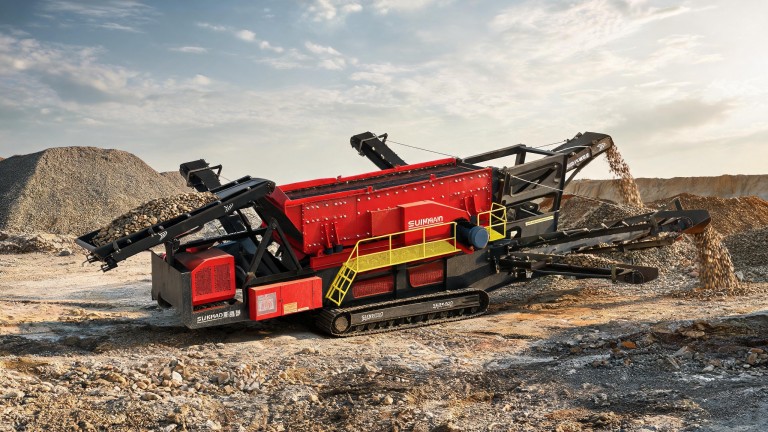
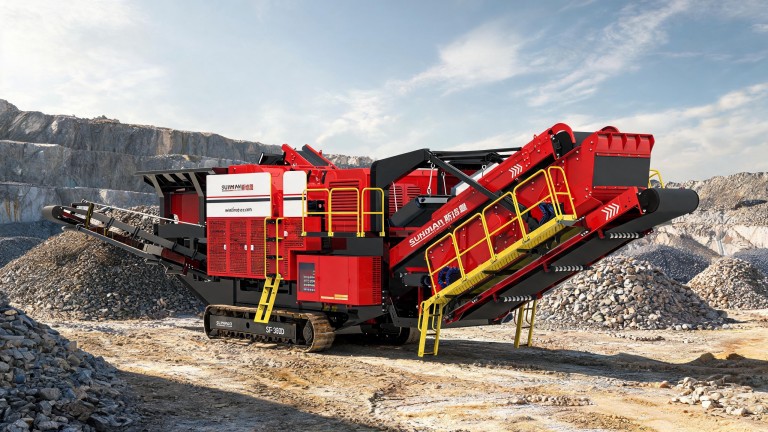
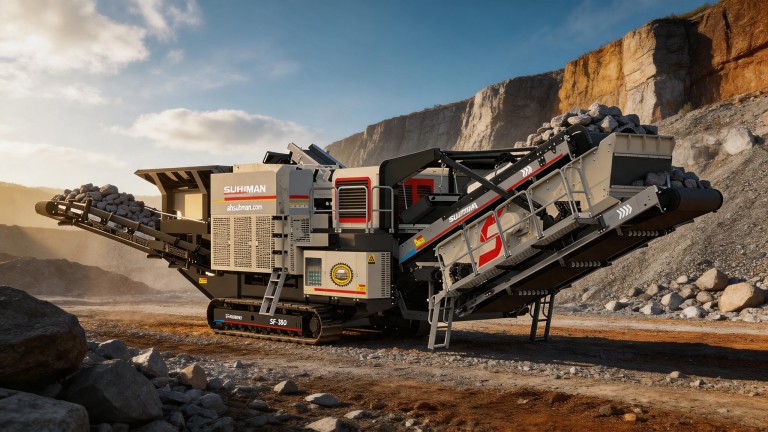
A comparison of a diesel-powered mobile production line and a stationary electric production line
The comparison between a diesel-powered mobile plant and an electric stationary plant is based on four key criteria; all figures given are the official specifications provided by the manufacturers of mass-produced equipment of this type.
Mobility and site requirements
The mobile diesel-powered line does not require any prior preparation of a permanent foundation; according to the engineering reference range, it takes between 2 and 4 hours to set up at the work site, and, according to official specifications, a level asphalt or concrete site with a load-bearing capacity of at least 2 tonnes per square metre is sufficient for its installation. The stationary electric line requires the casting of a reinforced concrete foundation with a depth of between 0.8 and 1.2 metres, depending on the weight of the equipment; the total time required for site preparation and connection ranges from 7 to 14 working days, according to the Engineering Reference Range.
Energy costs during operation
The specific diesel fuel consumption for standard mobile power lines of this class ranges from 0.25 to 0.4 litres per kilowatt of generated power, according to actual test data from independent testing laboratories. The specific electricity consumption for stationary units with a similar production capacity ranges from 0.18 to 0.27 kilowatt-hours per kilowatt of generated power, according to the manufacturers’ official specifications.
Operating noise and emission levels
According to data from independent environmental inspections, the sound pressure level at a distance of 5 metres from an operating mobile diesel power unit ranges from 72 to 81 decibels; the exhaust gases contain nitrogen oxides and particulate matter in concentrations that comply with the current Euro 5 standards. The sound pressure level at the same distance from a stationary electric power generation unit in operation is between 53 and 62 decibels, according to official specifications; when in operation, the equipment produces no direct emissions into the atmosphere.
Requirements for routine maintenance
According to the manufacturers’ official recommendations, scheduled maintenance of a mobile diesel power line is carried out every 250 working hours; the list of mandatory tasks includes the replacement of engine oil, fuel filters and air filters. Scheduled maintenance for a stationary electric line is carried out every 1,200 operating hours in accordance with official specifications; the main tasks consist of checking electrical connections and lubricating moving parts.
Comparison table of line parameters
Parameter Line type Mobile diesel-powered line Stationary electric line Deployment time 2–4 hours 7–14 working days Specific energy consumption 0.25–0.4 l/kW 0.18–0.27 kWh/kW Noise level at 5 m 72–81 dB 53–62 dB Maintenance interval every 250 hours every 1,200 hours Site requirements level surface with a load-bearing capacity of at least 2 t/m² reinforced concrete foundation 0.8–1.2 m
Frequently Asked Questions
Question 1: Can a diesel-powered mobile generator be used in enclosed production premises? Answer: A diesel-powered mobile generator may only be operated in enclosed spaces if a forced-airand exhaust ventilation system is in place, ensuring at least 12 air changes per hour in accordance with engineering recommendations. Question 2: Is an additional permit required to connect a fixed electrical line? Answer: Connecting a fixed electrical line with a capacity exceeding 100 kW requires obtaining a separate permit from the network operator and approval of the connection project by the regulatory authorities in accordance with current legislation. Question 3: What is the maximum continuous operating time for each type of generator set? Answer: The maximum continuous operating time for a diesel mobile generator set is 12 hours, after which a break is required to check the levels of technical fluids in accordance with official specifications; whilst a stationary electric power line can operate continuously for up to 30 days without interruption, according to actual test data.