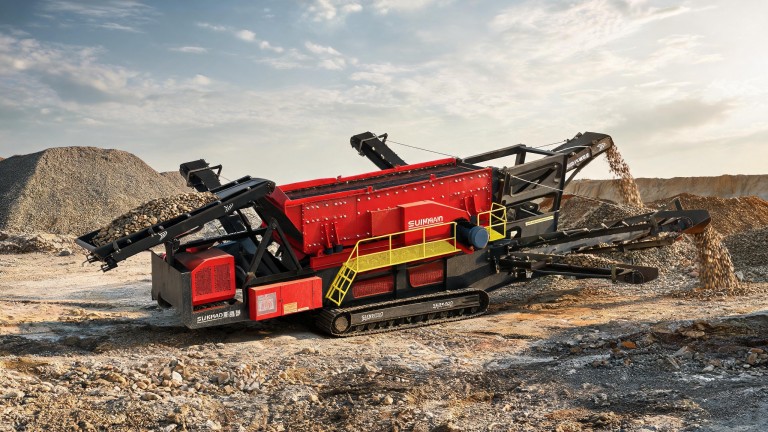
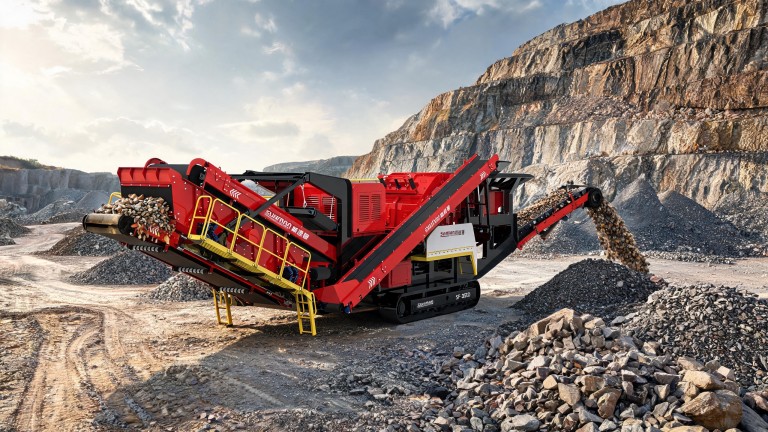
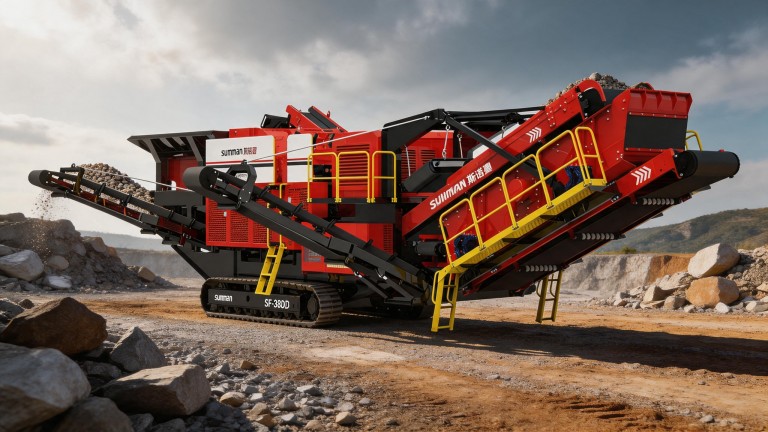
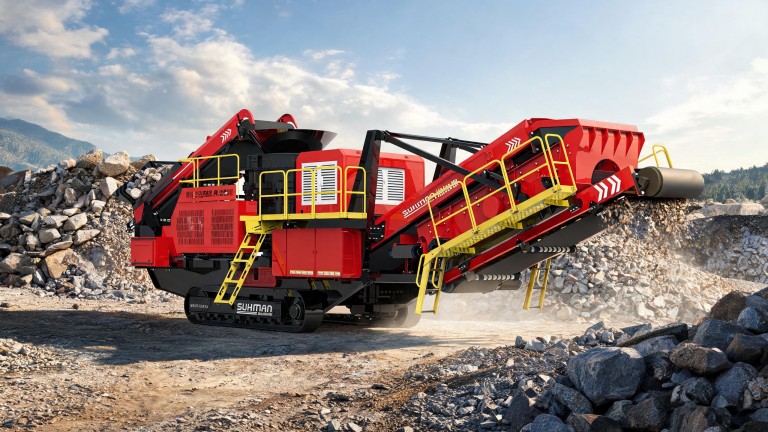
Small quarries need a compact yet reliable crusher that can process rock without unnecessary costs; the choice of a suitable model depends on the type of raw material, the scale of the work and the budget, and it can be purchased from authorised dealers of specialist equipment, focusing on tried-and-tested brands and technical specifications tailored to specific tasks.
We assess your quarry’s requirements before you buy
First and foremost, assess the type of raw material you are working with: hard granite requires jaw crushers, soft limestone can be processed using rotary crushers, and if you need to produce a uniform particle size, it is best to consider cone crushers. Calculate your planned daily processing volume: for small-scale operations of up to 50 cubic metres per day, compact units with a capacity of no more than 75 kW will suffice; this will ensure you do not overpay for excess capacity that you will not utilise. Also, don’t forget to consider the space available for installation: small quarries often have limited space, so choose models with dimensions no larger than 3 x 2 x 2.5 metres to avoid wasting time on site reorganisation.
Where is the best place to buy a crusher for a small quarry?
Avoid buying second-hand equipment from unverified sellers on classifieds websites, even if the price seems very attractive: the key components of such machines are almost always worn out, and the cost of repairs will exceed the price difference. The best option is to deal with authorised dealers of Russian and international manufacturers of specialist quarrying equipment; they provide an official warranty of at least 12 months, carry out free initial set-up and train your staff to operate the machinery. If you are on a tight budget, you can opt for domestically manufactured models: their performance is on a par with imported equivalents, but they cost 30–40% less, and spare parts for them can be found in any regional centre, without having to wait months for delivery from abroad.
Key features to look out for
The first important parameter is the maximum size of the rock pieces to be fed into the machine: this should be 10–15% larger than the average size of the pieces you extract from the quarry, so as not to waste time on manual pre-crushing. The second is the adjustable output size: the ability to adjust the settings from 5 to 50 mm will allow you to adapt to the requirements of different customers without having to purchase additional equipment. Thirdly, the overload protection system: this automatically stops the unit if a metal object enters the chamber that could break the blades or the rotor, saving you from costly repairs and production downtime lasting several days.
Checking before making a final purchase
Before signing the contract, be sure to ask the dealer to demonstrate how the plant operates with your specific type of raw material; this will allow you to see straight away how effectively it crushes the rock and whether the resulting fraction meets your requirements. Check the terms of the after-sales service: is there a service centre in your region, how quickly will technicians arrive in the event of a breakdown, and is routine maintenance included in the purchase price? Also, don’t forget to check the scope of delivery: it should include not only the crusher itself, but also a warranty certificate, an instruction manual in Russian and a set of standard spare parts for replacement during the first six months of operation, so that you do not have to search for them at short notice when the first minor faults occur.