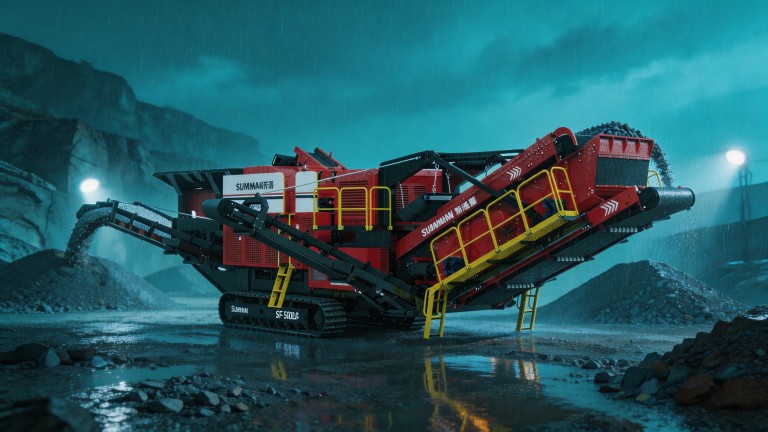
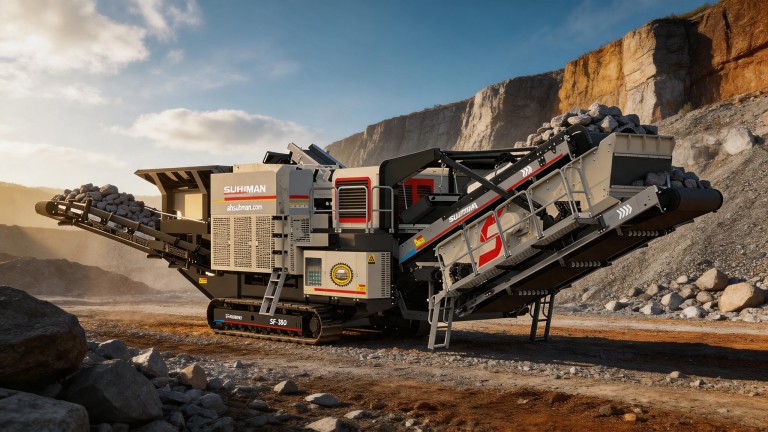
A mobile jaw crusher with a capacity of 500 tonnes per hour is a reliable «workhorse» for large crushing plants; choosing the right model and paying close attention to its operation directly determine its service life and operational reliability, so it is important to base your choice on the characteristics of the raw material and the operating conditions, and to adhere to the maintenance schedule.
Key criteria for selecting a model
When selecting a unit with a capacity of 500 t/h, first assess the maximum size of the feed material; this must correspond to the width of the jaw crusher’s feed opening. You should also take into account the hardness and abrasiveness of the rock: for very hard granites, models with a reinforced jaw hinge mechanism are suitable, whilst for soft limestones, the standard configuration will suffice. Additionally, check compatibility with your downstream conveying and screening lines.
Pre-start-up configuration options
Before starting the machine for the first time, be sure to adjust the gap between the outlet plates to the required size for the finished fraction; do not allow the gap to be too small, as this will lead to the motor being overloaded and the mechanism overheating. Check that all bolted connections are secure and that the lubrication level in the friction assemblies is correct; you should also test the chassis braking system if you plan to move the unit frequently around the production site.
Guidelines for safe and long-lasting use
During operation, ensure that no metal objects enter the feed hopper, as these may damage the working surfaces of the jaw plates; carry out regular visual inspections of the jaw plate liners for wear and replace them when they reach their minimum thickness. Ensure a steady feed of raw materials, avoid peak overloads, and adhere to the manufacturer’s recommended maintenance schedule; this will help maintain the specified capacity of 500 tonnes per hour for many years of operation.