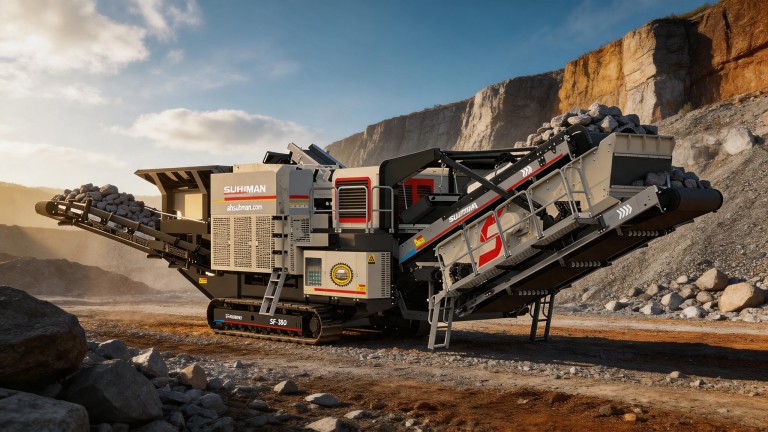
A mobile jaw crusher with a pre-screening unit combines two functional units into a single mobile system, enabling the immediate separation of fine fractions prior to crushing, reducing the load on the working components, increases productivity and eliminates the need for unnecessary processing of the finished material; the correct model is selected based on the required throughput, the type of raw material being processed and the dimensions of the operating site.
The main operational advantages of the complex
The primary screen, integrated into the crusher’s design, separates out fractions that already meet the required size in advance, so that they do not enter the jaw chamber; this prevents over-crushing and saves on energy consumption. The plant’s mobility allows it to be moved quickly between work sites without incurring additional costs for transporting individual units, whilst combining two operations into a single cycle reduces the overall duration of the production process by 30–40% compared with the use of separate equipment.
Key criteria for selecting the right model
The first parameter is the required hourly throughput, which must correspond to the volume of planned work, whilst the capacity margin must be at least 15% of the design figure. The second important criterion is the type of raw material to be processed: for solid rock, the following is selected models with reinforced side panels a camera, whilst a standard configuration is sufficient for soft construction waste. The maximum size of the input raw material and the permissible dimensions of the plant for operation at a specific site are also taken into account.
Practical guidance on operation
To ensure the plant operates reliably, it is sufficient to check the condition of the pre-screening screens regularly and replace worn parts in good time so as not to reduce the efficiency of fraction separation. It is also advisable to adjust the gap between the jaw plates to suit the specific size of the output material, which enables the production of finished products with the required particle size distribution without the need for further processing. Provided these simple rules are followed, the equipment will maintain its specified performance characteristics throughout its entire service life.