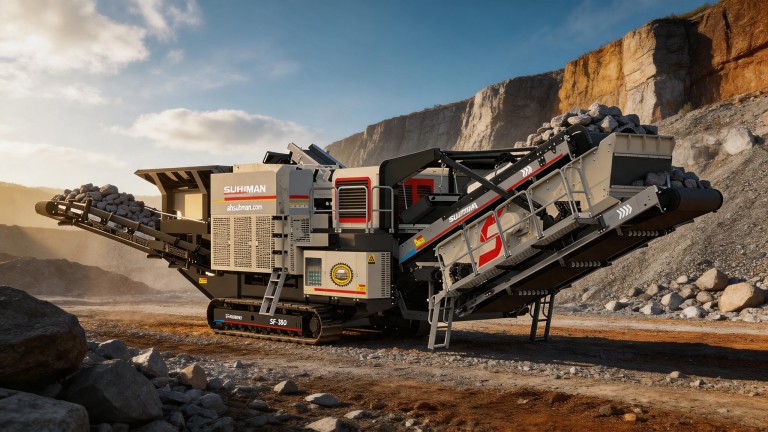
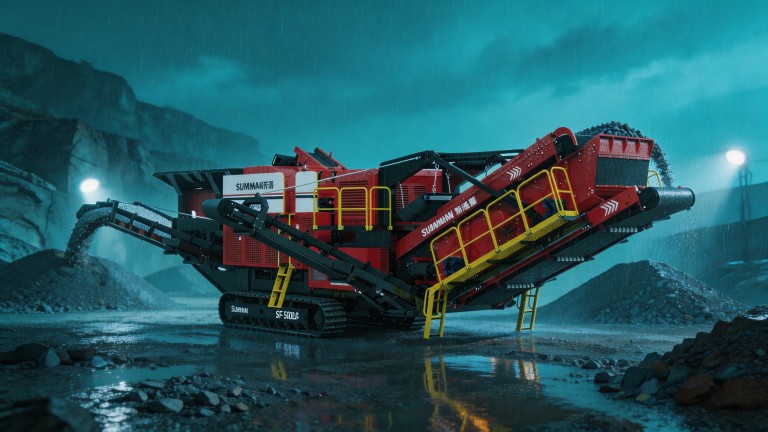
A mobile jaw crusher for construction waste fully justifies the investment when there is a steady volume of work, and choosing the right model has a direct impact on operational efficiency and profitability, helping to avoid unnecessary costs and downtime.
The main advantages of mobile models
These units do not require permanent installation; they can be easily moved between sites and process waste on site, thereby eliminating the cost of waste removal, and the resulting crushed stone can be reused for backfilling or pouring foundations, which further reduces construction costs.
Key criteria for choosing a model
First, calculate the required capacity: units with a capacity of 10–30 tonnes per hour are suitable for small sites, whilst large construction sites require models with a capacity of 50 tonnes per hour or more. Pay attention to the maximum size of the feed material and the type of drive: diesel-powered units are suitable for remote sites without an electricity supply, whilst electric units are more economical at fixed locations.
When investments fail to pay off
Buying a crusher of this kind is not cost-effective for occasional, one-off jobs involving small volumes of waste: in such cases, it is more cost-effective to hire the machine for the required period. You should also avoid skimping on cheap models from unknown brands, as they often break down when processing hard concrete fragments, requiring costly repairs.