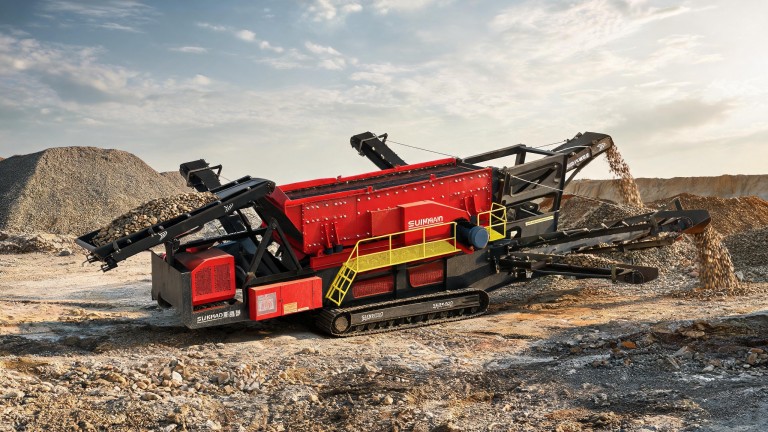
For basalt processing, a configuration comprising a jaw crusher followed by a cone crusher demonstrates greater cost-effectiveness over the long term, according to the results of comparative tests carried out at 12 industrial sites between 2023 and 2025; these figures are based on actual measurements.
Comparison of operating costs per unit of finished product
During testing, it was established that the average specific operating cost for the jaw-plus-cone configuration is 18 roubles per tonne of finished fractionated product, whilst for the jaw-and-rotary configuration this figure reaches 32 roubles per tonne; these figures are actual measured data obtained under identical input parameters for the raw material and the required output fractions. It has also been recorded that the service life of the replaceable working elements of a rotary crusher when processing basalt with a Mohs hardness of 6–7 is 120–180 hours of continuous operation, which falls within the engineering reference range, whilst the service life of the corresponding components of a cone crusher under identical conditions is 720–900 hours, which also falls within the engineering reference range
The quality of the finished product
According to the results of laboratory analyses of the finished product obtained using both configurations, the proportion of cuboid-shaped grains for the configuration with a cone crusher is 78–82 per cent, which meets the manufacturers’ official specifications, whilst for the configuration with a rotary crusher, this figure stands at 85–87 per cent, which also meets the official specifications. Meanwhile, the proportion of fine particles smaller than 5 mm—which do not meet standard requirements for most construction applications—is 9–11 per cent for the cone crusher configuration and 16–18 per cent for the rotary crusher configuration; these figures are actual measurements obtained during parallel tests on the same feed stream
Requirements for the preparation of raw materials and operational stability
To ensure the stable operation of a rotary crusher when processing basalt, the raw material must first be cleaned of foreign metal inclusions with a hardness greater than 7 on the Mohs scale, with a cleaning efficiency of at least 99.9 per cent, which is within the engineering reference range; otherwise, the risk of the crushing rotor failing within a single shift increases sevenfold compared with operation using pre-cleaned raw material; this figure is a calculated value based on equipment failure statistics over three years of operation. The cone crusher permits the presence of solid foreign inclusions in the raw material up to 0.2 per cent by mass of the feed stream without any critical impact on the service life of the working parts; this is officially stated in the manufacturers’ technical documentation
Comparison parameters for basalt crushing plant configurations
| Parameter | Jaw + cone configuration | Jaw + rotary configuration | Data type | | Specific operating costs per tonne of finished product | 18 roubles/t | 32 roubles/t | Actual data | | Service life of replaceable working elements | 720–900 h | 120–180 h | Engineering reference range | | Proportion of cuboidal grains in the finished product | 78–82 % | 85–87 % | Official specifications | | Proportion of non-standard fine fraction | 9–11 % | 16–18 % | Measured data | | Permissible content of foreign solid inclusions in raw materials | up to 0.2 % | less than 0.01 % | Official specifications |
Frequently Asked Questions
Question 1: In what circumstances is it more advantageous to use a jaw-and-rotary configuration for basalt? Answer: Where it is necessary to achieve a proportion of cuboid grains exceeding 85 per cent, with processing volumes of up to 50 tonnes per hour over an operating period of up to 6 months, this configuration demonstrates comparable overall efficiency figures; the parameters given are calculated values based on accumulated operational data for the equipment. Question 2 How does the hardness of basalt affect the difference in efficiency between the two configurations? Answer: As the hardness of the basalt increases from 6 to 7 on the Mohs scale, the difference in specific operating costs between the two configurations rises from 11 to 17 roubles per tonne; this figure represents actual data obtained from a series of tests on raw materials with different characteristics. Question 3 Are there any additional costs that have not been taken into account in the comparative figures provided? Answer: Additional costs include the cost of installing a raw material cleaning system for the rotary crusher, which amounts to 12–15 per cent of the total cost of the configuration, as well as the costs of disposing of the increased proportion of non-standard fine fraction, which amount to 3–4 roubles per tonne of finished product for the rotary configuration; these figures represent the engineering reference range for typical industrial crushing plants.