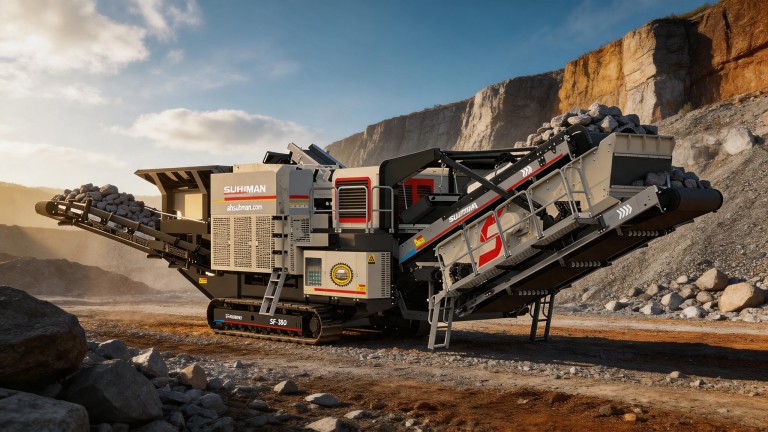
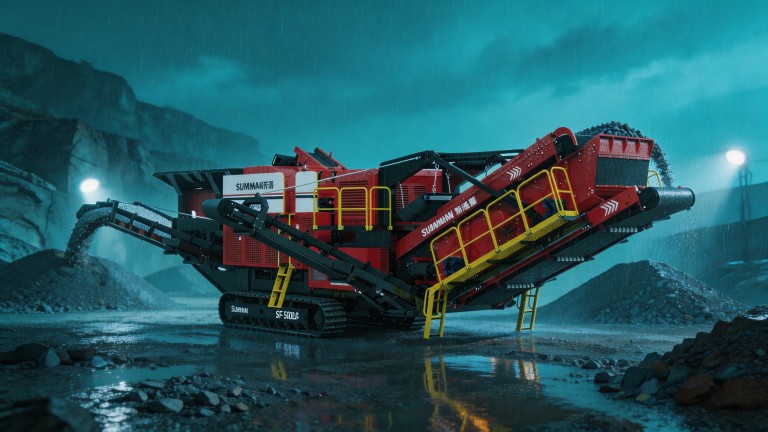
A turnkey rock crushing plant is a ready-to-use complex for processing hard rock that requires no further modifications after installation. To ensure you make the right choice, you need to assess the production loads, the type of feed material and the requirements for the finished product’s particle sizes; this forms the basis for stable operation without unnecessary costs
Key specifications of the completed production line
First, determine the maximum size of the feed material, the required throughput in tonnes per hour and the desired output fractions; as the configuration of the units depends on these three parameters; it is not advisable to select a line with a capacity margin exceeding 30% of the actual load, so as not to overpay for unused capacity
What components make up a standard set?
The basic configuration includes a vibrating feeder for the uniform feeding of raw materials, a jaw or cone crusher for primary crushing, a secondary crusher, a vibrating screen for sorting fractions and conveyors for moving the material; all components are already matched to the total capacity, so there are no discrepancies in throughput capacity
What to look out for when choosing a supplier
It is advisable to give preference to companies that provide a full range of services: from visiting the site to take measurements and calculate the configuration, through to installation, commissioning and staff training, and which also offer an official warranty of at least one year on all equipment in the line
Common mistakes when selecting
Customers often choose a production line solely on the basis of its low price, without taking operating conditions into account: high dust levels, temperature fluctuations or the high abrasiveness of the raw stone. This leads to rapid wear and tear of components and downtime, which ends up costing more than the initial price difference.
How to optimise operations
It is sufficient to adhere to the scheduled maintenance programme, replace wear parts in good time and ensure that no raw material exceeding the permitted size is fed into the crusher; this will extend the service life of the line by 40–50% and reduce the cost of unscheduled repairs several-fold