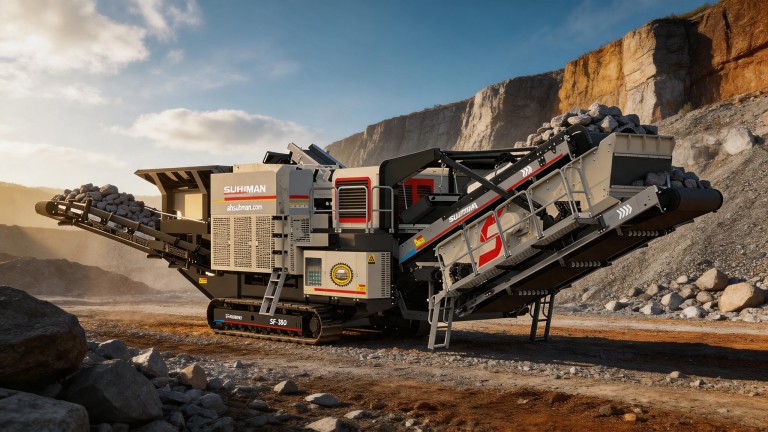
A mobile crusher can start up and operate reliably at temperatures ranging from minus 20 to minus 30 degrees Celsius, provided that specific preparatory procedures are followed and the correct operating conditions are maintained, which excludes overloading and ensures timely maintenance of components sensitive to cold.
Pre-start-up preparation of the unit at low temperatures
Before starting the crusher in very cold conditions, first check the levels and viscosity of the engine and hydraulic oils; if necessary, replace them with winter grades designed for operation at temperatures down to minus 40 degrees Celsius, then warm up the hydraulic system for 10–15 minutes whilst idling, ensuring that no load is immediately applied to the crushing mechanism.
Tips for starting the engine in cold weather
When starting the engine, do not operate the starter continuously for longer than 10 seconds; leave a pause of at least one minute between attempts to avoid draining the battery, which loses up to half its rated capacity at low temperatures; After a successful start, allow the engine to idle for a further 5 minutes to ensure that all cylinders and components of the power unit warm up evenly.
Crusher operating conditions at temperatures of minus 20–30 degrees
During operation, ensure that the crushing mechanism is not overloaded; feed the raw material in small batches to prevent the moving parts from jamming; and check the temperature of the bearings and hydraulic lines regularly every two hours, ensuring that there are no temperature fluctuations, which could cause cracks to form in the metal structural components.
Maintenance after the end of the shift
Once the work is complete, do not switch off the unit straight away; allow it to run at idle speed for 7–10 minutes to bring all components up to the same temperature, then drain the condensation from the fuel filter and the air system, check that there is no ice on the hinged joints and, if necessary, treat them with a special frost-resistant lubricant to prevent them from freezing on the next start-up.