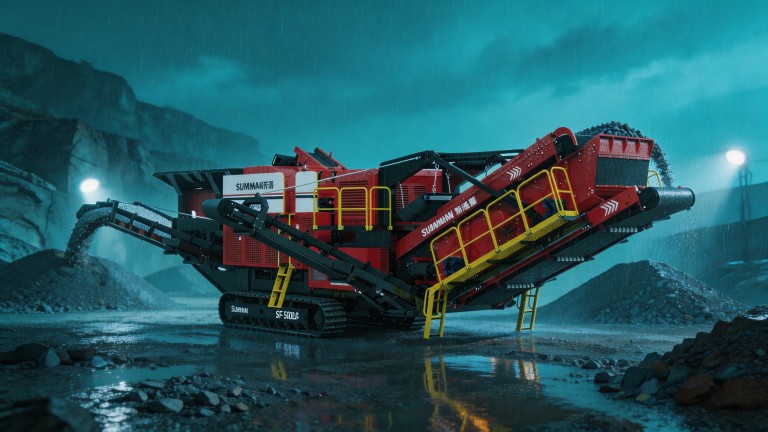
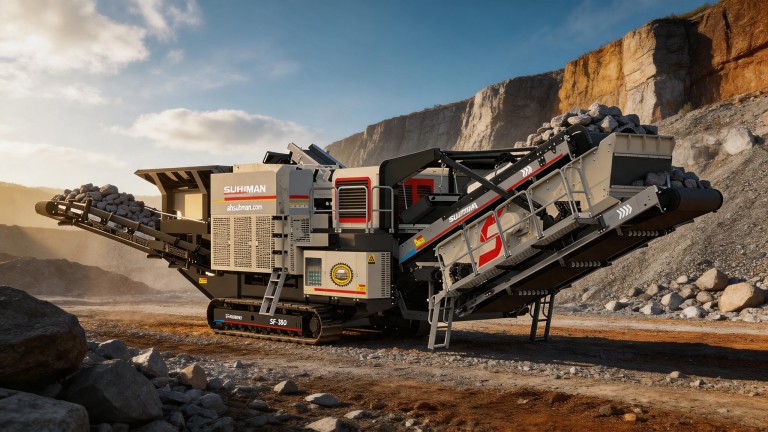
A mobile jaw crusher with a 40 mm output size is selected based on the volume of work, the hardness of the raw material and the mobility of the site; this configuration produces finished material suitable for standard construction requirements without the need for further crushing, whilst offering high productivity and savings on processing costs
How to choose the right crusher for a 40 mm particle size
First, assess the hardness of the raw material to be processed; for granite and basalt, choose models with a reinforced jaw mechanism. Then, match the required throughput with the specifications of the jaw outlet. Do not forget to check that the gap can be adjusted to the exact value of 40 mm without any variation in particle size.
Key advantages of the 40 mm fraction configuration
The finished material immediately meets the standards for concrete mixes used in road filling and construction work; therefore, there is no need for further crushing or screening, which reduces equipment costs and production cycle times, and significantly cuts logistics costs associated with unnecessary operations.
Guidelines for operating this type of crusher
Check the wear on the jaw plates regularly to ensure that the clearance does not change and the particle size remains stable at 40 mm. Do not feed in raw materials larger than the permitted input size to avoid overloading the mechanism. Carry out scheduled lubrication of moving components to extend the equipment’s service life without breakdowns