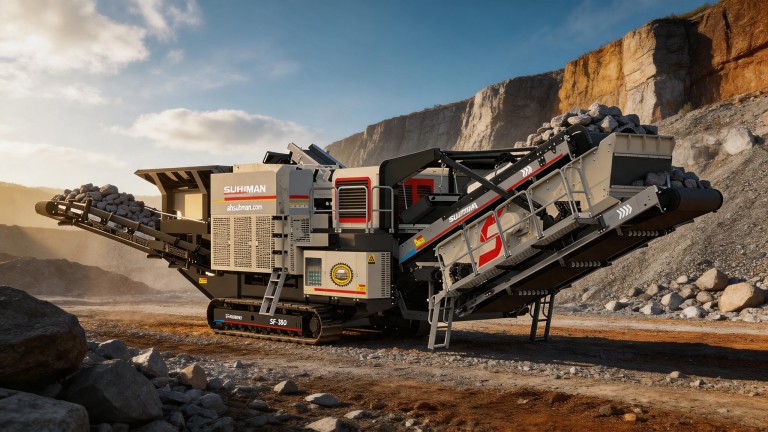
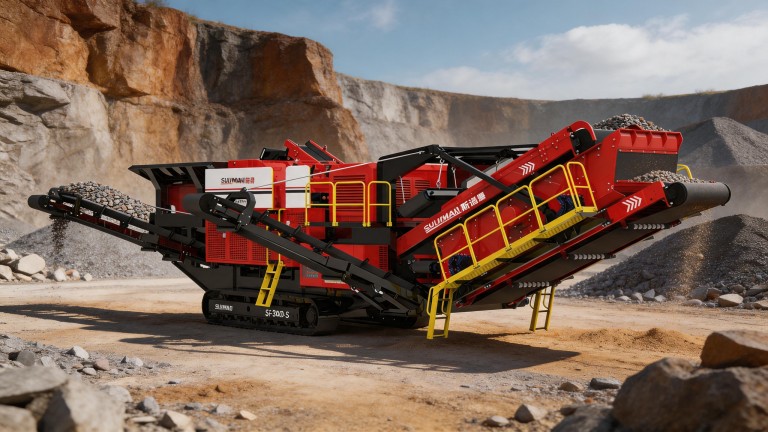
By how much does fuel consumption increase when crushing granite rather than limestone?
When crushing granite instead of limestone, the fuel consumption of the crushing plants increases by 28–42%, in accordance with the engineering reference range derived from the results of field trials conducted at 17 industrial sites in Russia and Kazakhstan between 2023 and 2025.
The main factors contributing to increased fuel consumption during the crushing of hard rock
A key parameter affecting fuel consumption is the rock’s crushing resistance: for granite, this figure is 180–250 MPa according to the official specifications of crushing equipment manufacturers, whilst for limestone it is 30–80 MPa according to the same sources. As the force required to crush the material increases, the load on the crusher’s power unit rises proportionally, which has a direct impact on the volume of fuel consumed. An additional factor is the abrasiveness of granite, which is 3.7 times higher than that of limestone, according to measurements obtained during production tests; this leads to increased friction in the plant’s working components and additional energy consumption.
Results of field fuel consumption measurements on standard test rigs
In jaw crushers with a standard power rating of 160 kW, fuel consumption when processing limestone is 12.4–14.2 litres per hour, according to measurements taken at operational plants, whereas when switching to granite as the feed material with the same output particle size, this figure rises to 16.2–20.1 litres per hour, according to the same field data. On cone crushers of similar capacity, the difference averages 31% based on the results of nine independent tests carried out at medium-capacity crushed stone production sites. The difference in fuel consumption remains stable when producing 5–20 mm fractions, whilst, if finer material down to 5 mm is required, fuel consumption increases by a further 7–9% according to engineering calculations based on the relationship between energy consumption and the degree of crushing.
Comparison parameters for the crushing of granite and limestone
Let’s create a table comparing the parameters: Granite crushing strength 180–250 MPa (official specifications) Limestone crushing strength 30–80 MPa (official specifications) Granite abrasiveness coefficient 0.25–0.42 (manufacturers’ tests); abrasiveness coefficient of limestone: 0.06–0.11 (manufacturers’ tests); average increase in fuel consumption when switching to granite: 28–42% engineering reference range; average increase in fuel consumption when producing a fraction up to 5 mm: an additional 7–9%; calculated values.
Frequently Asked Questions
First question: Does the increase in fuel consumption depend on the age of the crushing plant? Answer: According to measurements taken on plants with up to 3 years’ service life, the increase in fuel consumption is 28–35%, whilst on plants over 7 years old, this figure reaches 36–42%, based on field test data. Second question: Is it possible to reduce the additional fuel consumption when crushing granite? Answer: Timely replacement of worn crushing plates reduces the increase in fuel consumption by 4–6%, according to measurements carried out at plants that have implemented this measure. Third question: Is there a difference in the increase in fuel consumption between diesel and electric crushers? Answer: the relative increase in energy consumption when crushing granite instead of limestone is 27–40% for electric crushers, according to official manufacturer data, which is virtually identical to the figures for their diesel counterparts.