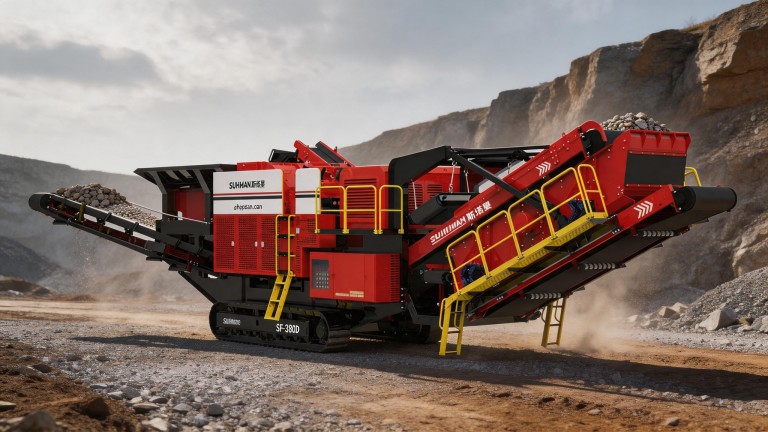
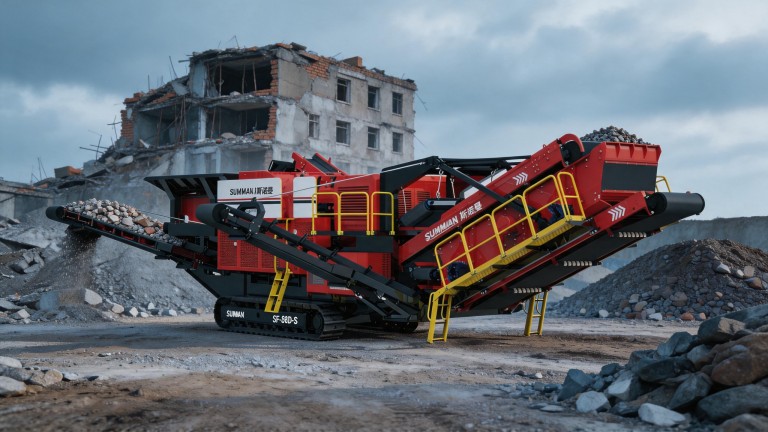
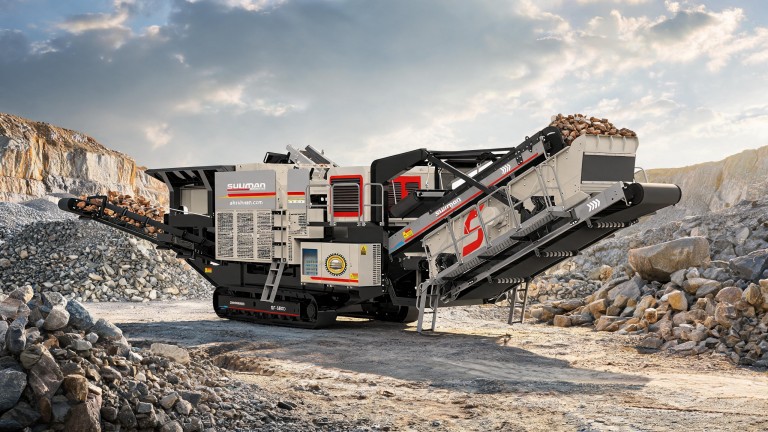
A mobile jaw crusher is an indispensable piece of equipment on construction and mining sites, and its key technical specifications directly determine its operational efficiency, service life and cost-effectiveness; therefore, before making a purchase, it is worth carefully examining the main parameters that affect its performance.
Dimensions of the intake slot
This parameter determines the maximum size of raw material that the crusher can process without prior preparation; it directly affects the feed rate and helps to avoid downtime caused by unsuitable stone sizes, and is selected to match the standard particle size distribution of the raw material at a specific site.
Fraction yield
This indicator reflects the volume of finished crushed material per unit of time; it depends on the width of the discharge slot and the frequency of the jaw’s oscillations, and is selected to match the planned workload so as to avoid a shortage of finished product or equipment overload.
Power output of the power unit
The engine is the heart of a mobile crusher; its power must be sufficient to handle the maximum load when processing hard rock. Insufficient power leads to frequent stoppages and accelerated wear, whilst excessive power unnecessarily increases fuel consumption and operating costs.
Weight and manoeuvrability
As a piece of mobile equipment, the crusher must be able to be moved easily between sites without the need for heavy specialist machinery; its optimal balance of weight and strength helps to reduce transport costs and cut down on the time taken to set up at a new work site.