别走!
您尚未获得免费报价和确切价格。.
请留下联系方式,我们的工程师将为您项目量身定制解决方案。.
请留下联系方式,我们的工程师将为您项目量身定制解决方案。.

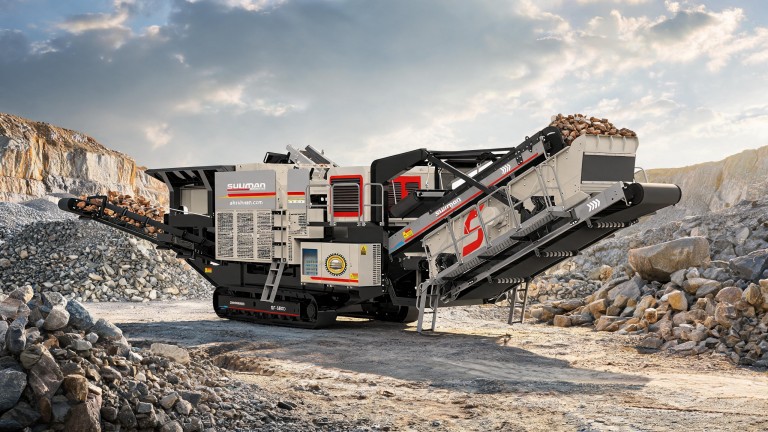
Learn what determines an artificial sand crusher (VSI) price: feed size, rock hardness, capacity, wear parts, and total plant costs. Essential budgeting
The price of an artificial sand crusher (máy nghiền cát nhân tạo) cannot be quoted as a single figure because the equipment is configured to suit the source rock, feed size, target capacity, and final sand specification. In practical terms, a quarry owner in Vietnam should expect the quote to be built around a vertical shaft impact (VSI) crusher core, with the final price varying by rotor diameter, motor power, automation level, and downstream screening. Since no verified SUHMAN price list is available in this article, every number below that should be a real figure is marked and must be confirmed with the manufacturer or your local dealer before budgeting.
The purchase price is only the entry threshold. For a quarry producing construction sand, the total cost picture includes the feed system, the crusher itself, the vibrating screen closed or open circuit, chutes and conveyors, foundation works, and the electric control panel. On many Vietnamese quarry sites, the crusher body represents roughly half of the full sand-making station cost, but this split shifts with the hardness of the source rock. A granite or basalt feed demands higher wear-resistant parts and a heavier rotor, which adds to the base machine price.
Feed conditions matter more than most buyers expect. A VSI crusher is designed for clean, dry feed between approximately 5 mm and 50 mm. If your quarry feed contains high moisture or clay contamination, you will need additional feeding and screening equipment, and the downstream sand may require washing — both of these are separate cost lines. For typical river pebble, limestone, or granite, the VSI configuration is proven, but the wear cost per tonne of sand produced varies significantly with rock abrasiveness.
Use the table below as a structured request list. Fill in each row with your real site data; without these inputs, any pricing estimate is guesswork.
| Parameter you must provide | 应注明哪些内容 | Why it affects the price | 状态 |
|---|---|---|---|
| Target capacity | Tonnes per hour of finished sand (e.g., 50, 100, 200 t/h) | Larger throughput means a bigger rotor, motor, and chassis | Must be confirmed |
| 进料 | Rock type, hardness (Mohs), silica content, moisture % | High silica raises wear cost and may require a thicker rotor feed tube | Must be confirmed |
| 饲料粒度分布 | Max feed size (mm) and typical particle shape | Oversize feed requires a pre-crusher or grizzly, adding cost | Must be confirmed |
| Final sand spec | Fineness modulus, apparent density, dust content limit | Controls screening and dedusting/washing options | Must be confirmed |
| Process mode | Dry or wet production | Wet process adds washing equipment and water management cost | Must be confirmed |
| Power supply on site | Voltage, available kVA, grid stability | Motor size and soft-start or VFD options depend on site power | Must be confirmed |
| Installation site | Ground elevation, area, foundation conditions | Anchoring, concrete works, and lift equipment affect installation cost | Must be confirmed |
When you receive a quote, separate the measured data from the manufacturer’s estimates. The crusher throughput and rotor tip speed can be calculated from the machine’s operating curve, and these are engineering estimates that should be shown in the technical datasheet. The final sand gradation, however, can only be confirmed by a field test — either a pilot test with your own rock or a reference project where the same rock type was processed. Many suppliers quote a «nominal» output for soft limestone, but your granite quarry will yield lower output per machine hour. Ask for the output figure stated at a specific feed size, moisture content, and closed-side setting; if the supplier gives a single number without those conditions, treat it as indicative only.
For a quarry director, the total cost of ownership over five years usually exceeds the initial purchase price. In VSI crushers, the wear parts — rotor tip, wear plates, and anvil ring or rock shelf — are the largest recurring expense. On abrasive materials like granite with high quartz content, wear consumables can become the dominant cost, so the hardening and thickness of these parts directly affect your per-tonne production cost. Power consumption is the second major cost; motor efficiency and idle-running control can be evaluated through the installed motor power and electrical draw per tonne. Neither of these numbers can be confirmed without either the manufacturer’s test record or a reference installation on similar rock.
A VSI crusher is suitable when your quarry produces 30–300 t/h of manufactured sand from dry, hard, blocky feed, and when the final sand needs a cubical shape and tight gradation for concrete or asphalt. The machine excels at rock-on-rock crushing where the operating cost is minimized by using the material itself as the crushing medium. That means you should choose a VSI when the feed is already under 50 mm and the target is fine aggregates.
The VSI approach is not suitable when the feed contains sticky clay, high moisture above roughly 8%, or materials that adhere to the rotor walls. In such cases, washing and screening become necessary before the VSI, and the system becomes more expensive and maintenance-heavy than an alternative like a selective impact crusher or tertiary cone crusher with a screen. Additionally, if the source rock is extremely abrasive — for example, high-silica quartzite — the wear cost per tonne of sand may render the VSI economically unviable, and a different crushing philosophy should be evaluated.
Before any supplier can give you a firm price, you must supply the following on your official site documentation: a representative rock sample of 200–500 kg for a test, the intended capacity in tonnes per hour of finished sand, the permitted dust content in the final product, and the available power supply on the site. You also need to define the concrete standard you sell against (e.g., TCVN 7570 in Vietnam), because this dictates the sand fineness and grading you must meet. Without these inputs, a supplier’s quote is only a steering range, not a commitment.
A cone crusher compresses rock between an eccentrically gyrating mantle and a concave liner, producing more fines but with a less cubical shape. A VSI (vertical shaft impact) crusher accelerates rock against a rock bed or anvil, yielding a better particle shape in the fine fraction and a tighter distribution of the sand sizes. For manufactured sand, the VSI is usually the final shaping stage, while the cone works at the secondary or tertiary stage to reduce size before the VSI. The price difference between the two is substantial and depends on the feed size and throughput targets, so it should only be compared after your material tests are completed.
Yes. A VSI crusher does not handle sticky, wet feed well; moisture above 6–8% can cause build-up in the rotor and drop the effective throughput. To operate reliably, you would need a drying or pre-screening system, and for wet-only processes, add sand washing equipment after the crusher. Both additions increase the initial price and the operating cost. If your quarry has seasonal rainfall, as is common in southern Vietnam, the procurement decision should account for a wet-season plan, not just a dry-season test.
The purchase price is a one-time cost, but the wear parts and electricity are recurring. Wear part consumption is proportional to the abrasiveness of the feed; the rotor tip life can vary by a factor of several times between soft limestone and hard granite. Energy cost is roughly proportional to the motor power and the operating hours, but the actual consumption per tonne can only be measured on site. Ask the supplier for a documented wear-life figure from a similar rock type and a measured or verified specific energy figure; if neither is available, this must be flagged as in the quote.
If you already have an aggregate crushing line producing 5–50 mm feed, buying a stand-alone VSI crusher and a screening module may be sufficient. If you are starting from a quarry face, you need the full sequence: feeder, primary jaw or impact crusher, secondary crusher, VSI, screen, and possibly a sand washer. The full plant price is a multiple of the single crusher price, and the missing inputs for that decision are the total project capacity, the land area, and the end product mix you plan to sell.
The rotor is the most loaded component. Its service life is defined by the material of the wear parts and the rotor tip speed, which is set by the feed hardness. There is no universal answer: at the same rock type, a low tip speed yields long rotor life but a specific output that is capped, whereas a higher speed produces more fines but wears faster. Your supplier should give you the rotor life in hours at the configured tip speed for your specific rock — if the quote only lists the rotor as «wear-resistant» without hours, request the clarification before comparing prices.