别走!
您尚未获得免费报价和确切价格。.
请留下联系方式,我们的工程师将为您项目量身定制解决方案。.
请留下联系方式,我们的工程师将为您项目量身定制解决方案。.

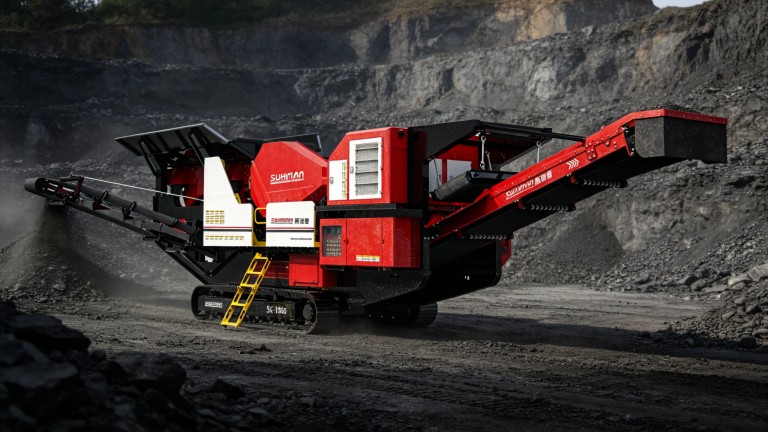
Select a quarrying plant by feed material, products, mobility, and power. Compare mobile vs fixed crushers, screens, and energy options with this practical
Short answer: a quarrying plant is not bought on machine size alone. You select the crusher, screen and power arrangement after you define four input groups: feed material, required products, relocation strategy and after-sales reach. When those inputs are missing, an offer is only a quotation, not a solution. The sequence below turns those inputs into a decision that can be justified at board level.
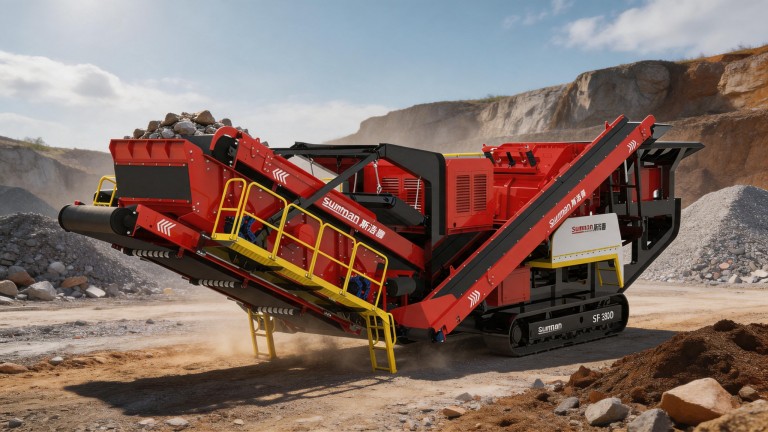
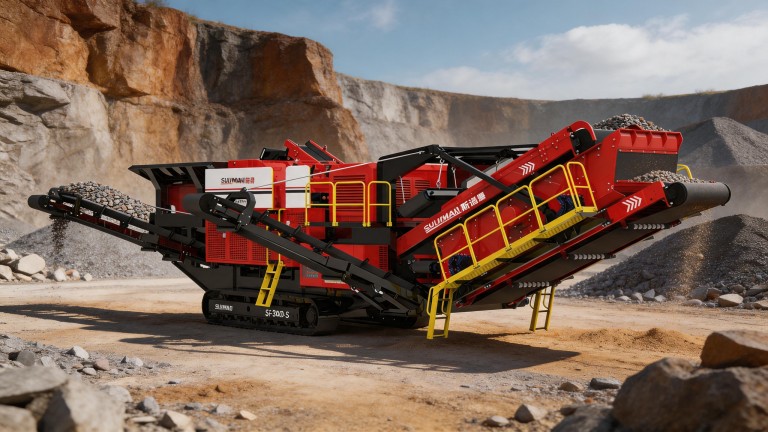
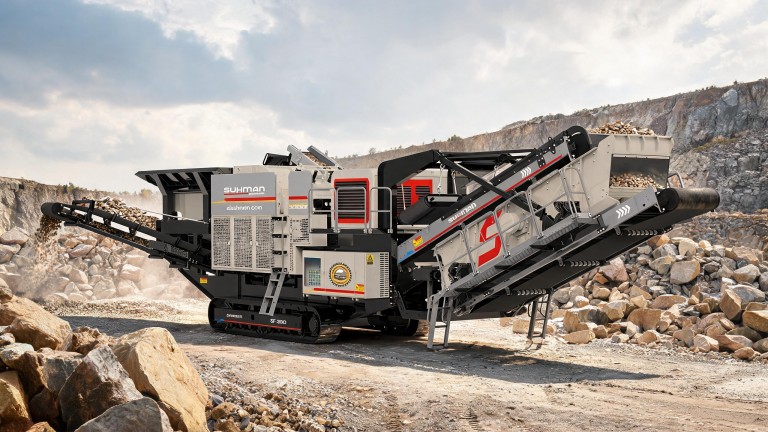
In a quarry, «plant» generally covers the complete circuit that turns blasted or ripped rock into saleable aggregate products: a feeder or grizzly, a primary crusher, downstream secondary and tertiary crushing stages, vibrating screens, conveyors and, often, a control system. As a quarry owner you must decide whether this equipment is fixed, mobile or semi-mobile.
A fixed plant is tied to one floor level and a planned life of many years. A tracked crushing and screening plant can extend, relocate or change the process flow without new civil works. Many quarries run both: a fixed primary for blast-run feed and mobile secondary/tertiary stages for high-spec chips. The evidence you need will come from your own site records, not from catalogues.
Every technical comparison begins with the material that arrives at the feed hopper. The same crusher model behaves differently on blasted granite, river gravel, limestone fines and contaminated demolition debris.
Critical feed properties are:
If you cannot provide these values, no manufacturer can responsibly size a plant. A quotation that skips this step is speculative. Before asking for pricing, fill in the material data sheet and, if the rock is non-standard, order a crushability test on a representative sample.
There is no universal answer, and the two options are not rivals in every quarry. Use the following logic:
A tracked jaw crusher is not always cheaper per tonne than a stationary cone circuit. At very high continuous output and constant feed quality, a well-engineered fixed installation often benefits from lower per-tonne operating cost because of permanent conveyors and stable power draw. The reverse is true when the quarry is dismantled and moved every three years.
The figures that govern this trade-off are site-specific. Fuel consumption and wear cost depend on the rock’s abrasiveness, crusher setting, feed distribution and operator discipline. Because a verified performance record is not available for this general comparison, any supplier’s claimed fuel or wear cost must be treated as a projection until confirmed by a site trial.
The table below does not compare machine specifications; it lists the ownership questions that must be answered with your own data or with a manufacturer’s written offer.
| Decision input | Why this matters | What must be confirmed |
|---|---|---|
| Feed material test report | Crusher type, chamber and speed depend on abrasiveness, crushability and feed size range. | Rock type, compressive strength, abrasion index, moisture, max block size. |
| Annual and peak tonnage | Determines required installed power and the number of operating shift hours. | Tonnes per hour sold, actual operating days, seasonal peaks. |
| Product portfolio | Different end products (road base, chips, railway ballast, asphalt aggregates) require specific crusher settings and screen cuts. | List of target products with particle size range and shape limits. |
| Relocation frequency | Defines whether tracks, wheels or a fixed foundation are most economical. | Planned working faces and expected lifetime of each face. |
| Power supply | Electric grid connection reduces fuel cost; a diesel generator adds autonomy but higher operating cost. | Available kVA, distance to grid line, noise and emission limits. |
| Local permit and transport constraints | Road permits, oversize movement and ground pressure affect equipment selection. | Axle loads, transport dimensions, road width and pit access. |
| Maintenance organisation | Mobile crushers require daily checks on wear parts, hydraulics and tracks; fixed plants shift maintenance to mechanical and structural parts. | Staff skills, distance to spare parts warehouse, workshop capacity. |
You are the source for the left-hand column. The right-hand column is the dialogue you open with a technical sales department.
Quarry directors often think that «mobile» automatically means «diesel». In fact, current mobile plants can be engineered for external electricity supply or diesel-electric drive. If a grid connection is close to the working face, an electric or hybrid option can lower fuel spend sharply, but it requires a cable management strategy and often a transformer or generator for start-up peak loads.
Your own energy tariff, grid capacity and fuel logistics determine which option wins. Without those three inputs, a calculation in euros or dollars per tonne is meaningless. Ask your supplier for a projected energy consumption per tonne under the operating conditions of your site; do not accept catalogue numbers without a calculation basis.
A quarry plant selection needs more than throughput. Use this list when reviewing proposals:
Do not allow a proposal to omit any of these items. Each one changes the price and the operating cost.
The most important inputs are the ones only you can supply. A manufacturer cannot decide for you on the following:
If you do not have the material test yet, you can still request preliminary comments, but you cannot expect a firm price or guaranteed performance. In that situation the right next step is not to compare more brochures, but to send a representative sample to the equipment manufacturer for analysis.
Because a mobile machine carries the cost of its own mobility: the undercarriage, hydraulic systems, onboard conveyors and, in many cases, a diesel engine. Those components add dead weight and energy demand to every tonne. A fixed plant uses lighter structural supports and direct conveyors; its energy cost per tonne in a stable high-volume process can be lower. However, the fixed plant does not follow the quarry face. When you move the face every few months, the reduced transport and reloading savings of a mobile system can overturn that cost difference.
Ask each vendor to state the external conditions assumed in the offer: feed gradation, operational availability, moisture, settings and material density. If the vendor refuses to show these assumptions, the offers are not comparable. Then ask for a demonstration of the plant at a site with similar rock. Until you have comparable input conditions, the tenders are descriptive documents, not measured commitments.
No. Screening may be unnecessary or even a bottleneck when all products can be sold as crusher-run material. In most aggregate quarries, however, screening creates the value by separating flaky oversize and directing it back to the crusher. The decision depends on your product list. If you sell only 0–32 mm crusher-run material, a screen may be overinvestment. If you sell 2–5 mm, 5–10 mm and 10–20 mm chips, screening is essential.
If your deposit contains a single uniform rock type, the quarry is expected to operate in one location for a long period, and the production goal is continuous base aggregate at the highest practical rate, a custom-designed stationary plant usually provides better process control and lower maintenance requirements over the full life. A mobile plant remains justified as a temporary solution or when you work on short-term extraction permits.
Feed material hardness is cited often, but the most forgotten factor is the shape and distribution of the feed. A crusher rated for 400 mm max feed can still choke if the feed contains an excessive proportion of fines or oversized lumps at once. Always specify a realistic feed gradation with the maximum compressive strength and the percentage of fines smaller than 10 mm. Without this, the crusher capacity statement has no reliable basis.
This article describes a general selection framework for public quarrying operations. It does not apply to:
In those cases, ask for a custom engineer study rather than selecting from standard catalogue configurations.
A quarrying plant purchase should start with a well-documented material report and a defined list of saleable products. Once you have those, you can compare mobile vs fixed concepts, evaluate the power arrangement, and only then analyse machine specifications. If you need to validate a specific project, prepare a brief with the six missing inputs listed earlier and discuss it through the technical enquiry route of the manufacturer. That will give you a factual basis for the next board decision.
Untuk references on this page: a full equipment catalogue and company background are accessible from the SUHMAN website — see mobile crushers and screens at SUHMAN and company profile for commercial enquiries.