Bạn vẫn chưa nhận được bản tính toán miễn phí và mức giá chính xác. Hãy để lại thông tin liên hệ, các kỹ sư của chúng tôi sẽ đưa ra giải pháp phù hợp riêng cho dự án của quý vị.
How to choose a quarrying plant: a practical buying guide for quarry owners
Select a quarrying plant by feed material, products, mobility, and power. Compare mobile vs fixed crushers, screens, and energy options with this practical
Short answer: a quarrying plant is not bought on machine size alone. You select the crusher, screen and power arrangement after you define four input groups: feed material, required products, relocation strategy and after-sales reach. When those inputs are missing, an offer is only a quotation, not a solution. The sequence below turns those inputs into a decision that can be justified at board level.
What «quarrying plant» actually means when you buy it
In a quarry, «plant» generally covers the complete circuit that turns blasted or ripped rock into saleable aggregate products: a feeder or grizzly, a primary crusher, downstream secondary and tertiary crushing stages, vibrating screens, conveyors and, often, a control system. As a quarry owner you must decide whether this equipment is fixed, mobile or semi-mobile.
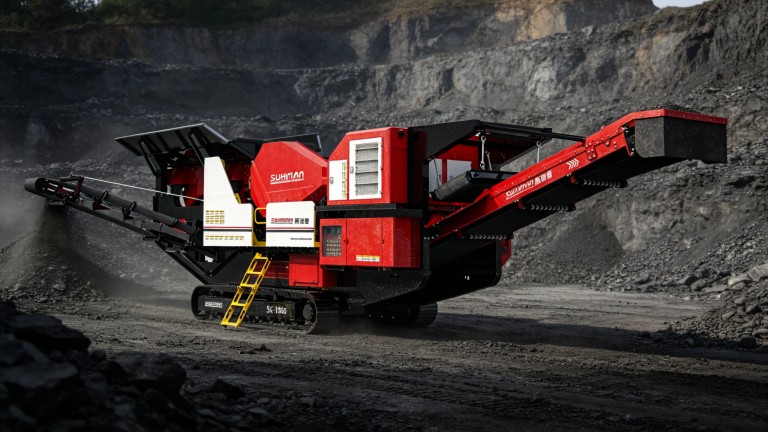
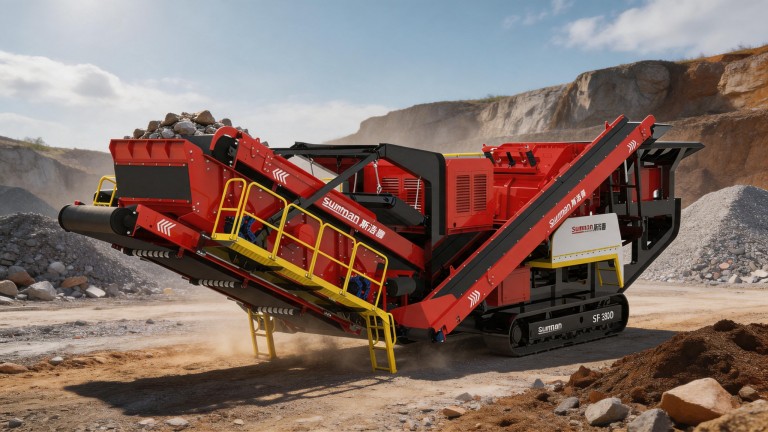
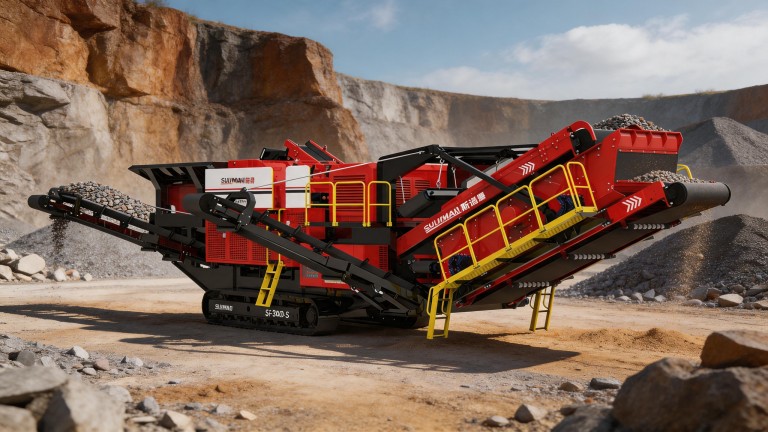
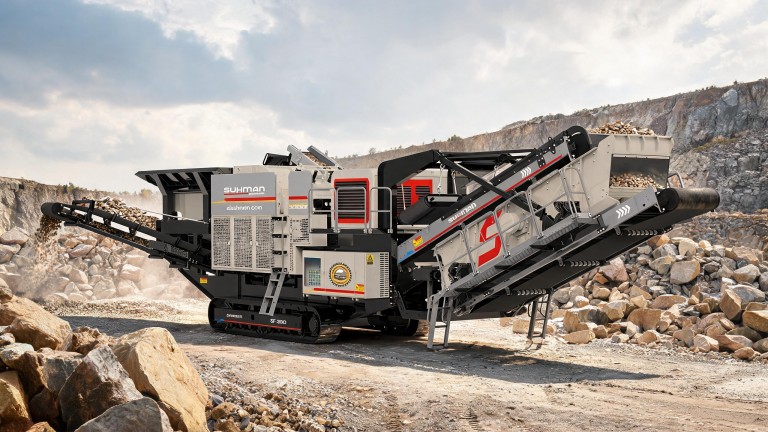
A fixed plant is tied to one floor level and a planned life of many years. A tracked crushing and screening plant can extend, relocate or change the process flow without new civil works. Many quarries run both: a fixed primary for blast-run feed and mobile secondary/tertiary stages for high-spec chips. The evidence you need will come from your own site records, not from catalogues.
Start with the feed, not with the crusher
Every technical comparison begins with the material that arrives at the feed hopper. The same crusher model behaves differently on blasted granite, river gravel, limestone fines and contaminated demolition debris.
Critical feed properties are:
Abrasive hardness – measured by an accepted test method, not by visual name of the rock.
Max feed size and gradation – including whether fines are removed before the primary.
Moisture and clay content – these decide whether a grizzly, a scalping screen or a washing stage is mandatory.
Blockiness and fracture – blocky feed can demand a jaw first stage; a slabby or less abrasive feed may allow an impactor.
If you cannot provide these values, no manufacturer can responsibly size a plant. A quotation that skips this step is speculative. Before asking for pricing, fill in the material data sheet and, if the rock is non-standard, order a crushability test on a representative sample.
Mobile or fixed: where the boundary sits
There is no universal answer, and the two options are not rivals in every quarry. Use the following logic:
Choose mobile or semi-mobile when the quarry faces advance quickly, the pit is multi-level, material is blended from different faces, or the products change seasonally.
Choose a fixed plant when the rock source is stable, the operation runs on a permanent concrete pad for more than a decade, and the process sequence is unlikely to change.
Choose mobile equipment inside an existing fixed circuit when you need to add a product, screen off a chip fraction, or create a temporary buffer stockpile.
A tracked jaw crusher is not always cheaper per tonne than a stationary cone circuit. At very high continuous output and constant feed quality, a well-engineered fixed installation often benefits from lower per-tonne operating cost because of permanent conveyors and stable power draw. The reverse is true when the quarry is dismantled and moved every three years.
The figures that govern this trade-off are site-specific. Fuel consumption and wear cost depend on the rock’s abrasiveness, crusher setting, feed distribution and operator discipline. Because a verified performance record is not available for this general comparison, any supplier’s claimed fuel or wear cost must be treated as a projection until confirmed by a site trial.
Mobile vs fixed plant — a decision matrix for the quarry director
The table below does not compare machine specifications; it lists the ownership questions that must be answered with your own data or with a manufacturer’s written offer.
Decision input
Why this matters
What must be confirmed
Feed material test report
Crusher type, chamber and speed depend on abrasiveness, crushability and feed size range.
Rock type, compressive strength, abrasion index, moisture, max block size.
Annual and peak tonnage
Determines required installed power and the number of operating shift hours.
Tonnes per hour sold, actual operating days, seasonal peaks.
Product portfolio
Different end products (road base, chips, railway ballast, asphalt aggregates) require specific crusher settings and screen cuts.
List of target products with particle size range and shape limits.
Relocation frequency
Defines whether tracks, wheels or a fixed foundation are most economical.
Planned working faces and expected lifetime of each face.
Power supply
Electric grid connection reduces fuel cost; a diesel generator adds autonomy but higher operating cost.
Available kVA, distance to grid line, noise and emission limits.
Local permit and transport constraints
Road permits, oversize movement and ground pressure affect equipment selection.
Axle loads, transport dimensions, road width and pit access.
Maintenance organisation
Mobile crushers require daily checks on wear parts, hydraulics and tracks; fixed plants shift maintenance to mechanical and structural parts.
Staff skills, distance to spare parts warehouse, workshop capacity.
You are the source for the left-hand column. The right-hand column is the dialogue you open with a technical sales department.
Power and energy economics: electric, diesel or hybrid?
Quarry directors often think that «mobile» automatically means «diesel». In fact, current mobile plants can be engineered for external electricity supply or diesel-electric drive. If a grid connection is close to the working face, an electric or hybrid option can lower fuel spend sharply, but it requires a cable management strategy and often a transformer or generator for start-up peak loads.
Your own energy tariff, grid capacity and fuel logistics determine which option wins. Without those three inputs, a calculation in euros or dollars per tonne is meaningless. Ask your supplier for a projected energy consumption per tonne under the operating conditions of your site; do not accept catalogue numbers without a calculation basis.
Technical checklist before you request a formal proposal
A quarry plant selection needs more than throughput. Use this list when reviewing proposals:
Closed-circuit versus open-circuit operation. If you produce chip fractions for concrete or asphalt, you usually need a closed circuit that returns oversize to the crusher. The proposal should show the return conveyor and its load.
Screen media type. For crushed stone, the aperture shape and media influence both skaking and blinding. Screening plants with only punched plate may fail on wet, clayey feed.
Crusher setting range. For a jaw crusher, a close side setting (CSS) range determines which nominal rock size you can produce. Confirm whether the setting is hydraulic or manual.
Metal detection and prescreening. In a shot rock quarry, a magnet and an overband separator are optional unless the rock source carries steel. For recycling applications they are mandatory.
Safety and access to service points. Routine greasing and wear part replacement must be possible without dismantling the feed hopper. Check how long a liner change takes according to the manufacturer’s procedure.
Remote control and automation. Automation helps maintain constant CSS and protects the plant from overloading. Ask which parameters are actually sensed, not just displayed.
Do not allow a proposal to omit any of these items. Each one changes the price and the operating cost.
What you must provide before a final selection
The most important inputs are the ones only you can supply. A manufacturer cannot decide for you on the following:
Material characterisation results from testing of the rock as it will be extracted, not from a geological map.
Product specifications such as general crushing requirements, flakiness index, sand equivalent or other downstream requirements.
A life-of-mine plan pointing out whether the operation has moving faces.
Beach of permitted hours and road access – many quarries have night-time or weekend restrictions that determine shift patterns.
Own operating budget – this tells you whether a faster payback from higher throughput is justified against a higher purchase price.
If you do not have the material test yet, you can still request preliminary comments, but you cannot expect a firm price or guaranteed performance. In that situation the right next step is not to compare more brochures, but to send a representative sample to the equipment manufacturer for analysis.
FAQ — Frequently asked questions from quarry owners
Why is a mobile crushing plant often more expensive to run per tonne than a fixed system?
Because a mobile machine carries the cost of its own mobility: the undercarriage, hydraulic systems, onboard conveyors and, in many cases, a diesel engine. Those components add dead weight and energy demand to every tonne. A fixed plant uses lighter structural supports and direct conveyors; its energy cost per tonne in a stable high-volume process can be lower. However, the fixed plant does not follow the quarry face. When you move the face every few months, the reduced transport and reloading savings of a mobile system can overturn that cost difference.
How do I compare a mobile crusher offer with a stationary plant proposal if my site data is incomplete?
Ask each vendor to state the external conditions assumed in the offer: feed gradation, operational availability, moisture, settings and material density. If the vendor refuses to show these assumptions, the offers are not comparable. Then ask for a demonstration of the plant at a site with similar rock. Until you have comparable input conditions, the tenders are descriptive documents, not measured commitments.
Does a screening plant belong inside the crushing circuit for every quarry?
No. Screening may be unnecessary or even a bottleneck when all products can be sold as crusher-run material. In most aggregate quarries, however, screening creates the value by separating flaky oversize and directing it back to the crusher. The decision depends on your product list. If you sell only 0–32 mm crusher-run material, a screen may be overinvestment. If you sell 2–5 mm, 5–10 mm and 10–20 mm chips, screening is essential.
When should a quarry owner avoid choosing a mobile plant?
If your deposit contains a single uniform rock type, the quarry is expected to operate in one location for a long period, and the production goal is continuous base aggregate at the highest practical rate, a custom-designed stationary plant usually provides better process control and lower maintenance requirements over the full life. A mobile plant remains justified as a temporary solution or when you work on short-term extraction permits.
What is the most critical specification that quarry owners forget?
Feed material hardness is cited often, but the most forgotten factor is the shape and distribution of the feed. A crusher rated for 400 mm max feed can still choke if the feed contains an excessive proportion of fines or oversized lumps at once. Always specify a realistic feed gradation with the maximum compressive strength and the percentage of fines smaller than 10 mm. Without this, the crusher capacity statement has no reliable basis.
Boundaries of this guidance
This article describes a general selection framework for public quarrying operations. It does not apply to:
Special waste or heavily contaminated soil – requires extra steps for dust collection, metal separation and hygienic discharge;
Hard-rock mining applications requiring continuous high-volume extraction from a permanent crusher chamber;
End-product segments with strict shape/particle standards where a fully calibrated plant with multiple crushing stages is mandatory.
In those cases, ask for a custom engineer study rather than selecting from standard catalogue configurations.
Your next decision point
A quarrying plant purchase should start with a well-documented material report and a defined list of saleable products. Once you have those, you can compare mobile vs fixed concepts, evaluate the power arrangement, and only then analyse machine specifications. If you need to validate a specific project, prepare a brief with the six missing inputs listed earlier and discuss it through the technical enquiry route of the manufacturer. That will give you a factual basis for the next board decision.
Untuk references on this page: a full equipment catalogue and company background are accessible from the SUHMAN website — see mobile crushers and screens at SUHMAN and company profile for commercial enquiries.