Bạn vẫn chưa nhận được bản tính toán miễn phí và mức giá chính xác. Hãy để lại thông tin liên hệ, các kỹ sư của chúng tôi sẽ đưa ra giải pháp phù hợp riêng cho dự án của quý vị.
Buying a Jaw Crusher for Stone: Specification Guide
Learn the key specifications—feed size, throughput, and product requirements—plus when a jaw crusher is not suitable. Base your purchase on verified data.
If you are buying a jaw crusher for a crushed-stone quarry, make the specification first and the brand decision second. The machine you actually need is defined by the rock you feed, the tonnes you must move per hour, and the finished product that leaves the site — not by price lists. Without those three confirmed numbers, any recommendation is guesswork.
This article gives you the decision logic, the checkpoints to go through before you talk to a sales engineer, and the cases in which a jaw crusher is the wrong tool for your line.
What a jaw crusher decides in a stone production line
A jaw crusher works as the primary stage. Its job is to take the largest boulders a quarry can safely produce and break them down to a size that the next machine — usually a cone crusher or an impact crusher — can accept. The choice of jaw unit sets two things for the whole line: the maximum feed dimension the pit can deliver, and the throughput ceiling of the entire plant. If either of those is miscalculated, the secondary stage stands idle or the primary stage becomes the bottleneck.
It also decides operating cost structure. A jaw crusher crushes by compression between two plates, which makes it durable on hard, abrasive rock but less effective at shaping the final grain. You are not buying this machine to make a finished product; you are buying it to keep the rest of the plant fed at a controlled rate.
The three specifications you must settle before asking for a quote
Most buying mistakes come from skipping one of these:
Feed conditions. The quarry owner must know the rock type, its hardness class, the moisture level, and the dimensions of the largest block entering the crusher. Hardness determines whether the machine will wear quickly or give a predictable service life. Moisture and clay content determine whether the crushing chamber will block.
Hourly throughput. This is not the same as what you want to sell. Throughput is measured in tonnes per hour of feed material, and it must account for peaks in production and downtime in upstream loading. The unit must be specified as «tonnes per hour of feed at X closed-side setting,» because throughput changes with the discharge gap.
Required product and downstream stage. The jaw crusher’s discharge size must match the opening acceptance of the next machine in your line. Determine whether you will put a cone crusher, an impact crusher, or a screen directly after it.
The table below is a working checklist. Fill it before you contact the supplier. The model choice for your site cannot be made from these pages alone because the plant configuration, the actual material test, and the site conditions on the quarry floor determine the figure.
Parameter you must define
Why it drives the decision
Where it must be confirmed
Rock type and estimated hardness
Compression crushing suits hard rock; very abrasive material changes liner life expectations
Geologist report or abrasiveness test
Maximum feed block dimensions
Sets the inlet opening requirement of the frame
On-site measurement of the largest stones from the face
Moisture and clay fraction
Determines risk of clogging in the chamber and feeder
Field sample observation, especially after rain
Required throughput, tonnes per hour
Sets the size and drive of the primary unit
Production plan, not marketing goals
Discharge setting and downstream feed size
Determines in what configuration the jaw is operated
Technical specification of your secondary crusher
Electrical or diesel drive availability
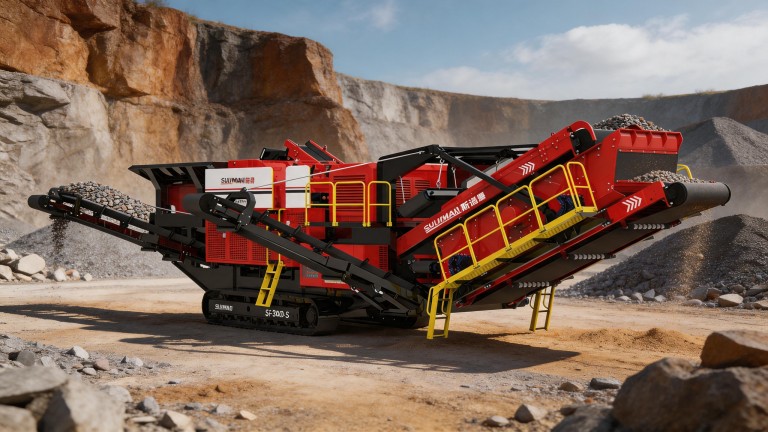
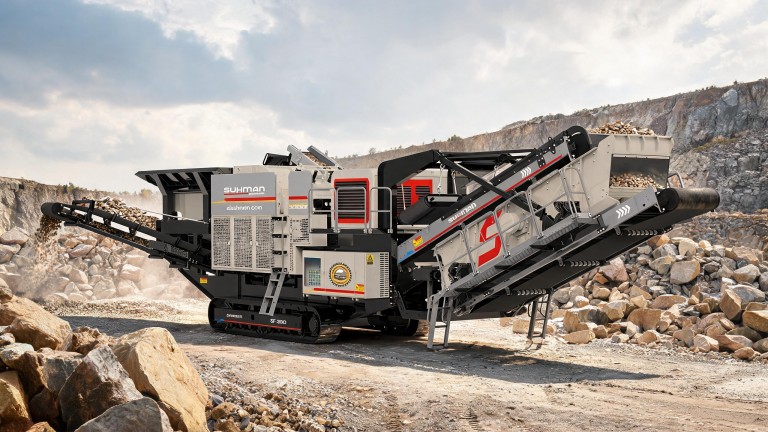
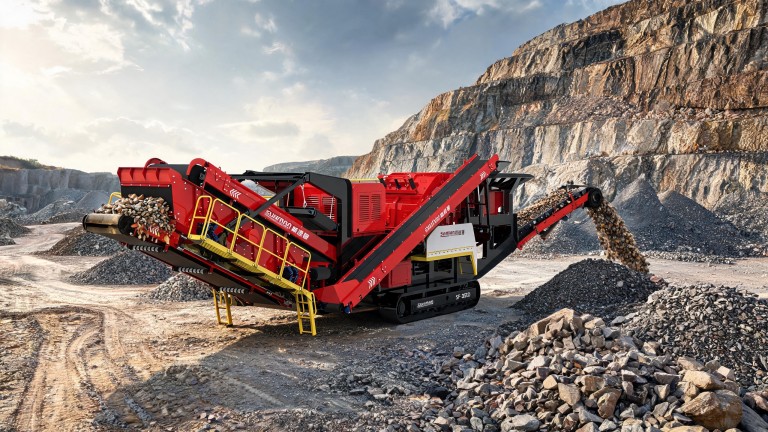
Mobile units differ in power and drive layout
Local grid capacity and site permit
Site logistics and transport limits
Mobile tracked machines have transport width and weight boundaries
Road access and site layout survey
With the table filled out, approach the manufacturers’ catalogue and compare only the machines that fit your opening sizes and throughput target.
Where a jaw crusher quotation needs caution
A quotation is only meaningful when it states the closed-side setting at which the throughput was calculated. Jaw crusher output without a defined setting is an advertising number. Ask for the capacity curve — not a single tonnage figure — and look at the curve at the gap width you actually intend to run.
If the sales engineer cannot show the basis of the throughput claim, treat the number as unverified. The same applies to fuel consumption on a mobile diesel-powered unit: in a quarry, consumption fluctuates sharply with feed hardness, feeder load, and idling time, so a fixed litres-per-hour figure is an estimate. What matters for your operating budget is consumption per tonne moved, which you can only get from site measurement at your rock conditions.
One calculation method you can use before the supplier is involved
You can estimate the mobile plant’s daily output capacity with a simple formula, but mark clearly that this is an engineering estimate, not a measured result:
Daily production estimate = throughput in tonnes per hour × operating hours per day × site availability factor.
The assumption here is that upstream loading never starves the crusher and that the secondary stage never blocks it. In most real quarries, availability factor sits well below 100 percent because of loader movement, changeovers, and weather stoppages. Use 0.8 as the starting assumption if you have no better data, then adjust after you measure actual running time in your own pit. This formula tells you how much buffer you need in the quoted throughput — it does not replace a test run.
Suitability boundary: when the jaw crusher is not your answer
Do not buy a jaw crusher when your requirement is single-stage production of finished cubic aggregate from naturally small feed. If your quarry produces a homogeneous feed of medium size and the end goal is shaping and fines content, an impact crusher will often give a better result with less investment in secondary equipment.
The second case where a jaw crusher works poorly is sticky clay-laden rock with high moisture. Compression crushing pushes wet, plastic material into the discharge zone, and blockage becomes a recurring event. If your deposit near the surface is weathered, or the wet season changes the stone’s behaviour, you must confirm whether the feeder and chamber design handles that material before you place an order.
The third boundary is low tonnage. A jaw crusher is engineered for continuous heavy primary duty. If operation is seasonal, the daily volume is small, and you run intermittently with frequent startups, consider whether a mobile impact or a well-configured screening system is the lower-cost alternative.
FAQ
Which jaw crusher specs matter most for a granite quarry?
For granite, the deciding inputs are the maximum rock block size from the face and your target tonnes per hour of feed. Compression-type machines are appropriate for hard igneous material, but the exact model choice depends on the measured feed dimensions and the discharge setting that your secondary crusher accepts. You must also state whether your site runs on grid electrical power or on a diesel-hydraulic mobile unit, because that changes the drive configuration. These project parameters — model, configuration, and material test results — are the missing inputs a buyer must supply before a final selection is documented. Where precise throughput figures for concrete models are not published, treat the quotation until the manufacturer presents the full capacity curve and the test basis.
What is the difference between buying a tracked mobile or a stationary jaw unit?
All else equal, the tracked mobile jaw crusher is bought when the deposit face moves, when relocating the unit between pits is planned, or when the quarry lacks permanent foundations and power connections. A stationary installation is justified when the deposit is stable, the layout is permanent, and the plant runs for years at one location without reconfiguration. Because transport width and weight limit a tracked unit, a stationary machine with the same inlet opening is usually expected to carry a larger main unit — confirm this against the supplier’s layout drawing. The choice is logistical and geological, not purely a matter of price.
When is the wrong time to buy a jaw crusher for stone?
The wrong time is when you are replacing a crushing stage without measuring your own feed. If you do not have a record of the largest block size from the blast pattern, sampled moisture variation across seasons, and daily production targets from the sales plan, a purchase made now is likely to be oversized or undersized. It is also the wrong decision if the only reason is that «the old unit failed» without root-cause analysis of whether the failure was the crusher or upstream feeding practices.
How should I verify real production output before buying?
Verify by running a test on your own material at a commercial site. Ask the supplier for a test pit reference with the same rock class, and clarify that the quoted output was measured with a defined closed-side setting and discharge product. During warranty and commissioning, measure actual tonnes per running hour over a full shift at your site. The measured result — output, product dimension, test duration, and sampling method — is the evidence you keep in your records. No marketing brochure figure substitutes for that field verification.
What information must I give the seller to get a precise price?
Provide the material test details, maximum feed block dimensions, target throughput per hour, site location and elevation, available power supply, and the end-product specification. Deliberately delay the price discussion until you have sent the complete technical brief. If the seller quotes without receiving those inputs, the number is not comparable to other offers. Use the project parameters listed earlier and convert them into a formal inquiry document — the manufacturer’s contact page for plant calculation can guide which documents the technical team expects.
Missing inputs you must still provide
This page does not contain model-specific data — no catalogue dimensions, machine weight, or operating outputs — because those values depend on the current unit line, its configuration, and your field data. If you want to proceed:
Your material test result from the pit.
Photographic documentation of the largest block at the feeder.
Annual production plan in tonnes per year.
Site location and whether you require a mobile or fixed layout.
Start with the product range or contact the supplier with those documents for a specification-matched response. For background on how the manufacturer positions its units, the company overview and the technical articles section give context without replacing your own site measurement.
Buy the specification first. Then buy the machine that matches it.