Bạn vẫn chưa nhận được bản tính toán miễn phí và mức giá chính xác. Hãy để lại thông tin liên hệ, các kỹ sư của chúng tôi sẽ đưa ra giải pháp phù hợp riêng cho dự án của quý vị.
Evaluate coal crusher suppliers using material data: hardness, moisture, contamination, and product specs. Learn the difference between measured facts and
When a quarry owner or director searches for a “crusher coal supplier,” the real question is rarely about the brand name. It is about whether the supplier can match a specific coal type to the right crushing principle, support the machine across seasons and distance, and prove performance with measured data rather than verbal assurances. At the time of writing, SUHMAN does not have a published specification sheet for a dedicated coal crusher model, so this page focuses on how to structure that buying decision. The selection logic below is valid for coal crushing lines, but the supplier must provide data, not claims.
What a coal crusher supplier must provide before you sign
A responsible supplier cannot quote a correct machine without five input values from your side: material hardness (for coal, usually measured by abrasiveness and compressive strength rather than Mohs alone), maximum feed lump size, surface and inherent moisture, clay or rock contamination percentage, and the final product size specification. These are not optional survey fields. Each one changes the crushing chamber, the speed of the rolls or hammers, and the configuration of the scalping screen above the crusher.
If the supplier asks only for “production tons per hour,” that is a red flag. Tonnage alone does not determine the machine. Coal at 15% surface moisture behaves differently from dry coal at 5%, and run-of-mine coal with 20% roof rock contamination needs a different plant than clean coal from a preparation plant.
The decision starts with coal properties, not with the brand
For coal, the crusher choice is dictated by two opposing requirements: reducing the lump to a marketable size while minimizing the generation of fines (dust and undersized material below the saleable fraction). Impact crushers and hammer crushers are energy-efficient for soft materials, but they can over-crush, producing an excessive amount of <6 mm dust. Jaw crushers handle large lumps and rock contamination but create flaky particles and have a higher wear profile per ton of coal. Roll crushers and sizers are typically the engineering answer for hard coal with a defined top size, because they crush by compression and shear rather than by impact.
However, this is a recommendation based on standard crushing engineering, not on any SUHMAN test result. The supplier must confirm which machine family they manufacture and what test evidence they have for your specific coal. Do not let a generic “we crush everything” statement replace a documented trial with your feed sample.
Measured facts, engineering estimates, and recommendations — know the difference
In the crushing business, the distinction between these three levels is a contract issue:
Measured facts: data from a pilot test on your coal sample — actual product curve, actual wear life per ton, actual power draw during the test. If the supplier cannot provide a signed test report, treat their numbers as estimates.
Engineering estimates: calculated throughput based on the crusher’s theoretical capacity curves, adjusted for bulk density and moisture. These are useful for planning but cannot be used for contractual performance guarantees.
Recommendations: the supplier’s opinion on crusher type, screen aperture, and circuit design based on experience with similar feed. Good as a starting point, worthless as a guarantee.
A contractually valid performance target is written as a measured fact tied to a specific feed: “for coal of ≤80 MPa compressive strength, ≤50% moisture, and ≤400 mm feed, the plant will sustain X tons per hour of −50 mm product over a 4-hour stabilized run.” Any wording that omits the feed characterization is not a performance guarantee. Insist on this phrasing in your tender.
Mobile or stationary: a trade-off, not a trend
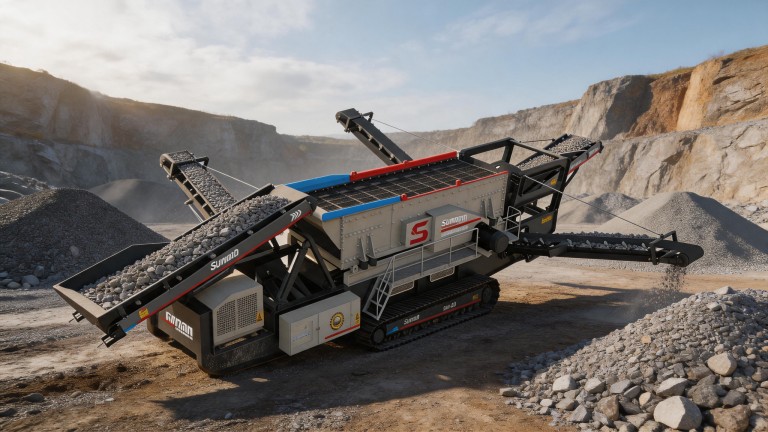
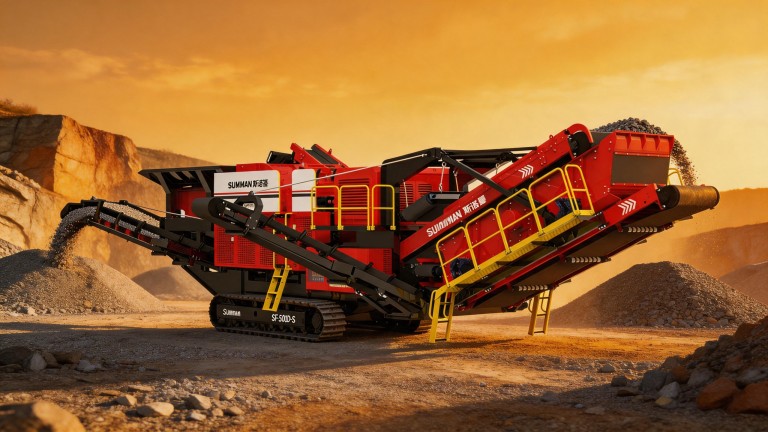
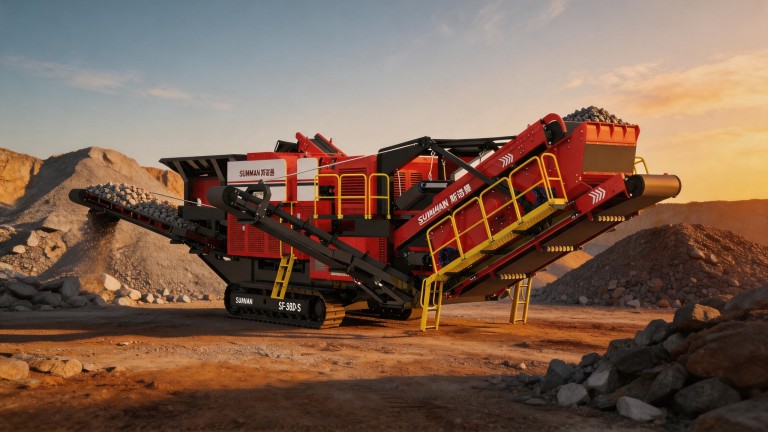
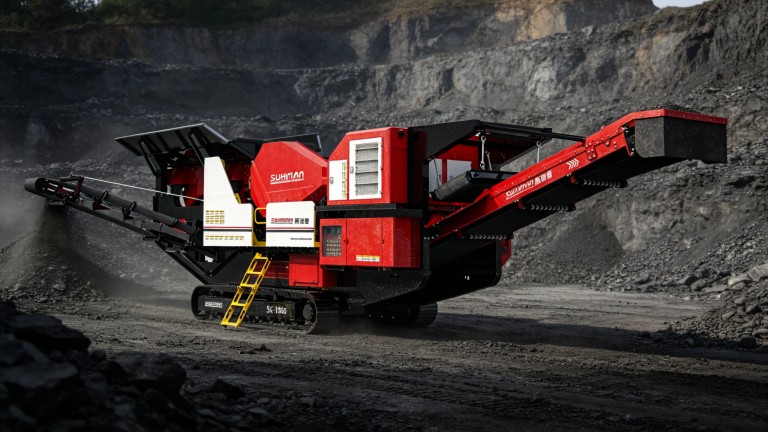
For an established quarry or mine pit, stationary plants often have a lower cost per ton over a 10-year life because the steel structure and conveyors are optimized for one fixed flow. Mobile plants win when the coal face moves quickly, when the operation is short-term, or when permits require you to move the plant between deposits. A mobile jaw or impact unit also shortens civil works time on site — you avoid a concrete foundation and long conveyor tunnels.
The trade-off you must accept with mobile equipment is the higher transport and setup complexity for the rest of the line, including screens and conveyors. If your project requires a complete crushing and screening line of more than two stages, ask whether the supplier delivers a fully mobile train or a mixed solution: one mobile crusher feeding a semi-mobile screening unit. — for a final answer on SUHMAN’s mobile configuration, the supplier must provide line diagrams and a model list.
Supplier evaluation checklist
Use the table below as your working document. It does not replace a technical audit, but it forces the missing input to the surface instead of letting the sales conversation gloss over it.
Decision factor
Why it matters
What you must confirm with the supplier
Crusher type match to coal hardness
Hard coal with rock contamination needs compression crushing; soft brown coal needs controlled impact
Supplier’s written recommendation for *your* coal, with compressive strength value stated
Feed top size
Undersized crusher inlet causes bridging and downtime
Maximum lump dimension the crusher accepts, in mm, plus recommended feeding method
Moisture tolerance
10%+ moisture causes clogging in screens and crushers without proper clearance
Test report or documented reference for similar moisture level
Product curve control
Over-crushing produces unsaleable fines
P80 and fines percentage from a measured test on your sample, not a brochure curve
Spare parts lead time
Crusher downtime has a direct cost per day in a quarry operation
Confirmed lead time for hammers, jaw plates, or rolls — and the nearest warehouse node
Electric motor vs diesel drive
Site power availability determines which drive is feasible
Motor power, starting method, and if diesel, fuel-related emission certification
Transport and climate
Russian and CIS sites often require cold-weather operation and heavy-haul logistics
Operating temperature range and dismantled transport dimensions
The right side of this table has no invented numbers because the missing inputs are site-specific. Bring these items to the supplier conversation: your coal sample, a sieve analysis of the feed, the required product spec, and your allowable operating days per season. Without the sample, any number the supplier gives you is an estimate.
Suitability boundary and cases where the recommendation does not apply
The guidance above applies to crushing of coal as a saleable energy product, typically from surface mines or open pits, with moderate to low rock contamination. It does not apply to coal with extremely high abrasiveness, such as anthracite blended with quartzite gangue exceeding roughly 30% hard rock content — in that case, a conventional coal crusher will suffer premature wear, and you should evaluate a rock-crushing jaw or cone circuit instead. The recommendation also does not apply to underground coal crushing applications where the machine must operate within mine airway constraints.
A final selection cannot be made from this page. The buyer must supply the coal sample test results and the site power situation. The supplier, in turn, must supply certified equipment documentation and measurable performance figures. If either side skips that step, the project will absorb the cost later in the form of unplanned screen changes, crusher blocking, or failed product quality.
FAQ — Часто задаваемые вопросы
Because this decision is often made under time pressure, here are the questions buyers typically ask after the first technical meeting.
What is the difference between a coal sizer and a hammer crusher for a quarry?
A sizer (roll crusher) reduces coal by slow-speed shear and compression, which tolerates wet and sticky feed and produces a more consistent top size with fewer fines. A hammer crusher reduces by high-speed impact, which gives a higher reduction ratio in one pass but generates more fines and has higher wear in abrasive feed. For hard, dry coal where top size control matters, the sizer is usually the safer choice. For soft, wet coal in large volumes, review a pilot result before deciding.
Should I buy a mobile coal crusher or a stationary plant for my site?
Choose mobile if the coal face moves every few months, the site lacks a permanent civil foundation, or you need quick relocation between permits. Choose stationary if you have a fixed deposit and plan to operate for more than five years with a stable production flow. A stationary plant typically has a lower maintenance cost per ton once built, but the civil works and conveyors make it a larger upfront commitment.
What happens if my coal has high moisture content?
High surface moisture — above roughly 10–12% — causes blinding on the screen deck and clogging in the crushing chamber if the machine lacks appropriate rotor clearance or roll speed. A supplier may counter this with a scalping screen with larger apertures, an impact bar arrangement, or a separately driven vibratory feeder. The only reliable way to verify the machine can handle your coal is a trial with a representative wet sample.
How long does it take to get spare parts for a coal crusher in the CIS market?
The lead time depends entirely on the supplier’s distribution network, and there is no accurate published figure for SUHMAN parts delivery available at this time. Before purchasing, request the supplier’s spare parts list with the nearest stocking location, confirm the paid lead time in writing, and determine which wear parts (hammers, rolls, screens) you must keep on site. For a two-week crushing season, one broken screen can shut the entire line — so the spare parts contract may matter more than the crusher price.
What are the minimum inputs I must give to get a reliable quote?
Provide: (1) a moisture content figure from a lab, (2) the maximum feed lump size in millimeters measured on site, (3) the mineral composition of the coal including contamination percentage, (4) the required product size distribution, and (5) available electrical power in kW. If you cannot determine the rock contamination percentage, the supplier should sample and test before quoting. Without a feed sample, request a budget price only, not a performance guarantee.
For more context on selecting the right machine for your site, review the SUHMAN equipment catalog and the company engineering background. The SUHMAN contact page allows you to request a preliminary calculation with your feed inputs; be prepared to submit your coal sample data so the response is grounded in measured values rather than estimates.