Aún no has recibido tu cotización gratuita ni el precio exacto. Déjanos tus datos de contacto y nuestros ingenieros prepararán una solución personalizada para tu proyecto.
How to Choose a Crusher for Construction and Demolition Waste
Learn how to select a mobile jaw crusher for construction waste. Key factors: feed composition, rebar, moisture, output specs, magnetic separator, and site
Your question is about selecting a crusher for construction waste (строительный мусор). The direct answer: you do not need a specialized «garbage crusher.» You need a mobile jaw crusher for primary reduction followed by a magnetic separator, and, in most cases, a screen to produce certified recycled aggregates. However, a final model choice cannot be given yet; it depends on measured material properties and your target product specification, not on general descriptions of the material.
Define the goal before choosing the machine
A quarry owner or director approaches construction waste differently than a demolition contractor. You are likely asking because you see an opportunity: produce recycled crushed stone or sand for road base or concrete production. Or you have a volume of concrete slabs, foundation fragments, and brick that must be removed from a site.
These two goals require different equipment arrangements. For the first, you may need a three-stage line with a screen and possibly a cone or impact crusher for shaping. For the second, a single jaw crusher that reduces material enough for transport might be sufficient. Decide what the output is: a sellable fraction or just reduced volume for disposal.
The difference between clean concrete and mixed demolition debris
Construction waste is a category, not a single feed material. The crusher setup and the wear parts depend entirely on what is actually in the pile.
Reinforced concrete structures: manageable with a jaw crusher, but rebar creates a continuous ferrous contamination problem. Downstream magnetic separation is mandatory. The crusher’s discharge opening must be set so that rebar does not wrap around the shaft or jam the toggle plate; this is an operational setting, not a fixed spec.
Brick and ceramic waste: high silica content, abrasive. A jaw crusher will process it, but wear life will be on the level typical for abrasive rock. If the waste contains more than 20–30% brick, the product shape and fines content must be tested, not assumed.
Mixed debris with wood, plastic, gypsum board: this material cannot be sent through a standard jaw crusher without damage to the conveyor belts and clogging of the screening media. A pre-screen (grizzly or vibrating grid) to remove fines and light contaminants is essential, and manual or mechanical picking of bulky items is required before the feed enters the crusher.
Asphalt millings: not concrete waste. At ambient temperature, asphalt is plastic and will wrap around the crusher jaws, reducing throughput dramatically. This requires a different machine configuration, likely an impact crusher with a specific rotor design, or a mobile screen with a crusher designed for reclaimed asphalt pavement (RAP).
For a quarry owner, the most valuable scenario is clean or lightly reinforced concrete because it behaves predictably and yields a high-quality aggregate after crushing and screening.
The machine selection decision: table for buyer input
No reliable specification comparison can be published without model data and verified test results. Instead, use this table as the decision framework. Each row contains the input you must obtain or confirm before asking for a quote. Do not accept a recommendation built on anything less.
Decision input
Why it matters
Measurement to provide
Who confirms
Feed material type and source
Determines crusher type (jaw vs. impact vs. cone), not just the brand.
Percentage of concrete, brick, asphalt, and soil contamination in the pile.
Site inspection by the buyer; photo/video evidence.
Maximum feed size
Jaw crusher intake must be at least 1.15–1.25x the largest piece.
Measure the three largest pieces of reinforced concrete in the pile. Do not estimate by eye.
Buyer/site engineer.
Desired output product
Sets the crushing stages and the screen deck configuration.
Sellable fraction size (e.g., 0–20 mm, 20–40 mm) and the required standard (e.g., GOST 32703).
Buyer, based on local market demand.
Acceptable moisture and clay content
Wet fines clog the screen; sticky material reduces jaw crusher capacity compared to dry feed.
Moisture percent from a sample; visual check for clay lumps.
Buyer with a simple drying test.
On-site power supply
Diesel mobile units are autonomous; electric units require a grid connection or a genset sized for the motor start.
Available connection in kW, or requirement for autonomous diesel operation.
Buyer/site electrician.
Permitted noise and dust limits
Determines whether a tracked crusher is allowed on-site or whether a mobile-but-not-tracked unit with dust suppression is required.
Local municipal regulations for noise (dB) and particulate level.
Buyer/local authority.
Formula for expected throughput: not a simple number
Manufacturers quote gross throughput at factory conditions, which you will not encounter. For real jaw crusher planning, use a conservative reduction formula based on the closed side setting (CSS):
Production estimate (t/h) = Bulk density of material (t/m³) x Crusher throughput at CSS (from OEM chart) x Material factor x Feed factor x Moisture factor.
Material factor: 1.0 for clean, blasted limestone; 0.7–0.8 for reinforced concrete with rebar and embedded steel; 0.5–0.6 for mixed demolition debris with brick content above 30%.
Feed factor: 0.9 if less than 20% of feed is undersized (already smaller than the CSS); 0.7 if the feed contains a high proportion of fines or oversized pieces that reduce the crushing chamber efficiency.
Moisture factor: 1.0 for dry material below 3% moisture; 0.8 for 3–6% moisture; below for wet, sticky clay-bearing feed.
This estimate is for jaw crushers in primary duty. For concrete with rebar, add a downtime factor of 10–15% of operating time for the removal of trapped metal and clearing jams, unless the installation has a robust pre-separation system. No OEM chart substitutes for this installation-level planning. Where formula factors are selected by judgment, this is an engineering estimate, not a measurement.
The magnetic separator: not optional when processing reinforced concrete
For any concrete waste with reinforcing mesh or bars, you must install a magnetic head pulley or an overhead magnetic separator immediately after the crusher discharge. The steel mass in concrete is typically 1–2% of the total weight, but the effect on downstream equipment is disproportionate.
The separation efficiency is not 100%. Depending on the magnetic separator strength and the burden depth on the conveyor, recovery is an engineering estimate in the 85–95% range. The remaining steel leaves the product stream. If you sell recycled aggregate or use it in concrete, that residual steel is a specification violation. Smaller pieces of wire are removed more efficiently by a magnetic head pulley with high belt speed; larger tangled pieces require an overhead suspended magnet with manual removal.
Where the recommendation does not apply
This logic applies to concrete and brick waste from demolition or construction. It does not apply to the following situations:
Contaminated excavated soil (грунт): a crusher is irrelevant; you need a screener to separate rocks and debris from soil, not a jaw crusher.
Asphalt pavement: requires an impactor or an asphalt-specific crusher with different crushing dynamics; jaw crushing produces a flat, elongated particle that fails asphalt aggregate stability tests.
Mixed municipal waste: contains high volumes of non-mineral material; a crusher will face fire risk and continuous shutdowns. You need a shredding and sorting line, not a crushing plant.
Waste containing large monolithic steel beams: feeding beams directly to a jaw crusher can damage the pitman and toggle plate. These must be pre-cut with a hydraulic shear.
For these materials, contact the equipment supplier with a full material characterization for an alternate recommendation.
The missing inputs you must provide for a final selection
A technical editor or an equipment manufacturer cannot make a valid crusher selection now because critical data is absent. Without inventing values, prepare the following before requesting a final quote or engineering calculation:
Certified material analysis: a sieve analysis of the largest 10 pieces, an estimate of rebar percentage by weight, a free moisture test, and confirmation whether brick or ceramic content is above 5%.
The exact product specification: the target fraction (e.g., 0–20 mm for road base underlayment) and the standard you must conform to (GOST, EU, or other). This dictates the number of crushing stages.
Measured throughput target: your required annual production rate in tons per year, not a vague «as much as possible.» This distinguishes a single shift or double shift crusher sizing.
Logistics and site layout: whether the crusher must move between sites weekly or operates at a fixed yard for five years. A tracked crusher costs more, but it eliminates crane and transport costs when moving frequently between demolition sites.
When a jaw crusher alone is sufficient
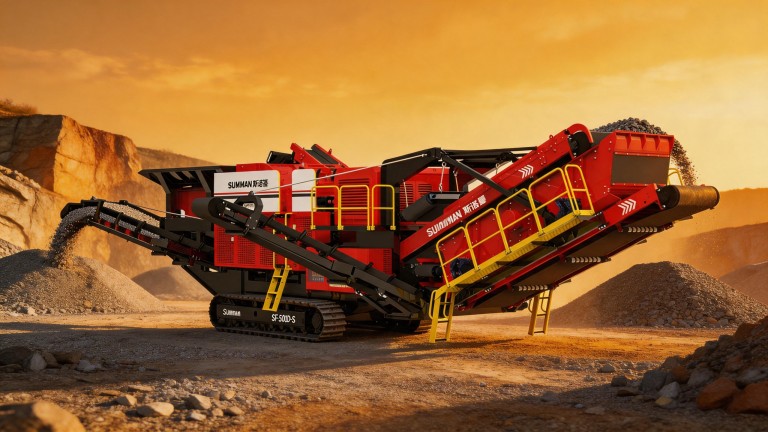
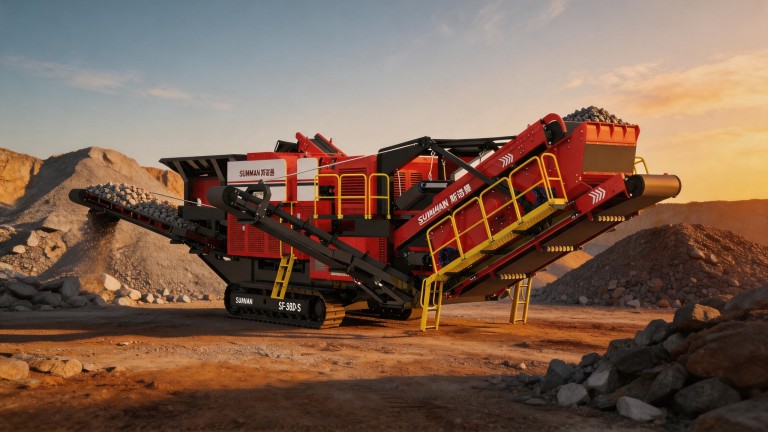
If the project scope is reducing concrete foundation blocks to a rubble size (e.g., under 200 mm) for use as haul road fill or disposal at a landfill with a volume-based fee, a single tracked jaw crusher with a magnet is the correct investment. Do not pay for a screening plant or a secondary crusher. The higher purchase price and the complexity of a full crushing and screening train will not be recovered because the product value is low.
If the scope is producing certified sellable aggregates, then a jaw crusher as the primary unit followed by a mobile screen and possibly a cone crusher for the oversize fraction is the correct line. Different machinery: the jaw crusher reduces, the screen classifies, the cone crusher shapes. The oversight here is the common reasoning error «we already have a jaw crusher, so we can just add a screen» — this logic fails when the jaw discharge is flat; a cone crusher (or a second impact crusher) is needed for particle shaping, but that requires a higher investment in a second crushing chamber.
FAQ — Frequently Asked Questions for concrete and demolition waste crushing
#### How is a jaw crusher sized for a demolition site if I cannot measure the pile accurately? The feed size is not measured from the top pile photo. You must measure three actual pieces at the largest dimension across the middle of the piece. If the pile is visually heterogeneous, take ten random pieces and pick the worst three. The crusher intake opening must be 1.15–1.25x the largest piece width, letting the piece enter without forcing. If you cannot transport the largest pieces to a measurement point, treat that as a reason for needing a hydraulic breaker to pre-commute material, which is an additional equipment line, not a crusher setting.
#### What is the difference in crusher type for processing concrete versus natural stone? Concrete with rebar requires slow, high-force compression to crack the cement matrix and yield the aggregate. A jaw crusher or a slow-speed impact crusher is suitable. Natural stone for road base is handled by a jaw crusher for primary and an impact crusher or cone crusher for secondary, depending on the hardness and fed abrasiveness. The key distinction is the rebar and steel content in concrete, which leads to far more frequent downtime, not just a change in wear parts. High-speed horizontal shaft impactors that work well on limestone will suffer hammer wear and a decrease in production on reinforced concrete waste, because the steel pieces overload the rotor.
#### My demolition waste is mostly concrete slabs with wire mesh. Is a magnetic head pulley enough? A magnetic head pulley is a first line of defense. For wire mesh, it works when the belt speed is low and the layer of crushed material on the belt is thin. For a larger operation, the throughput rate will exceed the magnetic separator capacity to attract all wire, so an overhead suspended magnet with powerful cleats or a machine to pull out tangled rebar before the crusher becomes necessary. For concrete that has more than 50% of steel by weight, rely on an overhead magnet at the primary crusher discharge, then a secondary magnetic head pulley after screening.
#### Can I produce a sellable sand fraction from my construction waste? Concrete crushed to small sizes yields a fine material, but this is not natural sand. The bottom fraction (under 5 mm) from crushed concrete contains a high proportion of cement paste that increases water demand and varies in grading. This product has a limited market as a subbase and fill, rarely for concrete production. To sell it as a non-standard aggregate for construction fill, check with the local Ministry of Construction or municipal authority for acceptance standards. A specific steel test and a resistance to freeze–thaw index will need to be measured in a laboratory, not an estimate.
#### Which do I obtain first: a crushing plant or a demolition permit? The plant permits and the demolition permits are likely separate. For a crushing plant, the local environmental authorities need confirmation of dust control and noise level at boundary limits. The crusher brand does not determine the dust control; the site layout and the suppression method do. Plan a two-stage dust control: suppression at the crusher feed and at conveyor drop points.
Editorial note on data gap
This article is built on the engineering framework for selecting a crushing plant, but no verified data from Suhman equipment is available to fill the machine specification cells. In the absence of that data, a precise model selection, a capacity figure in tons per hour, and a delivery time cannot be issued. The next step is a conversation where the Suhman technical editor can map your operating parameters to the actual model lineup.
For preliminary review, submit your site conditions through the contact arrangement. For guidance on what questions an equipment manufacturer asks, review our internal engineering materials. The final selection is a joint decision: your measured site inputs combined with the equipment’s full specification chart.
Need to discuss the dust suppression and site layout options? Review the specifications for mobile equipment built for recycling duty before you commit to a stationary plant system.
The correct next action: document the six inputs from the table and forward them to the Suhman technical team. When the inputs include the actual measurements, the manufacturer can return a quotation with the efficiency curve for your specific feed; until then, any printed quantity is unfounded.
Please review the mobile crushing equipment description and material handling notes for the standard product series to confirm which machine is compatible with your feed size.
Explore how to structure your inquiry using the engineering guidelines available in the SUHMAN documentation, or proceed to formal calculation support. Review the product catalog comparison pages for the tracked machinery that currently has published specifications.