Aún no has recibido tu cotización gratuita ni el precio exacto. Déjanos tus datos de contacto y nuestros ingenieros prepararán una solución personalizada para tu proyecto.
Quarry Machinery: A Site-First Selection Guide for Mobile Crushing and
Learn to choose quarry machinery by starting with geological data, not machines. Covers mobile crushing, screening, circuit design, and key input parameters for
The first decision in quarry machinery is not the crusher model—it is the geological and operational survey. Before requesting quotes for mobile plant, a quarry owner must define the material’s abrasiveness, the required final product gradation, and the annual production target. Without these three inputs, any equipment recommendation is an estimate, not a selection.
Start with the Rock, Not the Machine
Buyers often begin the process by comparing crusher types. In practice, the conversation must start with feed material data and product specifications. When selecting from the category of mobile crushing and screening equipment, the decisive factors are rarely the horsepower or the brand name. They are the unglamorous, site-specific parameters: the compressive strength of the rock, its moisture content, the level of clay or dirt present, and the allowable amount of oversized material in the feed.
It is useful to think of the quarry as a material transformation process rather than a collection of individual machines. A primary jaw crusher does not produce saleable aggregate on its own. It requires a feeder, a secondary crusher for shaping, and a screening plant to separate the finished fractions. When the buyer evaluates a single mobile unit, they are only evaluating one stage of that process.
The Input Data You Must Provide for a Final Selection
No reputable supplier can provide a binding specification without a completed technical questionnaire. For a quarry operation, the following data points are non-negotiable for defining the machinery list. A vendor who skips these questions is guessing:
Material and Feed Conditions: The type of rock (granite, basalt, limestone), its unconfined compressive strength, an abrasion index test result, the moisture content percentage, and the maximum feed dimension. A primary crusher set for a closed side setting of 150 mm will perform differently depending on whether the feed is dry limestone or wet river gravel.
Site Configuration: The required hourly tonnage for the final products, the specific market requirement for flakiness or cubicity, and the permitted number of hours of operation per year.
The Full Circuit: An accurate selection of a secondary cone crusher is impossible without knowing the output of the primary jaw.
In the absence of test data, the table below serves as a structured checklist. The buyer must confirm each item with project engineers before the supplier issues a quote.
Selection Parameter
Required Input from Buyer
Why It Matters
Status
Rock type and condition
Geological report or site sampling data
Determines chamber profile for jaw and cone
[FACT REVIEW REQUIRED]
Feed size and gradation
Sieve analysis of the quarry run
Defines the required opening and speed of the feeder
[FACT REVIEW REQUIRED]
Production target (tonnes/hour)
Business plan for the crushing season
Sets the size of the vibrating screen and conveyor widths
[FACT REVIEW REQUIRED]
Final product spec
Market customer requirements for aggregate
Distinguishes a secondary crusher for shaping versus size reduction only
[FACT REVIEW REQUIRED]
Power supply
Diesel generator capacity or grid connection
Mobile plants offer options; horsepower needs confirmation
[FACT REVIEW REQUIRED]
Moving the Crushing Circuit: The Quarrying Advantage
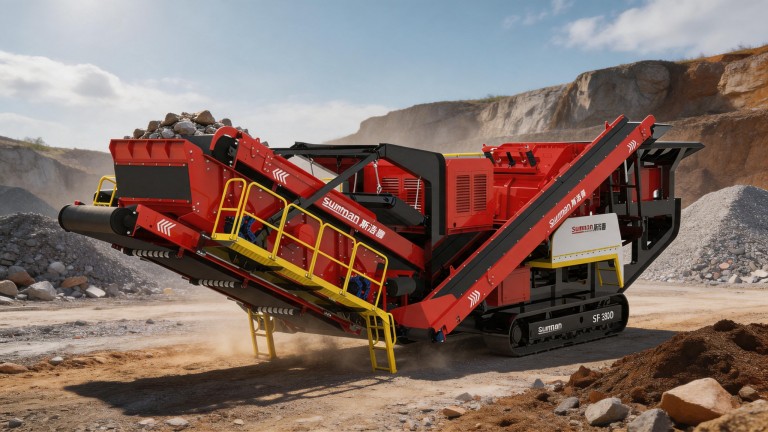
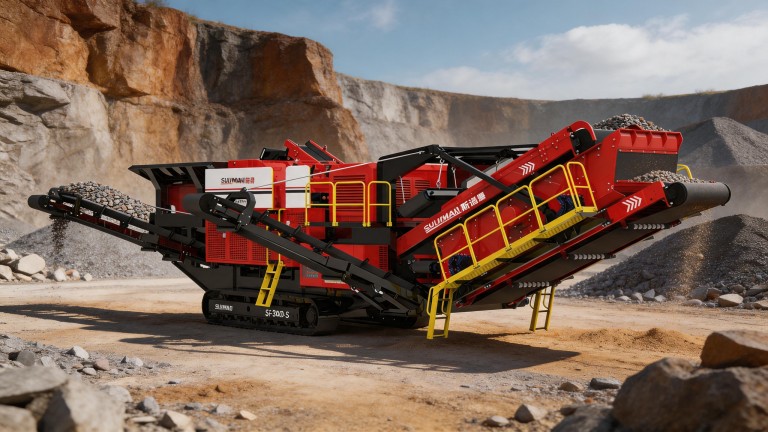
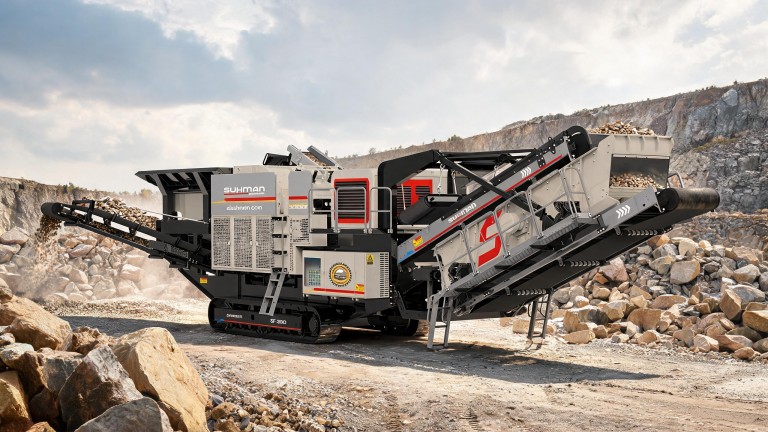
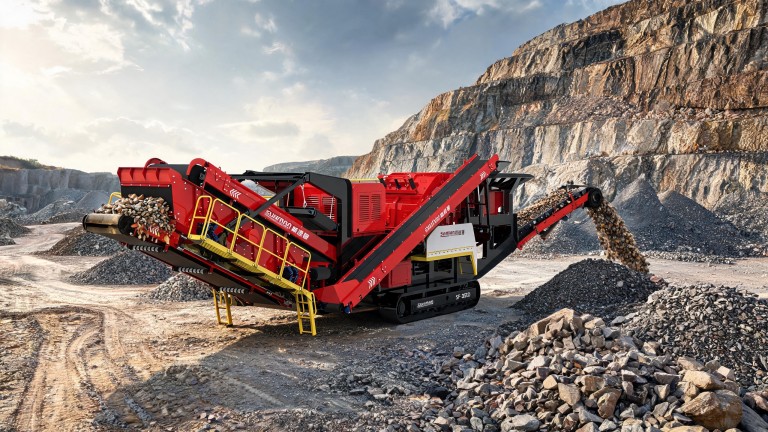
Mobile machinery is specified because the extraction face moves. As the quarry deepens and the blast zone migrates, the fixed infrastructure becomes obsolete or requires costly relocation. Mobile units offer a strategic pivot toward the blasted face, reducing the haul distance for the articulated dumpers.
There is a trade-off to acknowledge. A mobile jaw crusher provides flexibility but carries a different cost structure than a stationary plant. The tracked chassis, the hydraulic drives, and the mobility systems reduce the payload capacity relative to a static machine of the same theoretical crusher size. Buyers should compare the costs of maintenance for undercarriages and hydraulic hoses, which are intensive on mobile units, against the savings realized in reduced re-handling costs.
When evaluating equipment in a quarry, one must verify that the tracked machine is not undersized for the rip-rap size produced by the blasting pattern. If you rarely encounter a slab of rock over one meter in length, the selection of a primary jaw with a large inlet is wasted investment. The common pitfall in quarrying is specifying a machine designed for demolition recycling to handle blocky, freshly-blasted rock.
Throughput vs. Efficiency in the Crushing Process
The buyer’s question is usually «what is the hourly tonnage?» The correct question is «what is the saleable output per hour after screening?»
There is a critical difference between theoretical crusher throughput and the effective capacity of a plant. To estimate an hourly production figure, the material is crushed in a closed circuit with a screen to relieve the crusher. If the material contains high moisture or clay, the screen media blinds over, and the entire operation stops regardless of crusher power. It is recommended that newly opened quarries submit a test batch of material to the manufacturer for a practical assessment in a test facility; this is an engineering estimate rather than a guarantee. The accepted formula for preliminary checks uses the bulk density of the material, the crusher’s displacement, and the closed side setting (CSS), but final verification relies on the crushing trials.
Conclusion and the Decision Boundary
This selection guidance does not apply to underground mining operations or to contractors requiring a single machine for multi-site crushing of construction rubble. In those cases, portability requirements and road transport legal limits, rather than the production process, alter the decision criteria. For a quarry owner planning a long-term, face-to-face operation, a site survey is the only logical commencement.
Before any procurement discussion, the project owner must decide on the ownership model: a fully-owned mobile fleet requires the correct modules assembled upfront, aligning with the overall project strategy. The final configuration—whether to use an integrated mobile plant or a suite of separate units—depends on the yearly production schedule and the desire to maintain surge capacity.
To guarantee the success of the process, discuss your site data—not the machine specifications—with the manufacturer for a formal equipment selection and a list of required inputs, including location, material specs, and operating targets.
FAQ — Critical Quarry Machinery Questions
Can I use primary mobile machinery for secondary screening?
No. Primary machinery is designed to crush large feed down to a manageable size for a downstream unit. Using it to produce a final screened aggregate creates an inefficient system: the machine will consume excessive fuel, require a higher wear rate, and fail to produce the cubical shape needed for the finished product. This setup requires a separate screening phase to remove fines.
What is the primary difference between an open circuit and a closed circuit?
In an open circuit, material passes through the crusher once and exits the system for downstream processing. In a closed circuit, the oversize material is fed back to receive further crushing.
How do I estimate the required power and fuel consumption?
Power requirements are correlated to the material’s work index, which is a technical property of the rock. For a site-specific estimate, the buyer must provide the rock density and feed size, plus whether the site has a grid connection or runs on a diesel generator. During the operation of the equipment, continuous fuel consumption fluctuates with the speed.
What type of product shape can I expect from a mobile unit?
The product shape depends on the crushing chamber configuration and the feed material flow. For highway aggregate or concrete production, a cone crusher with a fine setting may not produce the necessary cubical shape. The configuration of the secondary process and the crusher speed must be tested in a civil engineering lab for the actual material—the final accuracy of this data point is dependent on the buyer’s final decision on the crusher’s CSS setting.
Should I rent or purchase quarry machinery if I am opening a new site?
Initial trials should be conducted to test plant run times and throughput. If the site has a limited deposit and is expected to be depleted in a short season, renting presents a financial advantage. If the product design is stable and the deposit is high-tonnage, ownership amortizes the cost of the purchased equipment over time.
For a specific production calculation or detailed feedback on your site’s geological conditions, use the enquiry contact to discuss your material and site requirements. General quarrying information and process articles are available in the newsroom.