别走!
您尚未获得免费报价和确切价格。.
请留下联系方式,我们的工程师将为您项目量身定制解决方案。.
请留下联系方式,我们的工程师将为您项目量身定制解决方案。.

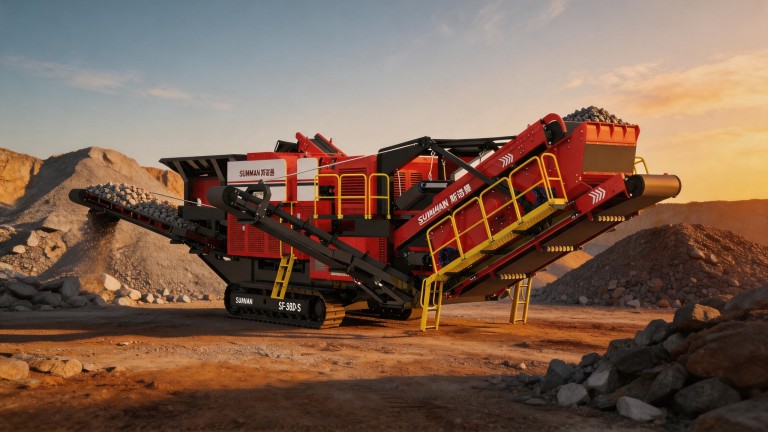
Learn key factors for selecting a crusher for mixed brick and concrete demolition waste: jaw vs impact, rebar handling, feed testing, and cost considerations.
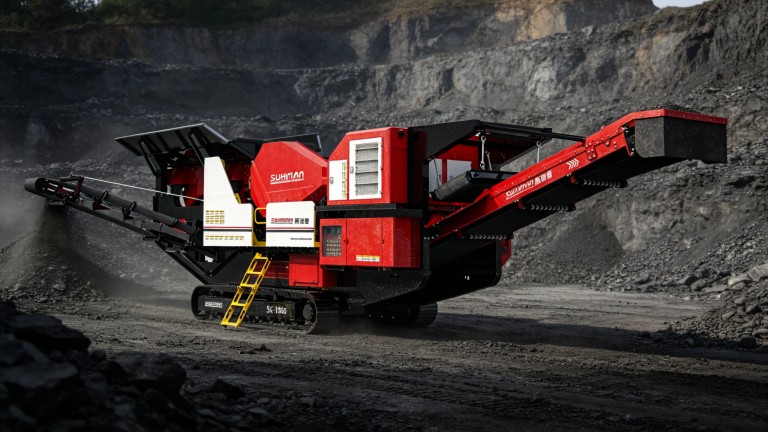
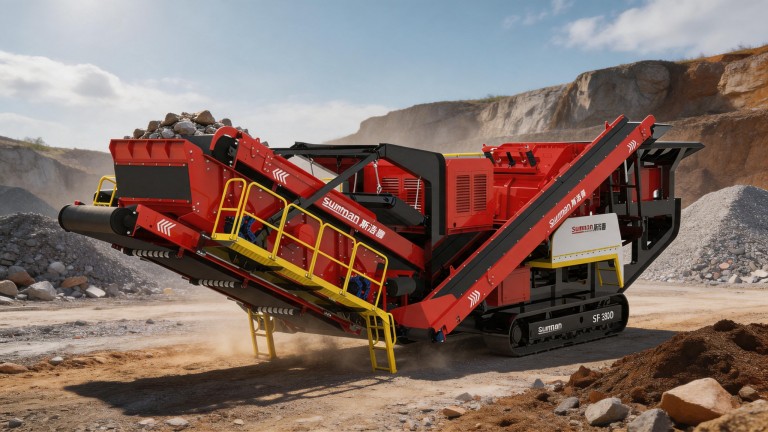
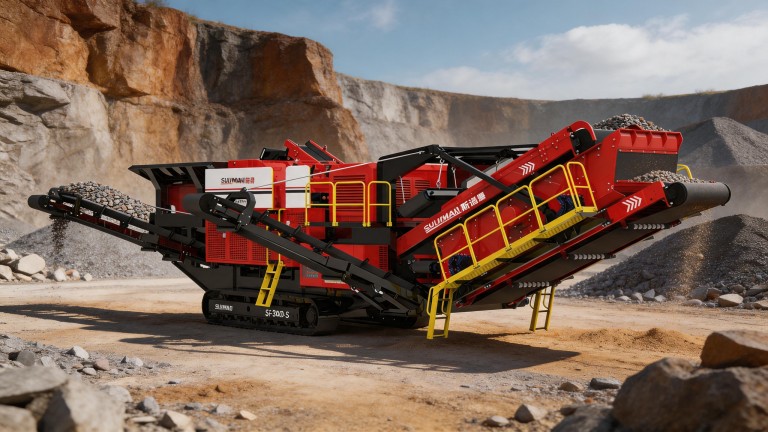
If you process mixed construction rubble—demolished brick walls, concrete foundations, reinforced slabs—the practical answer is usually a mobile jaw crusher for primary reduction and a mobile scalping or sizing screen to close the circuit. A jaw crusher handles rebar and tramp metal far better than an impactor, which is the main reason it suits mixed brick-and-concrete feed. However, the final choice depends on the ratio of brick to concrete, the level of reinforcement, the required product shape, and the moisture content in the feed. Several of these inputs must be measured or confirmed before a SUHMAN model can be selected rather than assumed.
—
Brick and concrete are often mentioned together, but they behave differently inside a crushing chamber.
Concrete, especially with rebar, tends to be abrasive and can contain steel. A jaw crusher with a deep, symmetrical chamber compresses the material and can pass embedded rebar without wrapping around the rotor, which is a common failure point on impact crushers. Brick, on the other hand, is usually softer and more friable. If the feed is mostly brick, a slower-speed impactor produces a more cubical product with less fines. If the feed is mostly reinforced concrete, a jaw crusher is the safer primary stage.
A reasonable sequence is to test the feed first: determine the proportion of brick, plain concrete, and reinforced concrete by weight, then measure the maximum lump size and the moisture level. Without these numbers, any recommendation is only a guess.
—
You have to plan for throughput, uptime, and operating cost across years, not just purchase price. The decision criteria below follow the order in which a technical selection is normally made.
| Criterion | What to check | Why it matters | Input required from you |
|---|---|---|---|
| Feed material description | Brick vs. concrete ratio, rebar content, hardness, moisture | Determines crusher type (jaw vs. impact) and wear life | Laboratory or on-site test report |
| Maximum feed dimension | Largest lump after demolition or pre-sorting | Feeder and crusher opening must accept it without bridging | Measured dimension of largest pieces |
| Throughput target | Required tonnes per hour at a defined product size | Hidden in every purchase decision; affects crusher size and engine power | Your production plan or contract volume |
| Required product specification | Final aggregate size and shaping requirements | Impactors shape better, jaws give better reduction of hard concrete | Customer spec or grading table |
| Steel and rebar content | Estimated percentage of embedded steel | Protect downstream equipment; jaw handles it better than vertical shaft or cone | Site inspection or test trial |
| Power supply configuration | On-site connected power or diesel generator | Affects engine choice and operational costs | Your planned power source |
| Screening requirements | Need for a pre-screen or after-screen and the desired number of fractions | Defines whether a single unit or a two-stage plant is needed | Desired product fractions or contract requirements |
This table intentionally leaves the specification cells blank. Each of these inputs is site-specific: SUHMAN’s technical department needs to confirm the actual values to quote a capacity and a model. A generic horsepower or tonnage number without these data would only mislead the purchasing decision.
—
For mixed construction and demolition waste, the trade-off usually comes down to this:
If your application contains both materials in significant amounts, you are in a middle zone. The answer is either a jaw primary plus a screen for brick fines and crushed concrete, or an impactor with a powerful over-belt magnet and a pre-screen that removes steel before it reaches the rotor. There is no single universal machine here. SUHMAN’s lineup of mobile jaw and impact crushers covers both paths; the product list at the SUHMAN catalogue page includes the main configurations, and the engineering team must approve the layout for your specific feed.
—
Beyond selecting a crusher type, you must check what sits around it.
An independent two-deck pre-screen before the crusher lets fines fall through and reduces wear in the chamber. This is a major advantage when brick content produces cohesive material, because wet clay from old mortar can clog a screen quickly. A strong over-belt magnet handles exposed rebar and loose wire from concrete. Unless you have a concrete-crusher that only processes clean, steel-free concrete, consider the magnet non-optional.
If the site has to produce a finished aggregate rather than just reduce waste for transport, a closed circuit with a return conveyor and a final screen is necessary. In that case, purchase the crusher and screen from the same manufacturer so that the conveyors, chutes, and electrical interconnection are compatible.SUHMAN provides tracked mobile crushers and screens; you can contact us with the layout of your job site and the output grading to arrange an assessment.
—
If the project aims to produce a clean, fractionated aggregate above, say, 20 mm for new concrete production, a standard rubble crusher alone is not sufficient. Rubble contains contaminants—wood, gypsum, plaster, glass—that are hard to deliver to non-construction, ready-mix, or concrete-products customers. In this case, the crushing plant is only part of the installation; washing, air separation, and density separation are also required, which means a fully static or semi-mobile handling system rather than one track-mounted unit.
Similarly, if the site is in a dense residential area and you plan to operate at night, a mobile crusher with a standard sound profile may exceed permitted night-time noise levels. Technically, you may need an enclosure or an electric-powered machine. Those decisions affect the total project cost and are usually outside the scope of a crushing plant catalog.
—
Wear life is directly proportional to the amount of brick, impurities, and steel in the feed. Brick with a high clay content is less abrasive than concrete with siliceous aggregate, so you can expect a longer wear life in brick-dominated materials. Concrete with granite aggregate shortens liner life noticeably.
An engineering estimate: if the majority of the feed is brick and the crusher produces a downstream product under 80 mm, the wear parts can be expected to last considerably longer than the same crusher processing a feed of reinforced concrete; the differences in abrasion index can range two to fourfold. However, no one can give you an absolute tonnage wear-life figure without measuring the actual abrasiveness of the site material.
On the maintenance side, plan daily checks of the jaw dies (or blow bars), the wear plates in the crushing chamber, the magnet’s carrying belt, and cleaning of the fines conveyor. Brick and mortar produce a lot of dusty fines. A well-maintained main belt cleaner and a dust-suppression water system will substantially reduce the downtime caused by build-up.
—
The cost to run a brick-concrete crushing plant may be divided into four parts:
Unless you have transparency on each of these lines, a single “cost per ton” comparison between suppliers is unsound.
What is the biggest difference between a jaw and an impact crusher for this type of demolition feed?
The major difference is tolerance to rebar and hard foreign objects. A jaw crusher compresses material between two plates and can handle significant embedded steel; the steel pieces are typically discharged without causing a shutdown. An impact crusher accelerates the feed against wear elements at high speed, so rebar and large steel fragments can wrap around rotor and result in downtime and expensive repairs. Therefore, if reinforced concrete is a significant part of the feed, the primary stage must be a jaw crusher or a machine with an adequately designed “rock shelf” and pre-screening to protect the rotor.
#### Does brick have to be sorted out before crushing?
It depends on the final product specification. In many recycled aggregate applications, you can crush a mix of brick and concrete together and use the output as a quarry fill or sub-base. Modern closed-loop concrete aggregate standards, however, often cap the brick and masonry content at a low value. If certificate-driven output is required, then upstream sorting out brick and gypsum is mandatory before the crushing stage. For a general construction rubble fill, sorting may not be worth the cost.
#### Should we buy a crusher or use an excavator-mounted shear and pulverizer?
If the task is to cut concrete down to a size that a feeder accepts—perhaps below 600 mm—an excavator pulverizer can prepare the feed for a tracked crusher. It may also separate rebar in the process. But if the quantities are substantial (over several thousand tonnes per month), an excavator pulverizer has a much higher cost per tonne than a mobile crusher doing the same work. The crusher becomes financially justified when the feed keeps the machine busy for regular shifts and you produce a saleable product size rather than just a reduced lump.
#### What feed moisture causes the most problems, and why?
Moist feed with clay brick and adhered mortar is problematic. High moisture content makes fines cohesive: material sticks on the screen cloth, blocks the discharge chute, and reduces the effective screening area. A jaw crusher handles moisture better than an impact crusher because the material is retained much longer through compression, but the screen performance still worsens. If the feed has that kind of moisture, request an independent pre-screen, a larger spacing between decks, or a washing system. Let the SUHMAN technical staff know average moisture before they propose the equipment.
—
No specific model recommendation is possible until we receive at least the following:
These inputs allow the SUHMAN engineering team to calculate a realistic throughput and a wear forecast. Without them, even an average figure for a machine capacity can only reflect ideal crushing conditions, which rarely occur with mixed brick and concrete. Fill in the form at the SUHMAN contacts page with your site data, and attach any recent material test results from a local laboratory. This is how a selection proceeds: from a description of materials and a measured feed, not from an industry stereotype. And if your ambition is large enough to consider a stationary line instead of a mobile plant, the same information still applies—starting with the physical properties of the demolition waste, which can differ sharply between two seemingly similar city sites.