别走!
您尚未获得免费报价和确切价格。.
请留下联系方式,我们的工程师将为您项目量身定制解决方案。.
请留下联系方式,我们的工程师将为您项目量身定制解决方案。.

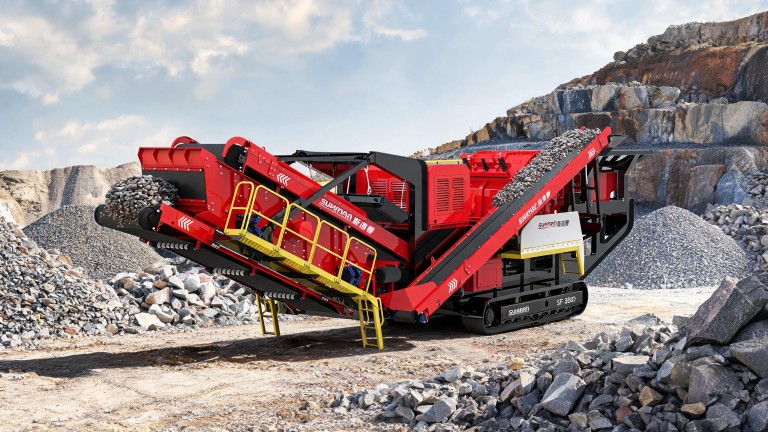
Learn what a 750x1060 jaw crusher startup video proves about commissioning order, plus the throughput data and capacity checks you must verify before buying.
The «750×1060» designation refers to the crusher’s nominal feed opening dimensions in millimetres: the width of the feed opening is approximately 1060 mm, and its depth is approximately 750 mm. In industry shorthand, this machine is usually called a «jaw crusher of 750 by 1060.» The model sits in a mid-to-large class of jaw crushing plants used as the primary crusher in a multi-stage line.
The common configuration follows this order:
What a video of such a startup usually demonstrates: the operator turns on the discharge conveyor first, triggers the jaw crusher to idle without load, then activates the vibrating feeder to drop rock into the crushing chamber. The reason for this sequence is to expel any material left inside the crushing cavity from the previous shutdown before adding fresh feed.
[FACT REVIEW REQUIRED] *The absence of verified factory data for specific throughput and drive power in this class—measured at the test site and confirmed under load—prevents a precise production figure here.*
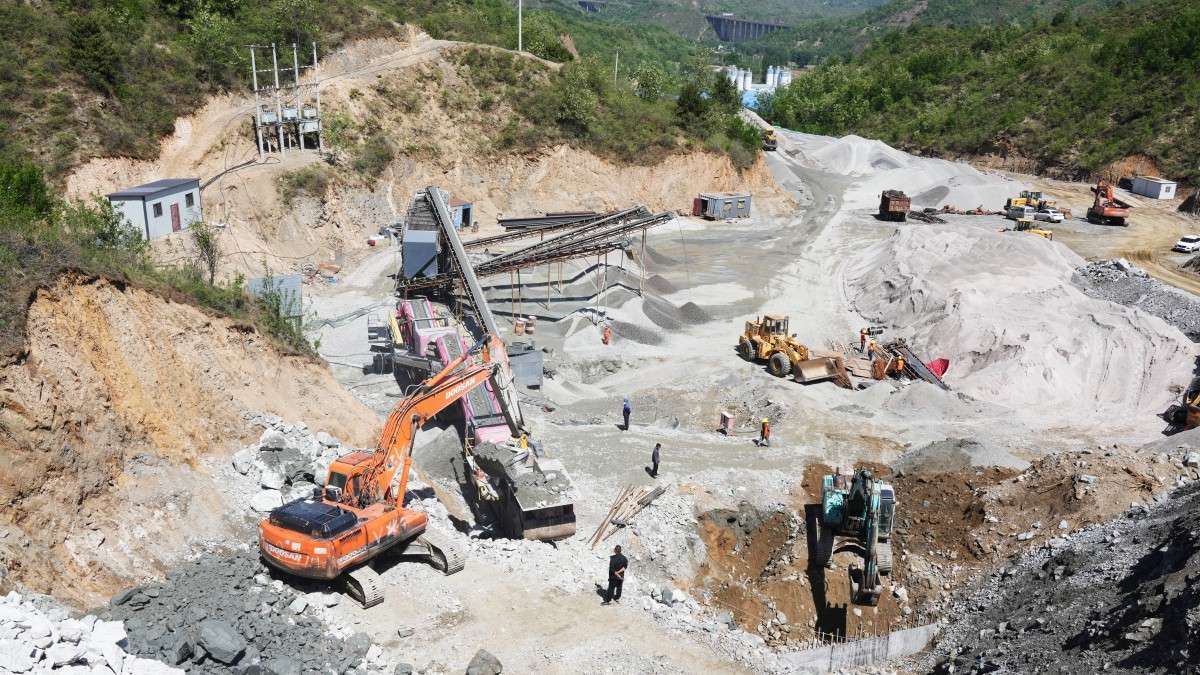
If you are evaluating this machine for your quarry, treat the video as a first filter. Note the following, and treat anything you cannot confirm as an open item for the equipment supplier’s engineering team.
| Check point | What you see in the video | What the supplier must confirm in writing |
|---|---|---|
| Start-up sequence | Conveyors first, crusher idle second, feed third | The automation logic or operator instruction card |
| 进料 | What class of rock: blasted stone, river gravel or recycled concrete? | Feed material: rock type, moisture, clay content |
| Top size of feed | Does the rock approximate the feed opening width? | Max confirmed feed dimension per the design setting |
| Gap / closed side setting (CSS) | Visual discharge product size | CSS in millimetres at time of video, for the actual material |
| Measured output | None visible in a video | Output in tonnes per hour, measured over time |
| Surrounding equipment | Any screen or secondary crusher visible | The full line order and belt widths, model names |
| Drive and hydraulics | Diesel engine, electric motor, or both? | Total installed power and fuel/energy source, if known |
| Climate fit | Not visible | Operating temperature limits for components |
This is a decision checklist, not a performance table, because a startup clip is not a measurement. The video shows you that the moving parts rotate; it does not show you a weighed result.
Most engineering estimates for jaw crusher capacity start from a simplified formula that relates the crusher’s throat dimensions, closed side setting, and a material factor. One common approximation is:
«` Capacity (t/h) ≈ (Width of feed opening, m) × (Feed opening depth, m) × (CSS setting, m) × (Material factor, t/m³) × (Some efficiency factor) «`
In practice, the calculation is less neat. The actual throughput depends on the bulk density of the crushed rock (often from roughly 1.6 to 2.2 t/m³ in the pile after crushing, depending on rock type and fragmentation), the eccentric throw, and the frequency of the jaw movement.
We cannot provide a numeric estimate that would be honest here. The 750×1060 class can, in typical quarry conditions with granite or basalt and a medium CSS, run in the range of dozens to a couple of hundred tonnes per hour depending on the design. The missing data is the model’s rated capacity range, tested with a specific material and discharge setting.
A 750×1060 jaw crusher suits a line where the feed is competent rock—granite, basalt, diorite, recycled reinforced concrete, and abrasive primary material. It is generally a correct choice for a fixed or mobile primary stage when the quarry produces raw feed of large but controlled top size.
This recommendation does not apply when:
Think about your legal and safety obligations around dust and noise, not just the machine. The moving jaw requires a strict lock-out procedure when the gap is adjusted or wear parts are replaced.
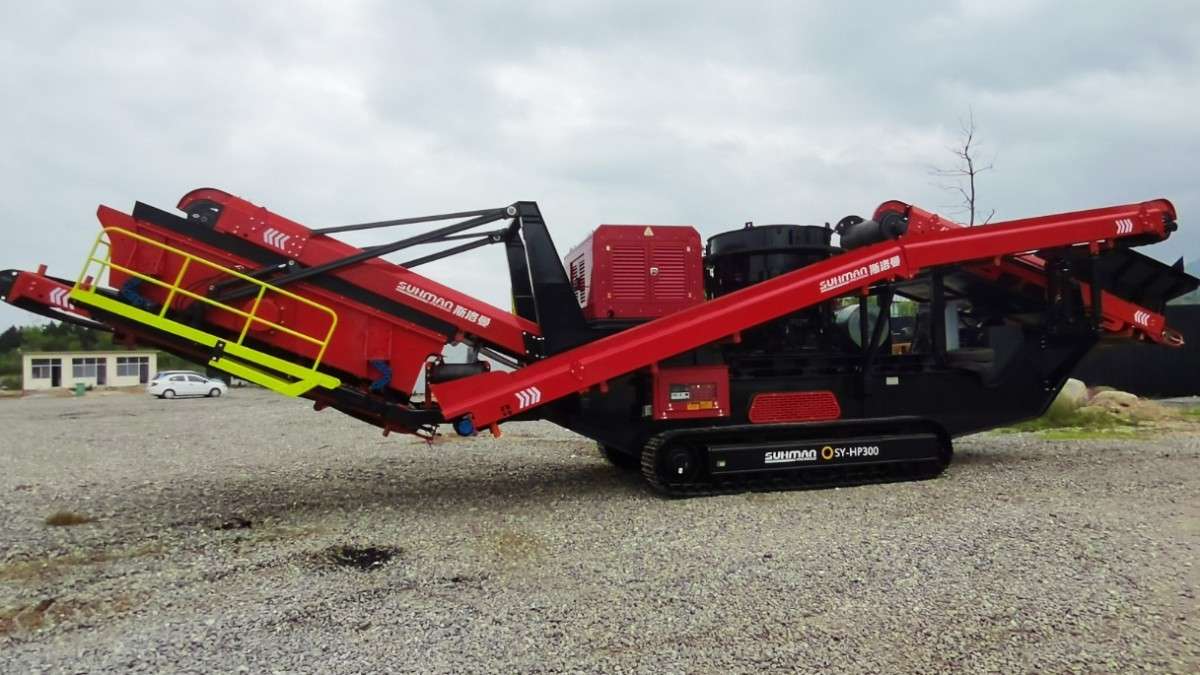
To make a final selection, the quarry owner needs to supply hard inputs, not wishes:
All of this must be supplied to the equipment supplier as a single project brief. Without the brief, nobody—not the seller, not an engineer—can give you a justifiable machine selection.
No. A video confirms mechanical running order but provides no traceable proof of throughput or product gradation. Use it as a first filter, then ask for a site report with measured output, feed setting, and operating conditions.
The throat dimension tells you the class, not the performance. Two machines with the same throat size can differ in eccentric throw, flywheel moment, stroke frequency and the crusher chamber geometry profile. These parameters change capacity and product shape. You must compare the actual crusher configuration, not only the model number.
The wear on jaw plates is gradual; the need for adjustments depends on feed abrasiveness, feed top size and whether the machine is in a fixed or mobile line. If you see liner wear beyond the design profile in regular inspections, that means the CSS should be re-set or the plates indexed. There is no universal calendar interval. You must keep a daily shift log on CSS and wear plate thickness measured in mm, not hours only.
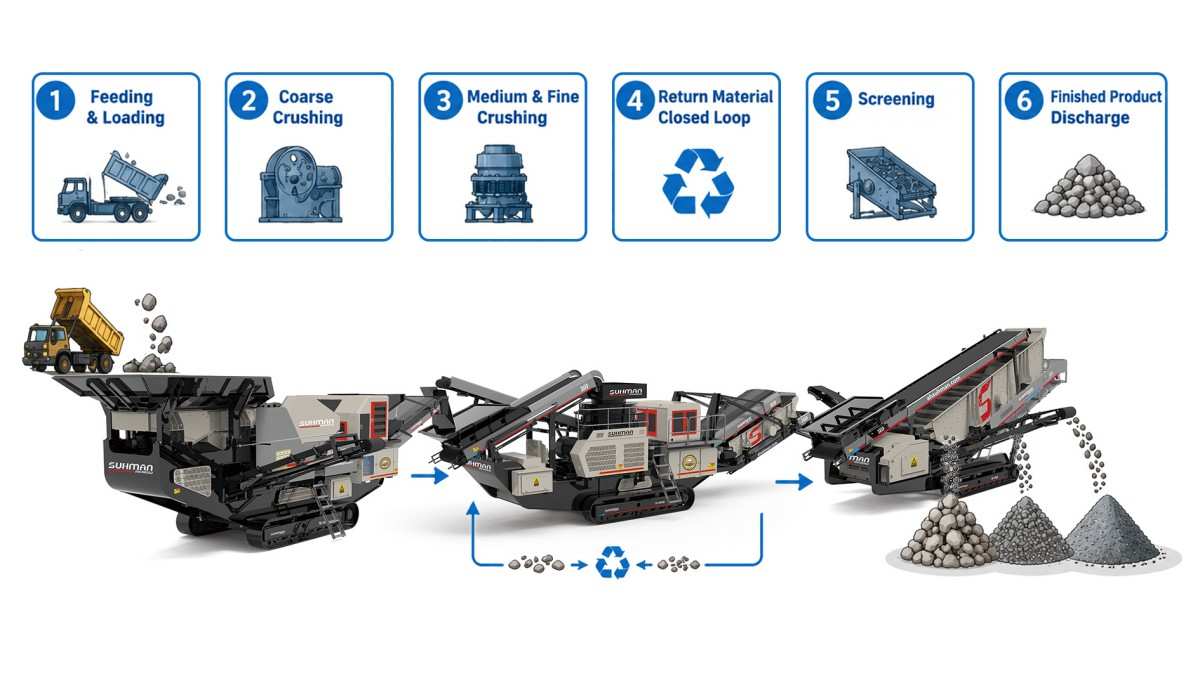
Jaw crushers work most efficiently under a continuous and evenly distributed feed, not in avalanche loads. A regulated feeder with a variable frequency drive (VFD) usually performs better in a line because it protects the crusher from sudden surplus load, reduces belt spillage and evens out the final gradation. But the actual control logic must be provided for your specific feeder type and crusher model.
The most frequent error seen in practice is starting with a full crushing chamber after a shutdown: the operator energizes the crusher while rock remains in the cavity, which causes a heavy unintended load on the pitman and bearings from cold start. A correct start sequence clears the cavity of loose rock first or has a mechanic inspect the chamber before start-up. The video you watched, as a matter of fact, documents this procedure—if it was done correctly.
Do not convert video enthusiasm into purchase momentum. You are buying a production unit with a defined role in the line composition that has yet to be confirmed. The missing verification items—the measured output in the operating conditions, the actual capacity range of the model, the crusher chamber configuration and model, and the material handling sequence—are the ones that decide the success of your project.
Bring the intended numbers to the SUHMAN engineering desk at the contact page for a calculation based on these specific data. You can check how mobile crushers and screens are arranged in the catalog for comparisons and read articles on crushing equipment setup for further guidance. But the summary is humble and clear: a video shows the line breathing; only your own data tells you whether it will digest your stone.
If you need a starting point within a possible project, the SUHMAN main page and the company information page frame the operational scope. The missing decisions are still yours.