别走!
您尚未获得免费报价和确切价格。.
请留下联系方式,我们的工程师将为您项目量身定制解决方案。.
请留下联系方式,我们的工程师将为您项目量身定制解决方案。.

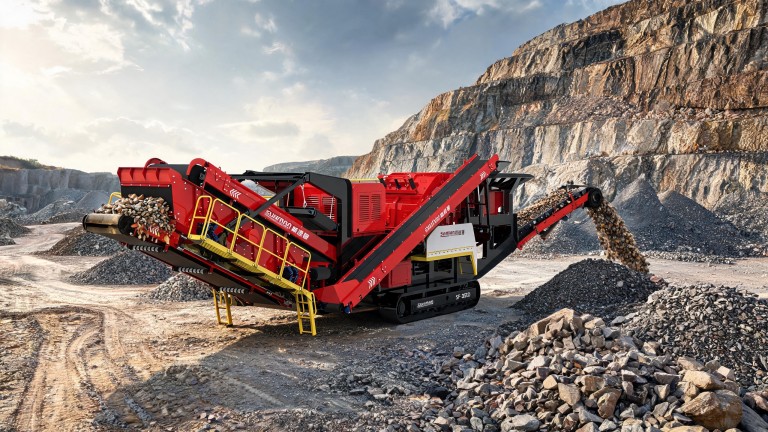
Before buying an impact crusher, verify feed rock, abrasiveness, power supply, and test data. This guide covers decision points, wear costs, and must-have
An impact crusher is a sound primary or secondary choice when your feed is medium-hard rock (for example limestone) or recycled concrete, when you need a high reduction ratio and a cubical product shape, and when you are willing to manage wear costs per tonne. It is not简体中文(大陆) the right machine for highly abrasive materials like granite, basalt, or river gravel. Because no verified SUHMAN specification data is currently available for this answer, you must base your purchase decision on measured site inputs and a documented test run, not on generic brochure figures or unserified vendor claims. Use the checklist below as your negotiation document.
An impact crusher accelerates the feed material and throws it against wear plates and breaker bars. The process produces intense shattering and rock-on-rock contact. The result is:
In a mobile plant, the impact crusher works after a feeder and often after a primary jaw. Screening either closed the circuit (returning oversize) or removes fine material before the crusher. The exact sequence must be selected for your geology and product demand. A common decision point is primary vs. secondary application. If your quarry produces large blocks of raw rock up to the crusher’s rated feed opening, a mobile impact crusher can function as the primary unit. If feed is already reduced (for example 0–300 mm), it is usually applied as a secondary or tertiary machine.
A useful comparison table for the decision is shown below.
Since the product data sheet for the specific SUHMAN model you may consider is not yet available in the verified documents, the table below is deliberately designed as a buyer-input checklist. Use it during site testing and when comparing offers. Do not accept blank “capacity up to” statements — demand the test basis.
| Decision parameter | 为何这很重要 | What you must record during a test or in a specification |
|---|---|---|
| Feed material type and rock name | Crusher setting and wear alloy selection depend on rock origin, not just the word “limestone.” | Geological name, compressive strength if available, and mineralogical composition. |
| Maximum feed size and shape | The most common cause of irregular throughput is oversize or slabby feed. | Measure the three axes of at least 20 of the largest feed pieces, not just the screen mesh. |
| Feed moisture and clay content | Wet fines clog the feed chute and reduce throughput dramatically. | Percentage of material below the smallest required product size, and moisture content at the moment of test. |
| Required final product specification | The crusher must produce a certain grading curve and flakiness index. | Sieve test analysis of the product over a full shift, not a 10-minute sample. |
| Abrasiveness | This determines the cost per tonne and whether an impact crusher is even economical. | Need documented abrasion test (standard method) for the specific rock, not “we know this rock” claims. |
| Site location and power supply | A mobile diesel-electric unit is a different machine than a fully electric plant. | Electrical network capability (in kVA), or availability of diesel for the generator set. |
| Operating record of existing equipment | Past problems in similar local projects show weakness of a specific configuration. | Running hours, issue list, corrective actions and causes. Must be submitted by the customer and signed. |
You must provide these inputs to the SUHMAN engineering team so they can calculate the correct configuration. Without those records, a final quotation is premature.
Because no verified capacity table is available, the following method describes how a technical editor expects the vendor to prepare the number. The vendor should state an output value in tonnes per hour (t/h) measured at a defined closed-side setting (CSS). The capacity calculation generally works like this:
The important rule: the achievable product size is not the same as the feed opening. Many vendors state the maximum feed dimension of the machine as the “recommended feed.” In practice, that dimension must be reduced to 80% of the opening width for a reliable feed stream, and long or slabby pieces must be avoided. Ask the vendor to write down the maximum recommended edge length for the specific rotor and the maximum piece one dimension can have, as these two numbers differ.
The economic lifetime of an impact crusher is defined by wear parts and the underlying efficiency.
An engineering estimate used in the industry assumes wear costs double when the silica content exceeds a certain level, but this estimate depends heavily on rock texture and the pellet size of quartz, so it cannot be universally defined without the abrasive test result. For this calculation, the buyer must supply the results of the rock test or the vendor must offer a trial period that includes documented cost per tonne reporting.
This guidance applies to a mobile or semi-mobile crushing plant operating in a quarry where the owner has an existing screening plant for the final product. It does not apply if the requirement is producing asphalt or concrete sand (a separate vertical shaft impactor design is then more relevant) nor if you plan to process wet clay material without proper scalping and dry screens.
This guide also cannot be used for a contract quote. The missing inputs are outlined above — but in particular, I have not yet seen the product’s certified power rating or weight, or a verified test report from a SUHMAN unit operating on a specific location. No manufacturer’s claim should be accepted without a complete technical datasheet, which must include the motor power in kW, maximum rotor speed, the exact crusher weight, and an example flowchart of a tested plant configuration.
—
#### What feed size is acceptable for a mobile impact crusher?
It depends on the crusher inlet dimension. The maximum feed length is usually 80% of the opening width, and the piece must not create a bridge at the inlet. Oversize rock that creates a jamming hazard is the most frequent cause of downtime, so you have to measure your feed distribution. If your primary jaw supplies a wide fraction, you must confirm the actual top size with a sieve analysis of the feed before installation.
#### How do I know if an impact crusher works for my rock type?
Test the rock. Provide a representative sample (at least a few tonnes) to the vendor with a description of its geological name and moisture. The abrasiveness test is essential — it defines whether you need a different machine family. For abrasive materials, my recommendation is to step away from the impact crusher and consider a jaw plus cone configuration.
#### What output specification should a vendor quote for my project?
The vendor should quote output at a certain material setting in tonnes per hour and give you the expected product grading. You should ask for the test basis: feed material, moisture, screen size in the closed circuit, and the duration of the measurement. A quotation without these details is not a quotation — it is an estimate.
#### How much maintenance time per shift does an impact crusher require?
There is no verified number in the current documentation for specific models. Maintenance time depends on feed dirtiness, crusher setting, and foreign objects entering the chamber. In principle, you should budget for daily inspection of blow bars, rotor, and apron settings. If your contract requires high uptime, ask the vendor to include a wear-parts service plan and a spare blow bar set in the quotation.
#### Should I buy a fully electric or a diesel-electric impact crusher?
That choice depends on the site’s available power and mobility requirements. A tracked electric unit needs a connection to the grid or a separate genset. If the provided power supply inside the quarry is insufficient for the motor starting current, you will need a diesel-driven machine. This is a mandatory input from the site, and the decision comes after a review of your power contract and the plant’s electrical layout.
—
Before contacting the SUHMAN office, compile your own data package: rock type and test results, the required output sieve curve, existing screen setup, and the available power network. Then send this package to the SUHMAN engineering team for a calculation. Take your time to read the catalogue of available tracked machines and request the complete technical datasheet for the candidate unit.
SUHMAN 移动破碎机和筛分机——产品目录 移动破碎机厂家_移动破碎站与筛分设备-SUHMAN SUHMAN 联系方式——破碎设备计算