别走!
您尚未获得免费报价和确切价格。.
请留下联系方式,我们的工程师将为您项目量身定制解决方案。.
请留下联系方式,我们的工程师将为您项目量身定制解决方案。.

了解影响破碎机选型的关键因素:物料、产量、现场条件、机动性。使用这份检查清单,在为您的采石场选购石料破碎机时,避免凭空猜测。.
Buying a stone crusher for a quarry starts with one uncomfortable truth: the machine’s nameplate tells you nothing about the rock you will feed it. Before any comparison between suppliers, you need measured data about your material, your site, and your product target. If you skip that step, every later decision — mobile versus stationary, jaw versus cone, new versus used — is guesswork.
This page sets out the decision sequence for a quarry owner or director who needs to buy a stone crusher, what must be confirmed before a quote, and where a mobile tracked crusher is the right answer — and where it is not.
Three variables dominate the selection: the material, the required output, and the site’s power and logistics. Everything else follows.
The material’s hardness, abrasiveness, moisture, and maximum feed size decide the crusher type. A jaw crusher handles primary reduction of hard rock; an impact crusher suits softer, less abrasive material and produces cubical shape; a cone crusher refines secondary and tertiary stages. None of these claims are universal — they depend on the specific machine and the measured rock properties .
The required output is not a single number. You need hourly tonnage, product size distribution, and whether the specification allows flakiness or demands cubicity. Screening is part of the system, not an add-on.
The site decides mobility and power. A tracked mobile crusher makes sense if the feed moves, if the quarry has multiple faces, or if the plant must be relocated. It makes less sense if you have a fixed primary position and decades of reserves.
The table below is a decision checklist. The right-hand column is deliberately empty of supplier values, because a responsible quote cannot be issued until these are confirmed. Do not accept a quotation that skips them.
| 参数 | 为何这很重要 | 您必须确认的内容 |
|---|---|---|
| 材料类型和硬度 | Determines crusher type (jaw/cone/impact) and wear life | Rock lithology, abrasion index, compressive strength, confirmed by testing |
| 最大进料尺寸 | Determines crusher opening and prescreen requirements | Largest lump measured in situ, not from the sales description |
| 水分和黏土含量 | 影响筛分效率和堵塞风险 | Measured at site, in the season you actually operate |
| Required hourly tonnage | Sets nominal capacity, which is never a single figure | Shift hours, operating days, and target annual production |
| Final product specification | Determines number of crushing stages and screening cut points | Grading curve, flakiness limit, fines tolerance |
| 电源 | Mobile vs stationary and diesel vs electric decision | Available kVA, generator capacity, or grid connection terms |
| Site access and relocation needs | Tracked vs wheeled vs semi-mobile decision | Roads, slope, permitted transport dimensions |
| Spare parts and service reach | Affects downtime risk and inventory cost | Distance to service point, parts lead time, consumables availability |
| Operating season and climate | Determines cold-weather options, heating, and dewatering | Minimum ambient temperature, frost policy, water availability |
If a supplier cannot tell you what additional data they need, treat that as a red flag. The missing inputs are listed at the end of this page.
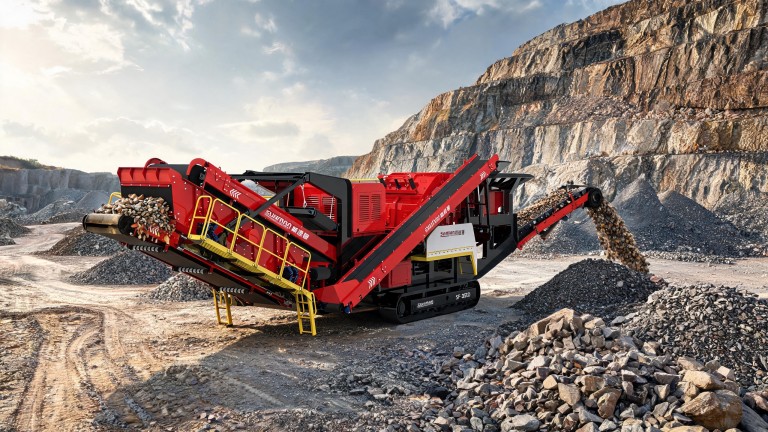
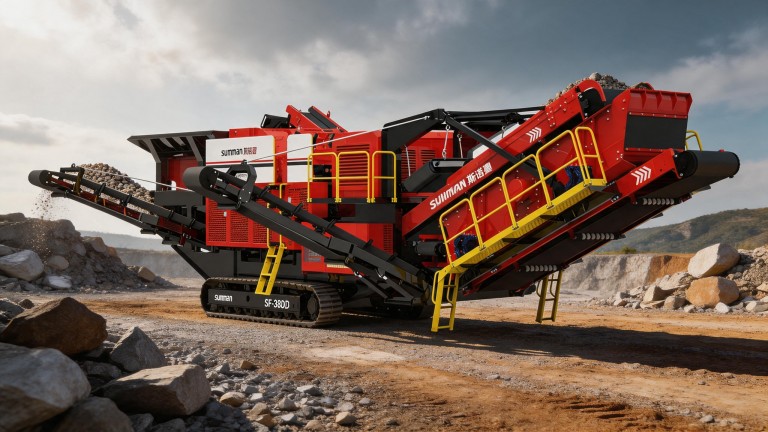
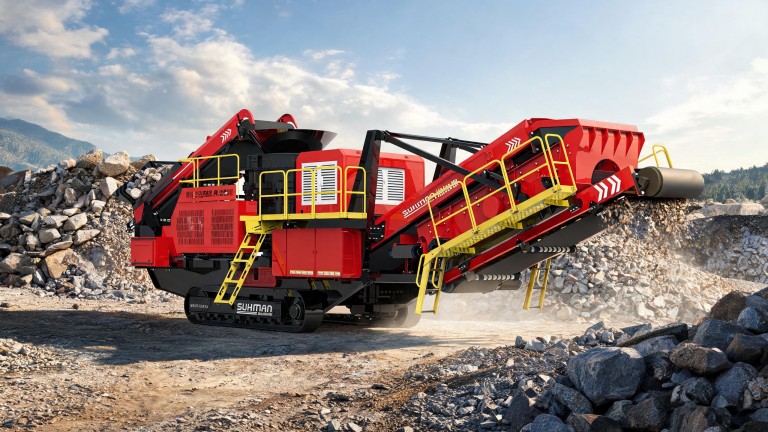
A tracked mobile jaw crusher is a sound choice when the quarry works multiple faces, when the rock must be crushed in short campaigns, or when the crushing location follows the extraction face. The machine’s ability to move under its own power removes rehandling and conveyor relocation costs, and it suits sites where a fixed foundation is not justified by annual tonnage.
That is the suitability boundary: mobile track-mounted equipment pays for itself when mobility is worth the price of the undercarriage. If your quarry has a single stable face, a fixed or semi-mobile plant typically gives lower operating cost per tonne, because the structure is simpler, the feed is more predictable, and the wear components are sized for one duty.
The recommendation also does not apply to very high tonnage operations or to material that changes character seasonally without the ability to switch crusher configurations. A tracked unit with a single chamber cannot magically adjust to a different rock type. If your material’s abrasiveness changes through the deposit, you may need a different crusher type altogether, not a bigger one.
A final selection cannot be made until these are supplied by the buyer or confirmed on site:
Without these, any capacity figure, fuel consumption claim, or certification statement in a quotation must be treated as unverified. Ask the supplier to show the basis for every number.
The answer depends on the rock you actually have. Jaw crushers tolerate harder and more abrasive feed and give high reduction in the primary stage; impact crushers suit softer material and produce better cubical shapes at lower cost. Measure the rock’s abrasiveness and compressive strength first, and get the supplier to split their recommendation into a measured basis versus an engineering estimate .
Do not quote a single figure. State annual production, planned operating hours per shift, the number of shifts, and the target product grading. Capacity always varies with feed size, moisture, and closed-side setting. A supplier who gives you one number without asking for these terms is guessing.
Not automatically. The undercarriage and hydraulic systems add cost and maintenance. Mobile equipment is cost-effective when relocation is frequent or the feeding point moves. For a fixed, long-life primary position, stationary equipment usually wins on cost per tonne. Calculate your relocation frequency honestly before choosing.
Cold starts, condensation in hydraulic systems, and frozen moisture in the feed all affect reliability. Confirm the minimum ambient temperature at your site and verify the machine’s cold-start rating, heating provisions, and any water-management requirements with the supplier. Brochures rarely state these limits, so ask in writing.
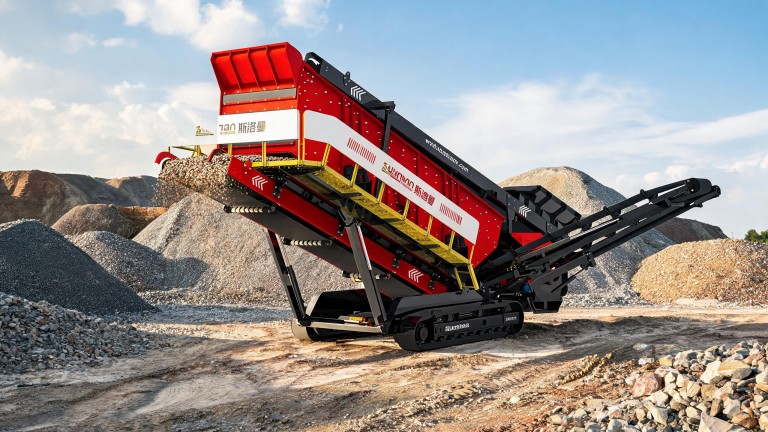
Unless your customer accepts unscreened crusher run, screening is part of the production process. Decide the cut points and the number of fractions before you buy. A crusher with an integrated prescreen is useful for bypassing fines, but final grading often needs a separate screen matched to the crusher’s output curve.
At the end of this process, you should have a shortlist of configurations, not a list of machines. The machine is selected after the configuration is fixed. Bring the nine checklist parameters to the conversation, and a supplier who engages with your measured data is worth more than one who hands you a price list.