Не уходите!
Вы ещё не получили бесплатный расчёт и точную цену.
Оставьте контакт, наши инженеры подготовят индивидуальное решение для вашего проекта.
Оставьте контакт, наши инженеры подготовят индивидуальное решение для вашего проекта.


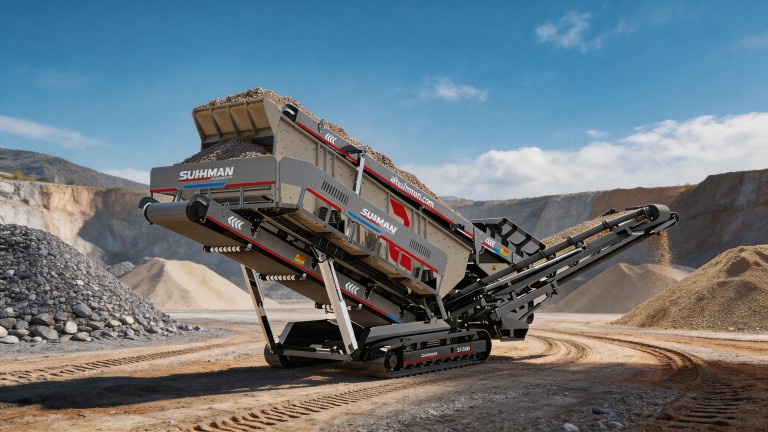
An 8,000 tons-per-hour rate applies to fixed mining crushers, not mobile quarry plants. Learn sizing, utilization, and what to verify before designing a line.
Direct answer: in mobile crushing and screening practice, 8,000 metric tons per hour is not a realistic throughput for a single tracked crusher. It is a figure associated with very large stationary primary gyratory installations fed directly by dump trucks in open-pit mining, not with equipment a quarry owner would line up at a pit face, move between ledges, or redeploy to a new site after a permit change. If your production target genuinely sits near 8,000 t/h, your decision stops being “which mobile crusher” and becomes a question of fixed plant design, conveyor infrastructure, and haulage strategy.
The 8,000-ton figure attracts attention precisely because it feels definitive. In practice, quarry owners rarely purchase against a single headline number. They purchase against a measured feed size distribution, a required product curve, a permitted operating window, and a monthly quality target. Ignore any of those and the number becomes unusable.
There is no verified SUHMAN model in this page’s fact set that substantiates a throughput of 8,000 t/h for a mobile unit . What that means is simple: before you let the eight-thousand-ton figure steer a purchasing decision, you need to map it back to your own measured site conditions. A few engineering constraints matter regardless of brand:
If you only take one point from the page, take this: hour-by-hour rated capacity is a laboratory condition. Contractual capacity, measured over a full shift and limited by the scalper, the discharge conveyor, and the downstream screen, is what pays the bill.
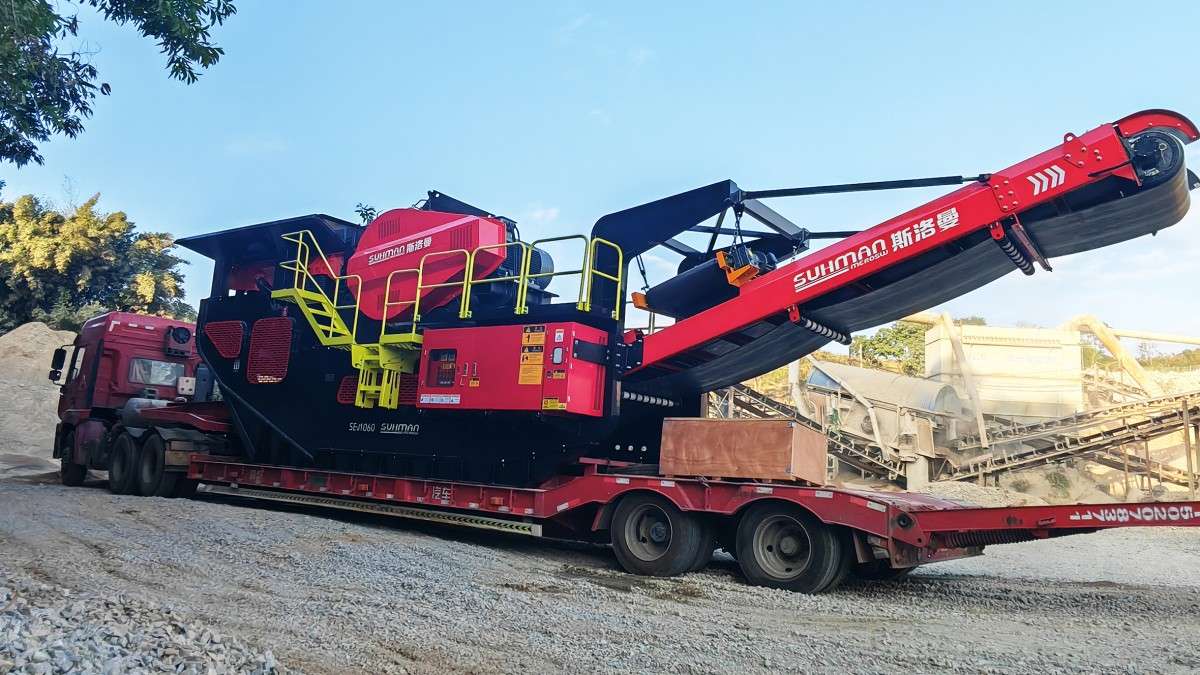
Mobile crushers make sense when your deposit is split across several working faces, when the rock is being processed close to extraction, or when you relocate the plant a few times per year. Those benefits come with practical ceilings: the unit has to travel on a lowboy or be self-propelled, which caps the size of the frame, the flywheel, and the feeder.
At the very high end of the mobile spectrum, large tracked jaw or impact plants [FACT REVIEW REQUIRED] handle a small fraction of the eight-thousand-ton rate. A stationary primary crusher in an open-pit mine, by comparison, sits on a concrete foundation, is fed by haul trucks on a ramp, and discharges directly onto a fixed conveyor network. It can be far larger because it does not have to move. If your true production target approaches thousands of tons per hour, you should be investigating a fixed or semi-fixed plant configuration, not a mobile product.
That is the first explicit suitability boundary: when production targets exceed what track-mounted units can physically transport and feed at a quarry face, mobile equipment is the wrong category entirely, regardless of brand.
Since no measured machine data is available in this fact set, the following are engineering estimates for budget-stage reasoning only, not verified specifications:
Do not use these figures as a procurement basis. They are here to expose the gap between a dramatic production number and a defensible engineering baseline.
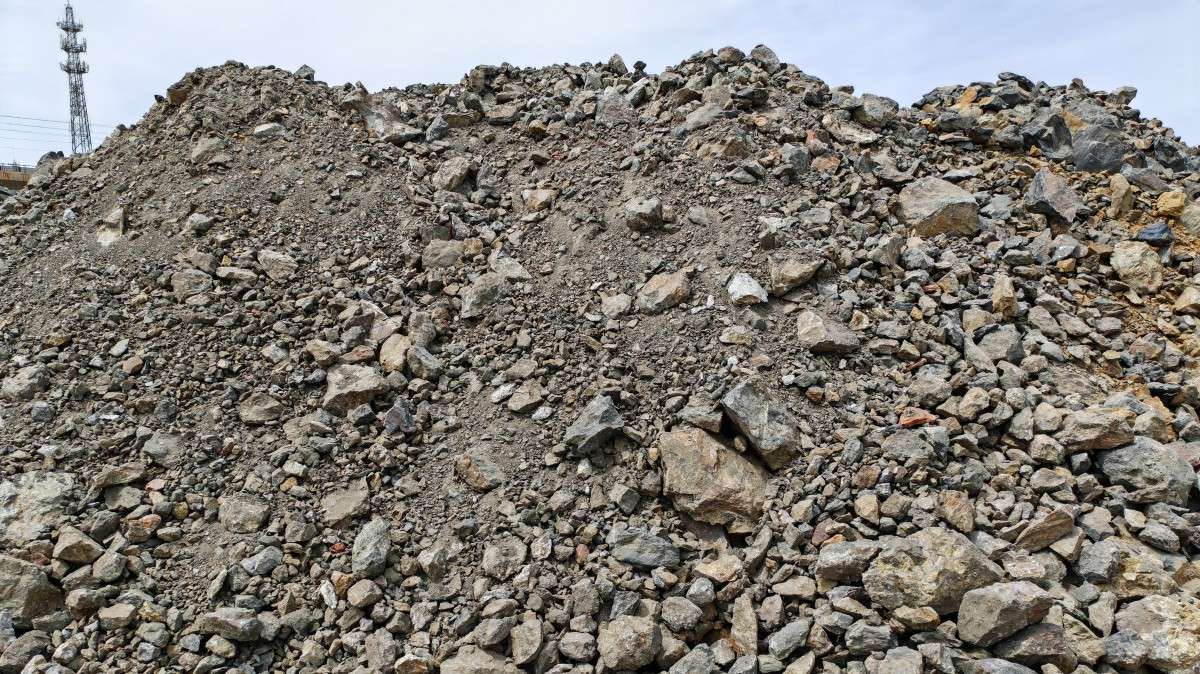
The following checklist gives you the inputs that change a headline figure into a purchase decision. Leave any of them blank and no supplier can give you a site-specific quote.
| Input you must confirm | Why it changes the selection | What you need to provide |
|---|---|---|
| Material type, hardness, moisture, and true maximum feed size | A jaw, impact, or cone choice only makes sense when abrasiveness and compressive strength are known | Rock type, compressive strength test result, moisture notes, and photos or sieve data of the feed |
| Required product specification and downstream use | A -150-mm sub-base for road works and a -20-mm aggregate for concrete are not produced by the same setup | Final product tolerances, target grading, and acceptable flakiness index |
| Site power and permit conditions | Diesel-hydraulic mobile units differ in fuel strategy from electrically driven installations near settlements | Available electrical connection, noise limits, dust constraints, and operating hours per day |
| Haulage and loading plan | The crusher only works as fast as the loader feeds it | Loader bucket size, number of units, cycle time to the face, and haul distance |
| Annual target, not just the hourly figure | A short seasonal campaign needs a different margin than 12-month base-load production | Tons per year, operating days, shifts per day, and the required guaranteed output |
| Test and sampling method | Throughput accuracies are meaningless without a defined testing protocol | Test duration, sample method, machine setting, and whether the run included a magnet and pre-screen |
At the time of writing, no verified SUHMAN specification is available to support an 8,000-t/h tracked mobile unit [FACT REVIEW REQUIRED]. The number belongs to the domain of large fixed or semi-fixed primary installations in mining, not to transportable crushing and screening plants. For a quarry needs to talk to a supplier about actual measured tracked crusher outputs [FACT REVIEW REQUIRED] for machines that can realistically be relocated between faces.
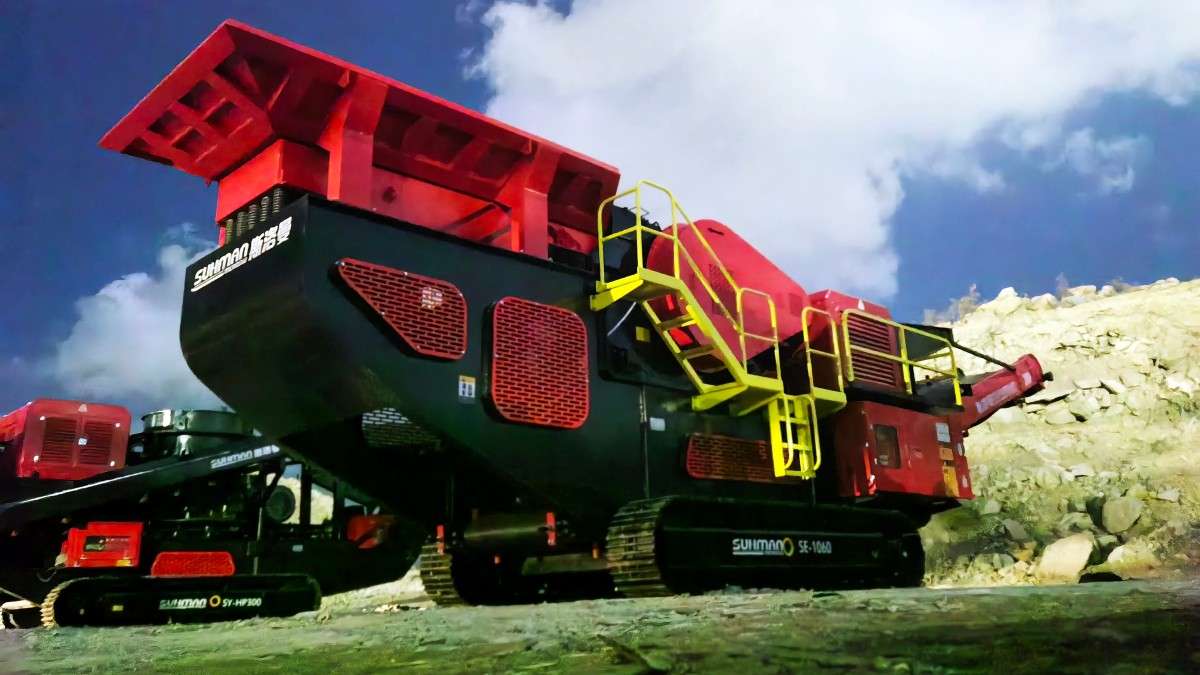
When a single face is good for many years, when the deposit becomes too deep for the crusher to stay near the face for long, or when environmental permits restrict dust and noise near the processing point, a fixed plant is safer. A mobile crusher pays off when you process near extraction, shift locations repeatedly, or process material at multiple satellite pits under one permit. If your plan requires crushing at a permanent, deep, stable hard-rock face, consider stationary infrastructure and avoid paying the mobility premium.
Hourly production should be verified by weighing a defined run, measuring the time, sampling the feed and product, and recording the crusher setting. Most reputable suppliers will discuss the test protocol before the run. If a number is quoted with no test duration, no sample method, and no setting, treat it as a marketing number. Ask for the operational condition, the shift length over which the average is calculated, and the utilization factor assumed.
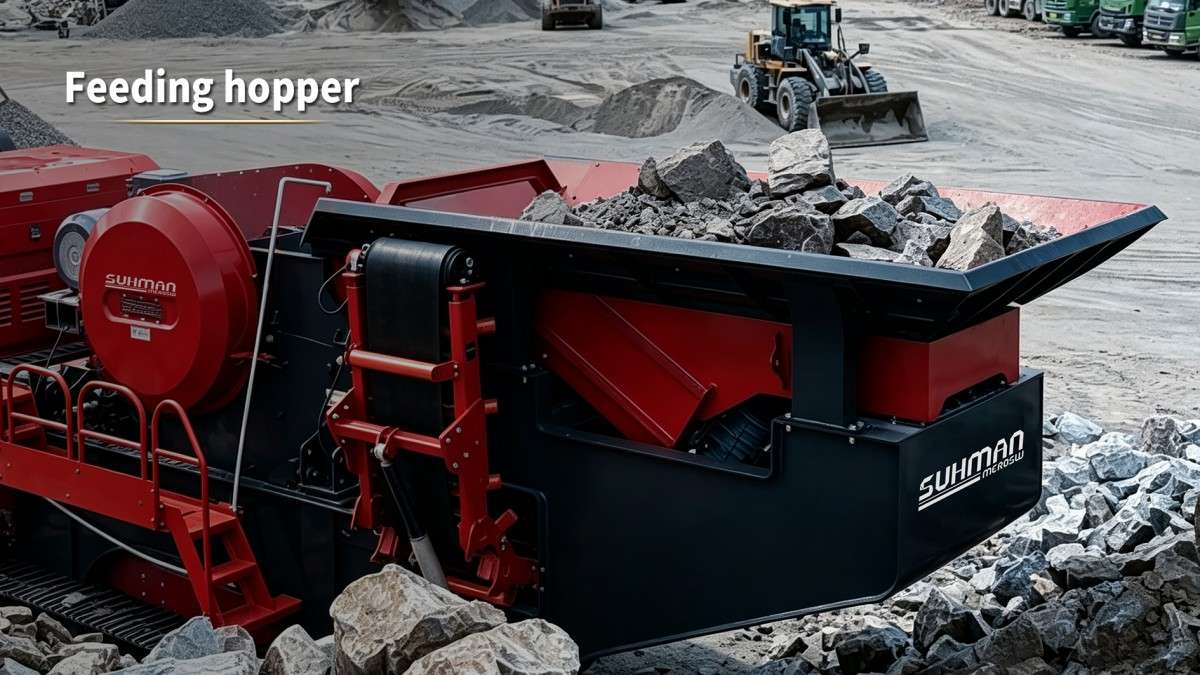
The feed spec. Specifically, true maximum rock size, unconfined compressive strength of the actual rock you are blasting, moisture content, and your permitted hours per day. Without these four, a conversation about tonnage is premature. Every subsequent engineering decision, from feeder width to discharge conveyor speed, depends on the physical interaction between the machine and the material source.
A quarry that produces for one short warm-weather campaign each year can live with a lower capacity utilization if the season is long enough. A twelve-month base-load operation serving an asphalt plant or concrete supplier needs a much more consistent performance, which usually means taking a conservative margin over the theoretical rating. Defining the annual total first lets the engineer work backward to the required hourly rate with real shift patterns, not a theoretical maximum.
This page does not apply to contractors processing recycled concrete or demolition material in confined urban yards, where the limiting factor is never crusher capacity but logistics, permit hour restrictions, and oversize handling. It also does not apply to underground mining, where hoisting constraints and gallery widths rule out large mobile units entirely. For those cases, even the machinery category described here is the wrong conversation to start.
If your operation genuinely approaches the high-tonnage end, the missing inputs that finalize any decision are: a material statement with hardness and feed distribution, the authorized line configuration (feeder → crusher → screen → product), your representative test output measured under defined conditions, and an equipment operating record including hours, faults, and adjustments. Without that package, the most useful next step is to provide your site data—country, material, feed size, product spec, and power situation—so an engineer can route you toward a realistic machine category instead of an impressive headline number.
For general orientation on what tracked crushing and screening lines look like, see the mobile crusher catalog. For context on how plant choice changes across projects, the news and technical articles section covers configuration strategy. If your site materially matches the quarry profile described here and you can supply measured feed and product data, the contacts page is intended for that exact calculation request. Company background and machine types are summarized on the about page, while the main equipment selection page lists current offerings suitable for further dialogue.