Не уходите!
Вы ещё не получили бесплатный расчёт и точную цену.
Оставьте контакт, наши инженеры подготовят индивидуальное решение для вашего проекта.
Оставьте контакт, наши инженеры подготовят индивидуальное решение для вашего проекта.


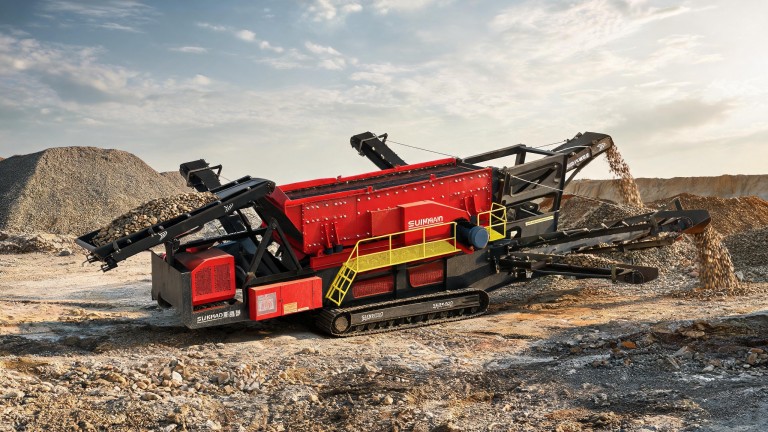
Learn about the most common vibrating screen failures—structural cracks, bearing damage, and blinding—with diagnostic steps and practical prevention tips for
For a quarry owner or director, the recurring failures of a vibrating screen usually fall into three groups: structural fatigue (cracks in the side plates or cross-members), drive system faults (vibration motor or exciter bearing damage), and material-handling issues (blinding, plugging, or uneven feed). None of these is a mystery, but most are misdiagnosed as «bad machine» when the root cause is poor operating discipline or an undersized selection. This page gives you a decision checklist, not a sales pitch. Where SUHMAN does not yet have a verified measurement for a specific claim, the text says so explicitly.
—
A vibrating screen gives you clues before it fails. The most reliable diagnostic sequence is:
—
#### Group 1: Structural cracks (the expensive failures)
The screen box is a fatigue-loaded structure. Every cycle bends the side plates and cross-members slightly. Cracks start when the local stress exceeds the endurance limit of the steel. The usual contributors are:
*[FACT REVIEW REQUIRED]* — SUHMAN cannot currently state a specific crack-free operating hour figure for its screens because no verified field record for that metric has been provided. What can be stated is an engineering rule: a properly selected screen box with correctly torqued mount bolts and a lined feed box should not develop structural cracks before the first deck cloth replacement, provided the machine is not run at resonance on startup or shutdown. You must confirm the amplitude and operating rpm against the screen manual at commissioning.
#### Group 2: Bearing and vibration motor failures
The exciter bearings are the highest-speed component on the screen. They fail for three reasons, in order of frequency:
For direct-drive vibration motors, the common failure is broken motor bolts. The motor base is bolted to the side plate, and if those bolts loosen, the motor moves slightly, the cables flex, and the winding fails near the terminal box. Check the bolt torque every shift for the first week after installation.
#### Group 3: Blinding, plugging, and carryover (the «capacity loss» that gets blamed on the screen)
This group is not a mechanical failure, but it causes more downtime than bearing changes. Blinding happens when wet fines stick to the wire and close the apertures. Plugging happens when a particle near the aperture size wedges halfway through. Carryover happens when the material travels too fast across the deck and does not stratify.
The technical response is never. «buy a bigger screen» first. The response is to check:
—
Use this table as a site-audit checklist. Do not skip rows. If you cannot measure a row, state that as a risk in your selection.
| Audit item | What to measure or confirm | Why it matters for the failure risk | Status (fill in) |
|---|---|---|---|
| Feed material | Type, max particle size, moisture %, clay content | Sets the aperture, deck angle, and whether a washing or spraying system is needed | ☐ Confirm with sieve test |
| Feed method | Chute geometry, drop height, distribution across the full deck width | Uneven feed is the most common cause of side-plate cracks | ☐ Confirm hopper liner exists |
| Required output | Target t/h per product size, acceptable carryover % | Determines required area; never buy on volume alone | ☐ Confirm with your process target |
| Operating environment | Outdoor/indoor, dust level, winter temperature | Directs motor selection, lubrication type, and dust sealing needs | ☐ Confirm site conditions |
| Isolation mounts | Condition of rubber buffers and spring seats | Collapsed mounts twist the box and crack welds | ☐ Confirm by visual check each shift |
| Bolt torque log | Exciter frame bolts and motor bolts torqued to manual spec | Loose bolts cause 70–80% of exciter housing cracks | ☐ Confirm with a torque wrench log |
—
A standard circular-motion screen is the right tool for dry or slightly damp material that is easy to stratify. It is the wrong tool if your feed is a sticky clay-rich material above 8–10% moisture and you need fine separation below 10 mm. In that case, the operating reality is that you will fight blinding for the life of the machine. You need one of the following instead:
The recommendation to buy a bigger or different screen does not apply when the actual bottleneck is downstream (a crusher that cannot hold the feed rate) or when the screen is simply fed a tramp oversize that it was never designed to accept. Fix those first.
—
SUHMAN cannot recommend a specific model or aperture without the following from your side:
—
Side-plate cracks almost always come from operating stress, not from a defective weld. The screen box is designed to flex in a controlled way; if it is forced to twist, the corners crack. The most common cause is a collapsed or worn isolation mount that lets one side of the box sit lower than the other. The second cause is feeding material onto one corner of the deck, which loads that side in torsion. Verify that all support rubbers are the same height and compress evenly when the screen is at rest. If they do, the next suspect is the feed chute, which must spread material across the full width. A crack that reappears after welding is a sign that the root cause was never fixed, and re-welding without changing the mounting or feed condition will usually lead to a crack in the same location.
There is no universal interval; it depends on the bearing size, the operating speed, and the ambient dust level. The engineering rule is to measure the bearing housing temperature at steady running state and record it. If the temperature rises by more than 10–15°C above the baseline reading without a change in ambient temperature, the grease is failing or the bearing is preloaded. In typical quarry dust, a common starting interval is every 500 operating hours, but SUHMAN has no verified service bulletin with a fixed interval for its screens, so this number is an engineering estimate for you to verify against the bearing manufacturer’s recommendation for your specific housing size.
The first action is to check feed moisture, because no mechanical solution works if the material is wet clay. For moderate blinding, many operators use a ball deck (rubber balls under the cloth that bounce against it) or a percussion cleaner. A more reliable fix is to install correctly designed spray bars upstream of the screen, not directly on the finest deck, because washing directly on the last deck often pushes fines into the material below. If the blinding comes from near-size particles, the fix is a heavier gauge cloth or a different aperture shape. Slotted and harp-wire cloths handle wet fines better than square-weave cloth. Do not increase amplitude to break blinding; this accelerates structural fatigue and tears the cloth at the hooks.
No. Running the screen faster than its designed operating rpm will not increase effective capacity; it will reduce the screening efficiency because the material does not have time to stratify and pass through the aperture. It also increases the dynamic forces inside the exciter, which the box and mounts were not sized for. If the screen is underperforming, measure the actual feed rate and the percentage of undersize in the oversize product. If the oversize contains more than the agreed carryover limit, the deck is likely overloaded or the aperture is wrong. Increasing speed or amplitude is the last variable to change, not the first. A controlled test at one speed step, with measurement of carryover before and after, is how you identify the limit without risking a structural failure.