Не уходите!
Вы ещё не получили бесплатный расчёт и точную цену.
Оставьте контакт, наши инженеры подготовят индивидуальное решение для вашего проекта.
Оставьте контакт, наши инженеры подготовят индивидуальное решение для вашего проекта.


Verify specs, capacity curves, spare parts, and service before ordering a small stone crusher from China. A practical checklist for quarry owners to avoid
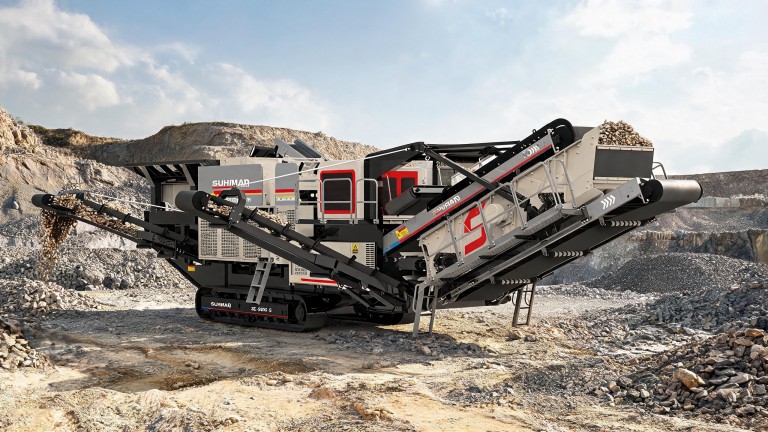
If you operate a quarry and need a small stone crusher, the practical answer is this: your buying decision should not start with a brand name or a brochure capacity figure. It must start with a written specification of your rock type, feed size, required output gradation, and available power, because a «small» crusher in one quarry is an undersized machine in another. Below is a decision framework built around what you must confirm from any Chinese manufacturer — and the boundaries where a small crusher is the wrong solution.
In quarry terminology, a small stone crusher usually means a unit with an inlet opening below approximately 600 mm, a feed size up to 300–400 mm, and a throughput range that suits a single-line operation rather than a multi-stage plant. This typically covers compact jaw crushers, small cone crushers, and impact crushers used for secondary or tertiary duty. The absence of a manufacturer’s verified specification sheet for this article means that exact inlet, throughput, and power figures cannot be stated here; you must obtain them per machine.
What defines «small» for your project is not the machine’s footprint alone. It is the relationship between the feed material’s compressive strength, the required reduction ratio, and the hours you plan to run per day. A machine that suits a 50 t/h limestone feed may fail on a 50 t/h granite feed because of wear and power draw.
A small stone crusher is suitable for a satellite pit, a short-term contract, a recycling yard, or a quarry producing aggregates on a modest scale with limited capital. It is not a suitable primary solution for a deposit with highly abrasive rock (high quartz content), a feed size above the machine’s documented inlet, or a site that must sustain peak production through a single shift without redundancy. If your quarry requires continuous operation above roughly tonnes per hour or your material exceeds the manufacturer’s stated max feed size, a small crusher becomes a bottleneck and a maintenance liability rather than an asset.
Because no verified specification sheet is available for this answer, the table below is a decision checklist. Every cell marked «must confirm» is a value you have to obtain from the manufacturer in writing before you compare quotes.
| Decision Item | What to Confirm | Why It Matters |
|---|---|---|
| Feed material | Rock type, compressive strength (MPa), abrasiveness (e.g., quartz content), moisture | Determines crusher type: jaw vs impact vs cone; affects wear part life |
| Max feed size | Manufacturer-stated inlet opening and documented max feed dimension | Oversize feed causes bridging and damage; undersized inlet limits production |
| Target output | Required final product size and gradation curve | No manufacturer can guarantee a gradation without knowing your closed-side setting and material |
| Throughput | Nominal t/h at a defined closed-side setting and bulk density | Brochure capacities are often optimistic; ask for the condition under which the number is valid |
| Power supply | Available voltage, frequency, and transformer capacity at your site | Chinese-manufactured motors may need re-rating for your electrical system |
| Climate | Ambient temperature range, dust, and altitude | Affects motor cooling, lubrication, and filter selection |
| Logistics | Port of loading, inland transport, and customs documentation | Delivery lead time and total landed cost vary more than the machine price |
| Spare parts policy | Wear parts availability, lead time, and technical support language | A cheap machine is expensive if the liner takes 12 weeks to arrive |
| Warranty terms | What is covered, who performs repairs, and where the nearest service point is | Clarifies whether the warranty is enforceable in your country |
Do not rely on verbal assurances from a sales agent. For any shortlisted manufacturer, request a technical datasheet that specifies — at minimum — the following:
If the manufacturer cannot provide a capacity curve for your material type, treat the verbal throughput figure as an estimate, not a guarantee. Precise capacity curves and wear life data are not available in this article’s fact set; these values can only come from the manufacturer’s engineering documentation.
Within China, there is a practical difference between a manufacturer with in-house engineering and a workshop that assembles imported or copied components. You can assess this distinction without visiting the factory by requesting photographs of the production floor, welding procedures, and quality control records for the specific machine model you intend to buy. A credible manufacturer will provide these without delay. A trading company will hesitate.
The key trade-off is this: a machine from a large-scale assembly shop may cost less, but your risk is concentrated in spare part availability, documentation quality, and technical support in your language. A machine from an engineering-oriented manufacturer may cost more, but you gain consistency in castings, heat treatment, and assembly tolerances. The decision depends on the value of your uptime.
If your quarry is in a country with restrictive import regulations on used or reconditioned machinery, or if your site has no resident electrician familiar with Chinese electrical schematics, a small crusher from a less established Chinese manufacturer will create avoidable risk. The machine itself may be sound, but if your team cannot interpret the manual or replace a motor starter, you will pay more in downtime than you saved on the purchase price. In that case, your recommendation changes: buy from a manufacturer with a local service point or an established export record to your region, or budget for a third-party commissioning engineer.
A final equipment selection cannot be made on this page alone. To receive a realistic recommendation — from this editor or from a manufacturer — you must supply the following:
Without these inputs, any documented capacity, feed size, or power figure is an assumption and must be treated as such.
A realistic capacity is one tied to a specific closed-side setting, a defined feed material, and a stated bulk density. Ask the manufacturer to provide the capacity curve for the machine at your required setting. If they quote a single «up to» number without conditions, treat it as a marketing figure and require a worst-case capacity for your material before comparing.
Choose a jaw crusher when your feed is hard and abrasive (granite, basalt) and you need a durable primary reduction. Choose an impact crusher when your material is softer (limestone) and you need a better shape in the final product with fewer stages. The boundary matters: putting abrasive rock through an impact crusher will shorten wear life substantially. Expected wear life figures are not available in the current fact set and must be requested per material.
The machine price from a trading company will often look lower, but the landed cost must include freight to your port, import duties, customs clearance, commissioning, and the value of your time dealing with a middleman for spare parts. A manufacturer that quotes direct with a clear equipment list and lead time usually gives you easier access to after-sales support. The «real cost» difference depends on your logistics route and service expectations, which you must calculate locally.
It depends on the crusher type and the moisture level. Jaw crushers are relatively tolerant of sticky feed, but impact crushers and screens can clog at high moisture content. You must inform the manufacturer of your actual moisture percentage in writing and ask whether the recommended machine includes anti-clogging features, such as adjustable breaker plates or larger discharge clearances. Without that information, the machine will be selected blind.
Order wear parts for the first season of operation: liners or jaws for the crushing chamber, a set of belts, and critical electrical spares such as contactors and overload relays. This is a recommendation based on standard quarry maintenance practice, not a verified manufacturer claim. The exact recommended spare parts list for a specific model is not available and must be obtained from the manufacturer’s manual.
Your final choice of a small stone crusher manufacturer in China should be made on the strength of written engineering documentation, a transparent spare parts policy, and a service arrangement you can actually use in your country. Price is the last variable to compare, not the first. If you can provide the missing inputs listed above, a proper machine-and-manufacturer match can be evaluated — until then, every claim remains a figure to be confirmed, not a fact to be relied upon.