Не уходите!
Вы ещё не получили бесплатный расчёт и точную цену.
Оставьте контакт, наши инженеры подготовят индивидуальное решение для вашего проекта.
Оставьте контакт, наши инженеры подготовят индивидуальное решение для вашего проекта.


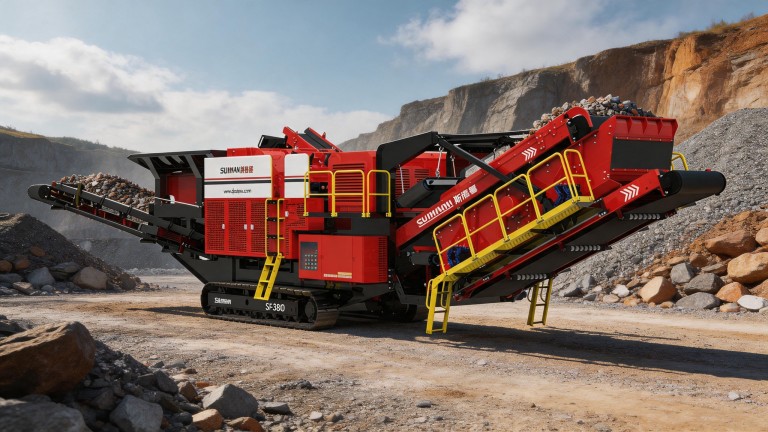
Evaluate a 120tph tracked mobile crusher for crushed rock, concrete, construction waste. Key specs, limits, and missing inputs for quarry owners.
A 120tph tracked mobile crusher is a realistic production target for small to medium quarries and recycling contractors processing crushed rock, concrete, or construction waste. The actual throughput you achieve, however, depends on the crusher type, feed characteristics, closed-side setting, and screen configuration. This page explains what 120tph means in practice, which machine configurations suit your material, and the inputs you must specify before choosing a unit.
Rated capacity—whether 120tph or any other figure—is a nominal value measured under reference conditions. In the field, three variables dominate real output:
For a 120tph specification, the manufacturer likely assumes medium-hard rock, a 0–50mm product, and a continuous feed. If you crush reinforced concrete with rebar, impact crushers handle it well but may reduce throughput due to jam risk. If you process damp construction waste, screens clog and output drops. The number 120tph is an engineering estimate, not a guarantee. [FACT REVIEW REQUIRED]
Tracked mobile crushers come in three main families. Each has a defined operating envelope for 120tph work:
Your material decides the crusher type. If you produce road base from limestone, a jaw + cone train works. If you crush demolition concrete to make recycled aggregate, a single impactor often suffices.
A tracked crusher shifts between faces, demolitions, or multiple sites without a permit for transport. That mobility is its primary value. But if your operation stays in one pit for years, a semi-mobile (wheeled) or static plant gives lower cost per tonne for the same 120tph output. Tracked units carry a higher purchase price and more hydraulic complexity. For a quarry owner, the trade-off is: do you need the machine to move every few weeks, or is it a fixed installation?
Tracked units shine where:
If none of these apply, a static plant with a hopper and conveyor will crush at 120tph more cheaply and with less maintenance downtime.
A 120tph tracked crusher is not a one-size-fits-all machine. You must define your feed size distribution and required product. For a jaw crusher, the feed must fit the opening without bridging. For an impactor, the feed is limited by the rotor diameter and inlet. Oversize feed reduces throughput dramatically and causes blockages.
Also specify the final product gradation. A 0–20mm product for asphalt base requires different settings (and perhaps a screen) than a 0–50mm subbase. Many tracked crushers include an independent pre-screen and a return conveyor from the integrated sizing screen. That configuration boosts effective output while maintaining product spec.
Tracked crushers run on diesel engines (usually 300–400 hp for this class) or electric drive with a diesel generator. [FACT REVIEW REQUIRED] If you have grid power at the site, an electric-drive tracked crusher reduces emissions and fuel cost. But it ties you to a cable and limits mobility. Diesel gives freedom but adds operating cost and noise. Consider your local emission regulations and fuel availability before choosing.
Climate matters too. In cold regions, hydraulic systems need cold-weather packages. In dusty environments, engine air filters and cooling packs require extra protection. These are site-specific options that affect uptime.
This class is inappropriate for high-tonnage permanent production. If you need 400tph consistently, a tracked 120tph unit is oversize for that duty. Also avoid it if your material is extremely abrasive (e.g., granite with high quartz content) unless you use a jaw impactor combination with heavy wear parts; otherwise maintenance costs will exceed the value of mobility.
Another boundary: feed moisture above 8–10% in construction waste will clog the pre-screen and reduce throughput far below 120tph. A tracked crusher with a high-frequency screen or a wet-processing option is required, but that is a niche configuration.
Before any supplier can quote a workable machine, you must supply:
Without these, a 120tph figure is only a starting point for a technical conversation, not a procurement specification.
Tracked mobile crushers are complex—hydraulic drives, tracks, and a vibrating feeder all add moving parts compared to a static unit. For a quarry owner, maintenance planning must include daily greasing points, weekly wear liner inspection, and engine oil analysis. Wear parts (jaw plates, blow bars, impact plates) life depends entirely on material abrasiveness. For concrete and limestone, blow bars may last several hundred hours; for granite, life drops drastically. [FACT REVIEW REQUIRED]
Ask the supplier for a wear parts cost per tonne based on your specific rock type. That number is more important than the initial purchase price.
The benefit of a tracked unit is that you can move it to a more favorable location within the pit, shortening truck haul distances. That reduces your loading costs and often offsets the higher maintenance of the machine itself.
To decide if a 120tph tracked mobile crusher is the right investment:
If your operation is a single long-life quarry with fixed haul routes, a semi-mobile (wheeled) or static plant at similar throughput will likely run at lower cost per tonne. The tracked crusher is a tool for flexibility, not for maximum efficiency in a permanent setting.
A 120tph tracked mobile crusher is a capable machine for medium-sized projects—provided you match the crusher type to your material, feed size, and product spec. For clean, medium-hard rock and for concrete waste with controlled feed, an impactor or jaw unit will achieve close to 120tph. For abrasive, hard rock, use a jaw and accept higher wear costs. For wet, sticky construction waste, avoid this class unless you add a wash screen.
The critical missing step is submitting your actual material data to the manufacturer. A 120tph rating is an engineering estimate; the real number comes from testing, not from a brochure. Demand a test report with your feed and your target product before you commit.